Pelvic organ prolapse
back to main page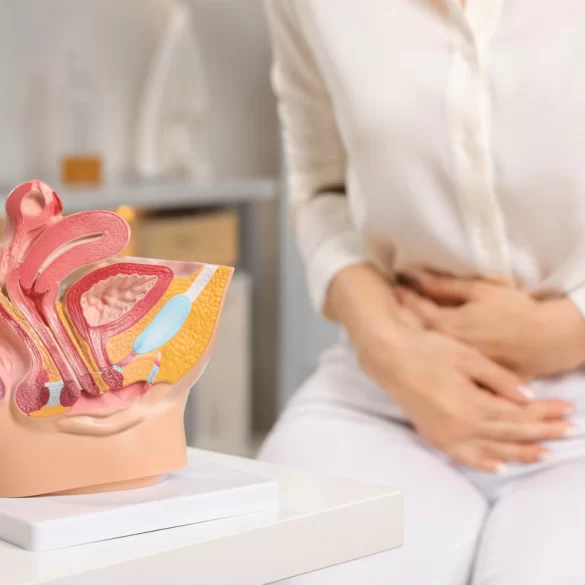
Pelvic organ prolapse (English: pelvic organ prolapse, POP) is a disorder characterized by the descent or displacement of the pelvic organs toward the vagina due to failure of supporting structures such as the pelvic floor muscles, fascia, and ligaments. It most commonly affects the urinary bladder, uterus, vaginal vault, rectum, or small intestine. The condition is chronic and progressive, and its severity may increase with age and the influence of contributing factors. Pelvic organ prolapse is a significant health problem, affecting both urinary and gastrointestinal functions as well as quality of life and sexual functioning.
Pelvic organ prolapse – types
Pelvic organ prolapse is classified according to the anatomical location of the descent. This classification has important clinical significance, since it determines the symptoms and the method of treatment.
Three main anatomical compartments are distinguished:
1. Anterior compartment (anterior vaginal wall):
- cystocele – descent of the urinary bladder,
- urethrocele – descent of the urethra.
2. Middle compartment:
- descent or prolapse of the uterus,
- vaginal vault prolapse (e.g., after hysterectomy).
3. Posterior compartment (posterior vaginal wall):
- rectocele – bulging of the rectum into the vagina,
- enterocele – displacement of loops of the small intestine.
In clinical practice mixed forms are very common, involving several compartments simultaneously. This is because the pelvic floor structures act as a functional system, and their damage is rarely confined to a single location.
Pelvic organ prolapse – stages
The severity of pelvic organ prolapse is most commonly assessed using the POP-Q (Pelvic Organ Prolapse Quantification) system, which allows an objective evaluation of the degree of descent relative to the hymen.
The classification includes:
| Stage | Characteristics |
|---|---|
| 0 | no prolapse |
| I | mild descent, above the hymen |
| II | descent to the level of the hymen |
| III | protrusion of the organ below the hymen |
| IV | complete prolapse of the organ |
The anatomical stage does not always correspond to the severity of clinical symptoms. In practice, therapeutic decisions take into account both the examination findings and the symptoms reported by the patient and their impact on quality of life.
Pelvic organ prolapse – causes
Pelvic organ prolapse develops as a result of weakening or damage to the supportive structures of the pelvic floor. This process is multifactorial.
The most important risk factors include:
- vaginal deliveries, especially multiple ones,
- peripartum injuries and high fetal birth weight,
- age and hormonal changes associated with menopause,
- reduced connective tissue quality (genetic predisposition),
- obesity,
- chronic constipation,
- chronic cough,
- prolonged increases in intra-abdominal pressure,
- heavy physical labor,
- prior pelvic surgeries.
Injuries sustained during childbirth can initiate a process that may remain asymptomatic for many years and later gradually lead to the emergence of pelvic organ support disorders.
Pelvic organ prolapse – symptoms
Symptoms of pelvic organ prolapse are varied and depend on the type and degree of descent.
The most common complaints include:
- a feeling of heaviness or a 'foreign body' in the vagina,
- a palpable or visible bulge in the vagina,
- discomfort that worsens when standing or during physical exertion,
- a pulling sensation in the lower abdomen,
- difficulty urinating,
- a feeling of incomplete bladder emptying,
- frequent urination or urgency,
- urinary incontinence,
- defecation disorders (e.g., constipation, the need to assist bowel movements),
- discomfort during sexual intercourse.
Symptoms may worsen during the day and lessen when lying down. In advanced cases, the organs may protrude beyond the vaginal introitus, which can lead to irritation, erosions, and secondary inflammatory conditions.
Treatment and modern therapeutic methods for pelvic organ prolapse
Therapeutic management depends on the stage of the condition, the patient's age, symptoms, and expectations regarding quality of life.
Conservative treatment includes:
- urogynecological physiotherapy (pelvic floor muscle training),
- behavioral therapy,
- vaginal pessaries (mechanical support of the organs).
Modern adjunctive methods used in aesthetic and functional medicine:
- gynecological laser therapy - improvement of tissue tone and quality,
- radiofrequency (RF) - collagen stimulation and firming of supporting structures,
- HIFU - focused ultrasound increasing tissue tone.
Surgical treatment is used in advanced cases and includes reconstructive techniques restoring the proper anatomy of the pelvic organs.
The choice of treatment method requires an individualized clinical assessment and consideration of all functional aspects of the pelvic floor.

