Urology
back to main page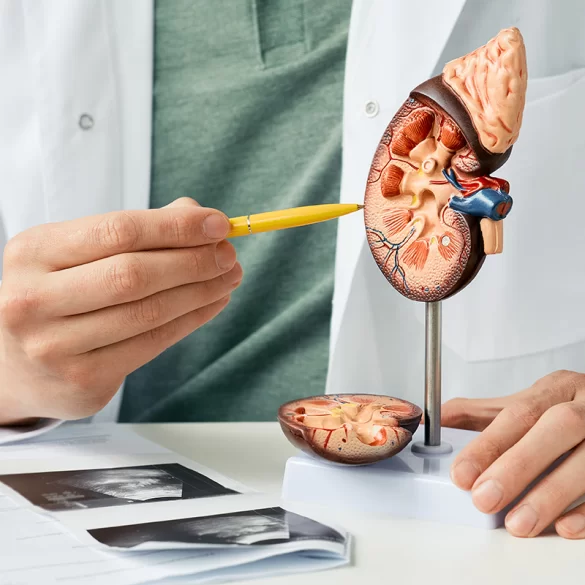
Urology is a branch of medicine concerned with the diagnosis, treatment, and prevention of diseases of the urinary system in women and men, as well as of the male reproductive system. It includes disorders of the kidneys, ureters, urinary bladder, urethra, and organs such as the prostate, testes, and penis. Modern urology combines conservative, pharmacological, and surgical approaches, including minimally invasive techniques. Due to the close anatomical and functional relationships of the pelvic organs, urology remains in close collaboration with other disciplines, particularly gynecology, oncology, and urogynecological physiotherapy.
Urology – scope
The scope of urology includes a wide spectrum of disorders of various etiology - from infections to neoplastic diseases. Diagnosis is based on laboratory, imaging (ultrasound, computed tomography), endoscopic (cystoscopy) and functional tests (urodynamics).
The most commonly diagnosed and treated urological conditions include:
- urinary tract infections (UTIs),
- urinary stone disease,
- benign prostatic hyperplasia (BPH),
- urological malignancies (e.g., bladder, kidney, prostate cancer),
- urinary incontinence,
- voiding disorders (urination),
- sexual dysfunction in men.
Urology includes both pharmacological treatment and surgical procedures, including:
- endoscopic techniques,
- open surgeries,
- laparoscopic and robotic procedures.
In recent years there has been development in functional urology, focusing on disorders of the lower urinary tract, particularly important in women.
Urology and gynecology – common points
Urology and gynecology overlap in the area of pelvic health, especially in women. The shared field of interest of both specialties includes anatomical structures that are in close functional relationship – the urinary bladder, the urethra, the uterus, and the vagina.
Problems requiring an interdisciplinary approach include:
- urinary incontinence (stress and urge),
- pelvic organ prolapse (prolapse),
- recurrent urinary tract infections,
- pelvic pain (chronic pelvic pain),
- sexual dysfunctions (e.g. dyspareunia).
In clinical practice a team approach is often used, in which the urologist and gynecologist jointly determine the treatment strategy. This particularly applies to cases requiring simultaneous correction of anatomical structures and restoration of proper pelvic floor muscle function.
Urology – when urological problems affect women
Although urology is traditionally associated with treating men, women constitute a significant portion of patients. This is due to the anatomical structure – a shorter urethra and the proximity of the urethral and vaginal openings favor infections and functional disorders.
The most common urological problems in women include:
- recurrent urinary tract infections,
- stress and urge urinary incontinence,
- overactive bladder (OAB),
- voiding dysfunction,
- bladder pain (painful bladder syndrome / interstitial cystitis).
Factors that increase the risk of these conditions include:
- pregnancy and childbirth,
- menopause (hormonal changes),
- pelvic floor muscle weakness,
- previous gynecological surgeries,
- chronic increased intra-abdominal pressure.
Contemporary approaches to treating women take into account not only pharmacological and surgical therapy, but also functional rehabilitation and education on prevention.
Urology and urogynecological physiotherapy – where is the boundary?
The boundary between urology and urogynecological physiotherapy is functional and is based on the cause of the disorders. The urologist primarily deals with medical diagnostics, pharmacological treatment, and surgical interventions, whereas the urogynecological physiotherapist focuses on restoring the proper function of muscles, fascia, and movement patterns.
Urogynecological physiotherapy is used in situations such as:
- muscle-based stress urinary incontinence,
- pelvic organ prolapse in early stages,
- pelvic pain related to muscle tension,
- pelvic floor muscle coordination disorders,
- recovery after childbirth and surgical procedures.
On the other hand, a urological intervention is necessary in the case of:
- structural changes requiring surgical treatment,
- oncological diseases,
- severe voiding disorders of neurological origin,
- infections requiring pharmacological treatment.
Optimal therapeutic effects are achieved through collaboration between both specialists. The interdisciplinary model allows simultaneous treatment of the causes and consequences of disorders, which is crucial in chronic and functional conditions.
A modern approach to the treatment of urological disorders
Contemporary medicine increasingly uses methods that support the treatment of urological disorders, particularly in women, where tissue quality and pelvic floor function play an important role. Among the available solutions are:
- urogynecological physiotherapy - improvement of pelvic floor muscle function,
- gynecological laser therapy - stimulation of mucosal regeneration and improvement of tissue tone,
- microneedle radiofrequency - collagen remodeling and improvement of tissue elasticity,
- regenerative procedures using platelet-rich plasma (PRP),
- technologies supporting the treatment of urinary incontinence and improvement of bladder function.
These methods complement conventional treatment and are used especially in functional disorders and in the prevention of progression of changes.

