What treatments for wrinkles under the eyes?
- Why do wrinkles form under the eyes and what are their types?
- What injectable treatments reduce mimic wrinkles and fill in the tear troughs?
- Which treatments stimulate the natural production of collagen under the eyes?
- What treatments help with dark circles and bags under the eyes?
- When is it worth considering surgical eyelid correction (blepharoplasty)?
Why do wrinkles form under the eyes and what are their types?
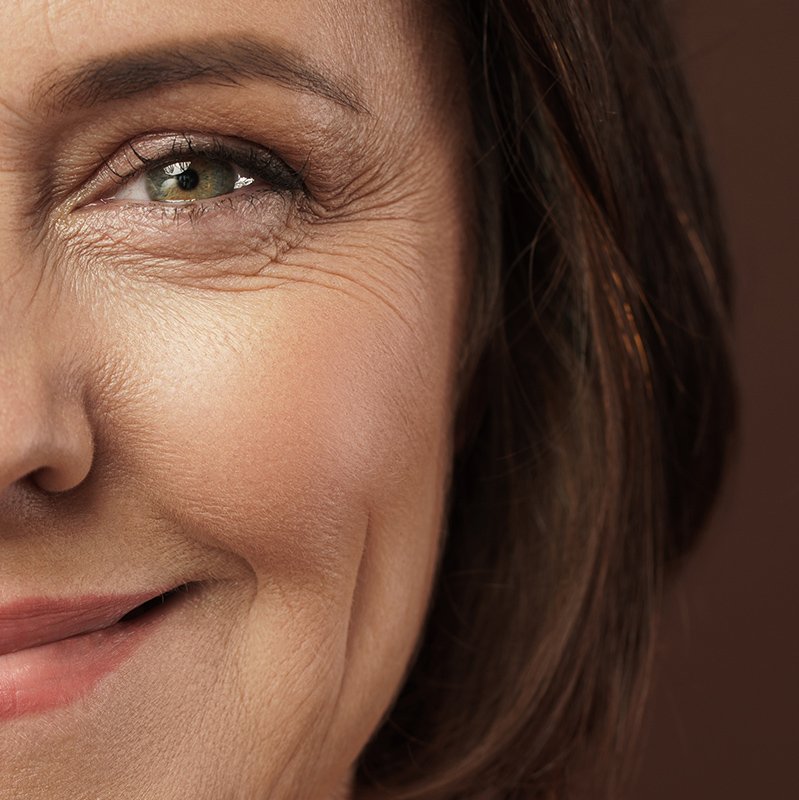
Under Eye Wrinkles are a natural symptom of aging. The skin in this area is exceptionally thin and sensitive, which makes it lose collagen and elastin - key proteins for its firmness and elasticity - more quickly.
The formation of wrinkles is the result of various factors. Harmful UV radiation plays a crucial role. Frequent facial movements, such as smiling or squinting, contribute to the formation of so-called crow's feet. The influence of gravity is also significant.
There are several types of wrinkles. Mimic wrinkles appear due to muscle movements, for example, during smiling. Static wrinkles are visible even when the face is at rest. When the skin loses its firmness, gravitational wrinkles become prominent. At the most advanced stage of aging, deep grooves form, especially noticeable in the eye area.
Medical aesthetics offers a range of effective treatments for wrinkles. One of them is botox, which effectively smooths out mimic wrinkles, such as crow's feet. It works by relaxing the facial muscles, leaving the skin much smoother. Equally helpful are fillers with hyaluronic acid.
They perfectly correct subcutaneous defects and fill in the tear trough, restoring lost volume to the skin – as part of volumetric treatment.
Another highly valued procedure is microneedle mesotherapy. It involves the precise injection of nutritious cocktails into the skin, often containing non-cross-linked hyaluronic acid. There is also mesobotox, which cleverly combines the benefits of botulinum toxin and mesotherapy.
Always remember to consult with a doctor. They will present you with all the indications and contraindications for treatments, as well as discuss potential side effects, taking care of your safety.
Biostimulation treatments effectively support the skin by activating fibroblasts. Thanks to them, the natural production of collagen and elastin increases, especially in the delicate under-eye area.
To combat wrinkles, various tissue stimulators are used, such as polynucleotides, polylactic acid, or amino acids. Additionally, valuable support comes from natural materials obtained from the patient: plasma, platelet-rich fibrin (PRF), and adipose-derived stem cells (Nano Fat).
Another popular method for reducing wrinkles is micro-needling mesotherapy, performed using specialized devices like Dermapen. Micro-punctures stimulate the skin for intensive renewal.
It is also worth considering redermalization. This technique, combining hyaluronic acid with succinic acid, provides a strong skin revitalization.
One can also opt for revitalizing threads. They create a kind of scaffold under the skin, effectively stimulating collagen synthesis and providing a gentle lifting effect.
Many people struggle with the problem of dark circles and bags under the eyes, often resulting from poor circulation or lymphatic stasis. In such situations, targeted treatments are essential.
One of the effective solutions is carboxytherapy. This innovative method, involving precise injections of medical carbon dioxide, effectively deals with imperfections in the delicate eye area. The key benefits of its use include:
- reduction of dark circles,
- improvement of the condition of gray and tired skin,
- improvement of microcirculation,
- intense nourishment of tissues,
- significant reduction of puffiness,
- diminishing the visibility of bags.
Another effective method of combating dark circles and bags under the eyes is needle mesotherapy. Special brightening preparations, such as Light Eyes, are used in this procedure, which thanks to a rich complex of vitamins and active ingredients improve the skin condition. It is also worth considering gentle chemical peels, which effectively reduce discoloration in this sensitive area.
Treatments effectively support draining procedures, such as sub-pressure massage, which help remove excess accumulated fluids.
When non-invasive methods for reducing imperfections under the eyes are ineffective, it is worth considering blepharoplasty, which is a surgical correction of the eyelids. This procedure is recommended in cases of serious changes, effectively eliminating the issue of drooping eyelids by removing excess sagging skin. The procedure also deals well with unsightly under-eye bags, often caused by the shifting of fatty tissue.
During the surgery, the surgeon precisely removes both excess skin and unnecessary fat tissue. There are two main techniques for performing this procedure: the transcutaneous method (involving an external incision) and the transconjunctival method (which does not leave visible scars).
Although blepharoplasty provides long-lasting and satisfying results, it is important to remember that the recovery period after this procedure is usually longer than after less invasive cosmetic procedures.

