Why is it worth doing peels?
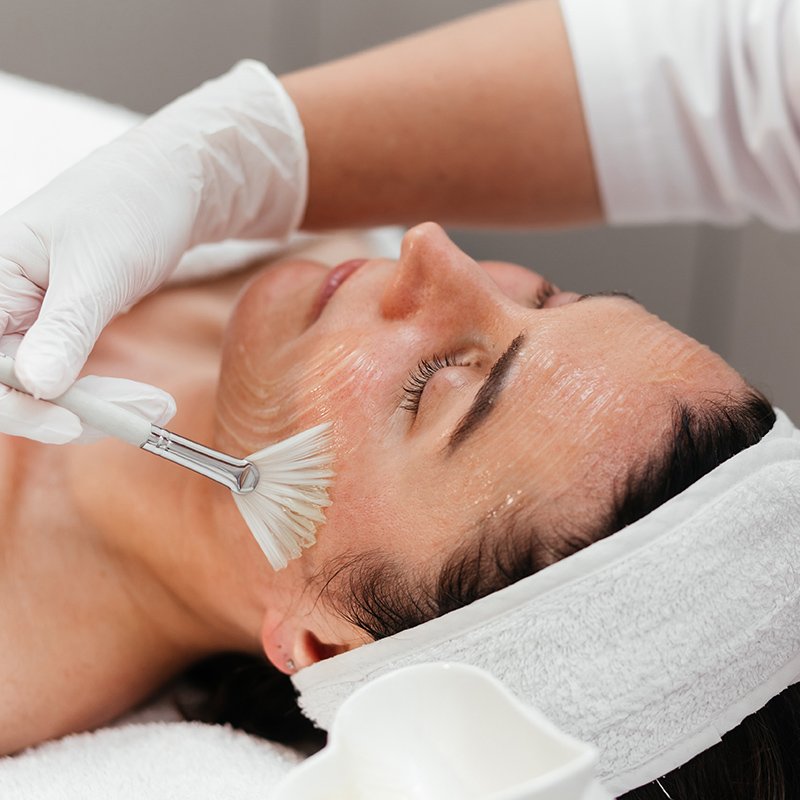
Table of Contents
- Mechanism of exfoliation - what is a peel and how does it work?
- The impact of epidermal structure on the effectiveness of exfoliating treatments
- Types of peels: mechanical, chemical and enzymatic
- Frequency of peeling application and skin type
- Peeling for acne-prone, couperose and mature skin
- Contraindications and safe post-peel care
- Application techniques and professional treatment protocols
- Home peeling vs treatment at the Ambasada Urody clinic
- Goals and benefits of regular exfoliation of the epidermis
- FAQ: frequently asked questions about peels
Peeling is the controlled removal of corneocytes (dead cells of the stratum corneum).
Since we know what peeling is, it is worth understanding its biology. The natural renewal cycle, the so-called turnover time, lasts about 28 days, and with age, it slows down to 40-50 days. Exfoliation (peeling) accelerates this process: active substances loosen corneodesmosomes (bonds between cells) or mechanically remove the stratum corneum.
3 mechanisms of epidermal exfoliation:
- Mechanical (abrasion) - abrasive particles remove dead cells through friction
- Chemical - AHA, BHA, and PHA acids dissolve the intercellular cement
- Enzymatic - plant enzymes digest cell-binding proteins without changing the skin's pH
Fun fact: As early as ancient Egypt, powdered shells were used to smooth the skin - exfoliation is one of the oldest skincare methods!
The stratum corneum functions like a wall - corneocytes are the bricks, lipids are the mortar. Together they create a hydrolipid barrier, and the correct skin pH (4.5-5.5) keeps this structure in balance.
Hyperkeratinization (excessive keratinization) makes the complexion look sallow and leads to the appearance of blackheads. Cosmetics do not penetrate through a barrier that is too thick. Removing the excess stratum corneum prepares the skin for absorption - serum absorbability increases by up to 50%!
Which face peel to choose?
Selecting the method depends on the appearance of the skin and whether there are inflammatory lesions present.
- Mechanical peeling - involves the friction of abrasive particles. Fine-grained products are better for the face – leave coarse-grained ones for the body.
- Chemical peeling - uses acids to dissolve bonds between cells. This is the best face peel for discoloration. The concentration is selected according to the Fitzpatrick scale (phototypes I-VI). Acid peels are best performed in the evening, when the skin enters the nightly regeneration phase and absorbs ingredients better.
- Enzymatic peeling - the gentlest exfoliation. Papain, bromelain, and ficin (2025/2026 trend) digest proteins without irritation. Home enzymatic peeling works well for sensitive skin.
- Cavitation peeling - uses ultrasound. Home devices cannot replace professional treatments. At the Ambasada Urody clinic, a cosmetologist selects the type of peel based on an analysis of the phototype and the current skin condition.
How often to exfoliate your face depends primarily on your skin type.
| Skin type | Frequency | Type |
| Oily | 2-3x / week | BHA, enzymatic |
| Combination* | 1-2x / week | AHA, enzymatic |
| Normal | 1-2x / week | Any |
| Dry | 1x / week | Enzymatic, AHA |
| Sensitive | Every 10-14 days | Enzymatic, PHA |
* Combination skin needs an individual approach - the T-zone tolerates more frequent exfoliation, while exfoliating the cheeks once a week is enough.
A poorly chosen peeling can aggravate problems instead of soothing them.
Choosing a peeling for a skin concern:
- Acne-prone skin - responds to salicylic acid (BHA), which penetrates the pores and dissolves sebum. Does peeling help with inflammatory acne? Yes - BHA reduces blackheads and inflammation. It is better to avoid scrubs, as they can spread bacteria.
- Couperose skin - requires gentleness. PHA acids (lactobionic acid, gluconolactone) have large molecules and do not irritate the blood vessels.
- Mature skin - benefits from AHA acids, especially glycolic acid - it penetrates deeper and stimulates collagen synthesis.
Scalp and face peeling during pregnancy
Safe ingredients include mandelic acid, lactobionic acid, gluconolactone, and enzymes. Salicylic acid and LHA are contraindicated. Trichological scalp peeling is safe if it does not contain salicylates.
Sonic brush as an alternative to peeling
A sonic brush aids cleansing but does not replace peeling - it removes impurities from the surface, while exfoliation breaks bonds in the stratum corneum. Daily use carries a risk of irritation.
Absolute contraindications:
- Active herpes – exfoliation spreads the virus
- Wounds and abrasions – broken epidermal continuity precludes exfoliation
- Oral retinoids – they thin the epidermis, a peel would weaken the barrier
- Fresh tan and skin cancers
After a peel, the skin may be red – this is a natural vascular reaction that subsides within a few hours to days. Use SPF 50+ every day for at least 2 weeks; this is an absolute necessity. Ceramides rebuild the lipid barrier, panthenol soothes irritations, and ectoine reduces redness.
SOS after acids: if the skin stings, rinse the product off with cool water, apply panthenol, and avoid active cosmetics for 48 hours.
Professional acid peel step by step:
- Cleansing - removal of sebum and makeup
- Acid application - with a brush, avoiding eyes and lips, 5-15 minutes
- Neutralization - rinsing off or a neutralizer that raises pH
- Moisturizing - cream with ceramides or panthenol
Mechanical massage lasts 30 seconds to 3 minutes with circular motions. A gommage-type aesthetic procedure consists of applying the preparation to dry skin and rolling it off after drying - corneocytes detach with the preparation.
At home, AHA acids up to 10-15% at buffered pH are safe - they brighten the skin tone and even out the complexion. BHA acids at home are used up to 2% and they cleanse the pores. In a professional office, a cosmetologist works with AHA concentrations of 20-70% and a lower pH, which stimulates collagen remodeling and provides deeper exfoliation than home preparations.
The same 20% acid from a drugstore works differently than at a cosmetologist's - home products have a buffered pH that slows down penetration. A medical peel reaches deeper layers of the skin, and effects are visible after a series of 3-6 treatments. As part of our treatments, we select concentrations individually. Example: a patient with adult acne after a series of 5 peels (salicylic + mandelic acid) achieved a reduction in inflammation by over 60%.
Regular exfoliation unclogs pores, reduces blackheads, and evens out skin tone - a dull, gray complexion is most often the result of accumulated dead cells that scatter light irregularly. After exfoliation, the skin surface becomes smoother and more radiant, and the active ingredients of subsequent cosmetics (masks, serums, retinol) are absorbed up to 40–70% more effectively - hence the classic professional protocol: a peel always before a mask, not after.
In the case of the body, mechanical scrubs and dry brushing stimulate microcirculation and lymphatic drainage, which translates into visible skin smoothing and a reduction of tissue stagnation that intensifies the appearance of cellulite.
Book a free consultation at Ambasada Urody and together we will determine an exfoliation plan tailored to your skin!
Ingredients in peels: natural or chemical - what to choose?
Natural particles work well in body scrubs. For the face, it is better to choose acids or enzymes - they act more precisely.
What acid concentration in a face peel is safe at home?
AHA up to 10-15% and BHA up to 2%. A lower concentration at the start and a gradual increase.
Where besides the face can acid peels be used?
On the décolleté, back, hands, and feet. Higher concentrations are used on the body than on the face.
What are the most common mistakes when exfoliating?
Too frequent exfoliation, lack of SPF photoprotection after the treatment, and using scrubs on active acne.
Can mandelic acid be used during pregnancy?
Yes - it has a large molecule that is not absorbed systemically. Lactobionic acid and gluconolactone are also safe.
Does a chemical peel at the beautician's hurt?
It may cause tingling, but not pain. The cosmetologist controls the exposure time and neutralizes the acid earlier if necessary.

