Acne on the shoulders
back to main page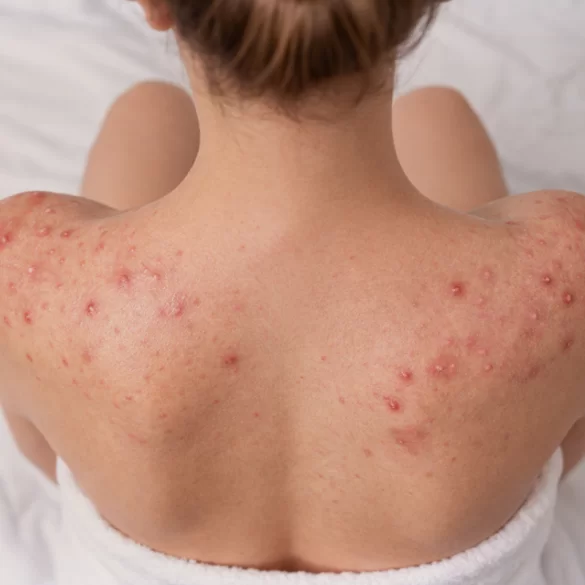
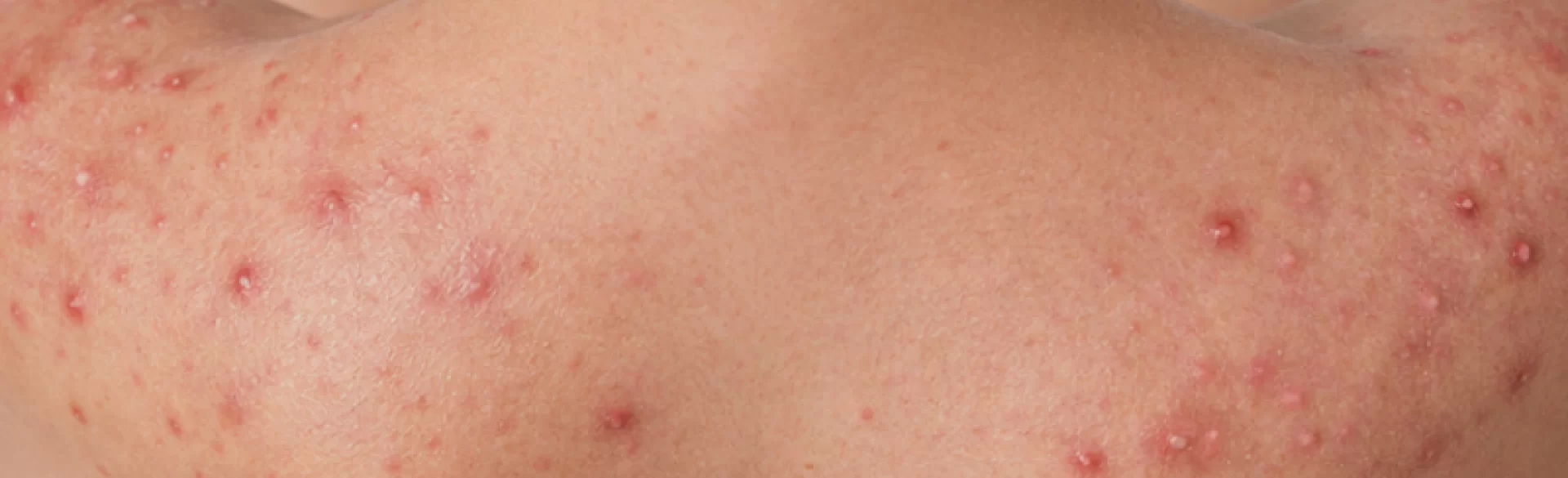
Pimples on the shoulders are skin changes that most commonly occur in the area of hair-oil follicles, including blackheads, papules, pustules, and sometimes painful nodules. The location on the shoulders favors chronicity because the skin in this area is often exposed to friction (straps, backpacks), sweat, and occlusion by clothing, which exacerbates inflammation. The symptoms may resemble folliculitis or keratosis pilaris, so it is important to identify the type of lesions and triggering factors. Effective management is based on reducing occlusion, proper skincare, anti-inflammatory and keratolytic treatment, and—if necessary—supportive procedures and targeted therapy.
Acne on the shoulders – causes
Pimples on the shoulders usually have a multifactorial background. Most often they are a form of truncal acne, but they can also result from other follicular diseases.
Main pathophysiological mechanisms:
- Excessive sebum production and changes in its composition (promotes the "clumping" of keratin and sebum).
- Follicular orifice hyperkeratinization (formation of keratin-sebaceous plugs → comedones).
- Inflammation within the follicle (activation of inflammatory mediators).
- Microbial colonization in the closed follicular environment (intensifies inflammation).
Most common triggering and exacerbating factors on the shoulders:
- Friction and pressure: backpacks, bag straps, tight sports tops, bras, protectors.
- Sweat and occlusion: training + non-ventilating clothing, long periods in a wet shirt.
- Comedogenic cosmetics: heavy lotions, body oiling, "body butter" in the shoulder area.
- Hormonal disorders: increased androgen activity (not only diseases; also physiology).
- Stress and sleep deprivation: may exacerbate inflammation via the neuroendocrine axis.
- High glycemic load diet and frequent milk consumption (in some people correlates with flare-ups).
Important differential diagnosis (common mistakes):
- Folliculitis (bacterial or yeast) — often more "uniform" pustules.
- Keratosis pilaris — small, rough bumps ("goosebumps"), fewer pustular lesions.
- Acne mechanica — clear association with friction/pressure in specific areas.
- Contact dermatitis — itching, erythema, association with new detergent/clothing.
Acne on shoulders – how to get rid of it
Getting rid of pimples on the shoulders requires a strategy that simultaneously:
- reduces occlusion and irritation,
- normalizes follicular keratinization,
- limits inflammation,
- prevents recurrence and scarring.
Daily actions with the highest clinical "cost-effectiveness":
- Shower as soon as possible after a workout (not "in the evening because I don't feel like it" — the skin does not negotiate).
- Change clothes after sweating + avoid sitting in a wet shirt for long periods.
- Breathable fabrics and looser cuts in the shoulder area; limit compressive straps.
- Wash with a problematic skin cleanser once a day (more frequent may damage the barrier).
- Light emollients/non-comedogenic dermocosmetics instead of heavy butters and oils.
- Do not squeeze: mechanical damage to the follicle increases the risk of discoloration and scars.
Skincare ingredients that usually work (selection depends on tolerance):
- Salicylic acid (BHA) — unclogs follicle openings, acts keratolytically.
- Azelaic acid — anti-inflammatory, supports the reduction of post-inflammatory discoloration.
- Benzoyl peroxide — antibacterial and anti-inflammatory action (may bleach fabrics).
- Topical retinoids — normalizes keratinization and prevents comedones.
When to suspect it's not "ordinary acne" and worth changing direction:
- dominant uniform, itchy bumps after workouts (more often folliculitis),
- absence of comedones, but there is exclusively a "rash" of bumps,
- quick recurrences despite proper care and elimination of friction.
Acne on shoulders – treatment
Treatment should be tailored to the type of lesions (comedonal vs inflammatory) and their severity. The arms and trunk often require a slightly different approach than the face, partly due to a thicker stratum corneum and larger surface area.
Management of mild to moderate lesions (the most common scenario):
- Topical therapy aimed at:
- unclogging follicles (normalization of keratinization),
- reducing inflammation,
- limiting microbial colonization.
- Gradual introduction of preparations (e.g., every 2–3 days → daily) to limit irritation.
- Protection of the epidermal barrier: if the skin is dry and stinging, treatment is often undermined by its own aggressiveness.
Management of severe lesions / nodules / tendency to scar:
- usually requires dermatological consultation and combination therapy,
- the goal is to quickly interrupt inflammation to limit scarring.
What is clinically significant in assessing progress:
- The first improvement often concerns the number of new lesions, not immediate “smoothing”.
- A realistic window for assessing effectiveness is usually 6–12 weeks of systematic management.
- Recurring lesions in the same area often indicate that a mechanical/occlusive factor is still at play (e.g., a backpack "on one shoulder" — a classic).
Red flags (indication for more urgent consultation):
- extensive, painful inflammation with rapid spreading,
- general symptoms (fever),
- abscesses, fistulas, significant tenderness (risk of more severe follicular diseases).
Treatments for pimples on the shoulders
In-office treatments play a supportive role: they accelerate the reduction of lesions, improve tolerance to topical treatment, and in the case of permanent consequences (scars, post-inflammatory hyperpigmentation), allow for corrective therapy. The selection of the procedure should be based on the diagnosis (acne vs folliculitis) and the current condition of the skin.
Most commonly used procedures (in clinical and office practice):
- Chemical peels for the body (choice of acid and concentration according to the type of lesion):
- reduction of hyperkeratinization,
- unblocking follicular openings,
- reduction in the number of comedones and pustules,
- support in reducing post-inflammatory hyperpigmentation.
- Treatments using light with a selected wavelength (e.g., IPL / light therapies):
- anti-inflammatory action,
- support in the normalization of inflammatory changes in some patients,
- often as a part of combination therapy.
- Skin cleansing and normalizing procedures (especially with a predominance of comedones):
- controlled removal of non-inflammatory lesions,
- reduction of "inflammatory material" in the follicle,
- educational skincare to limit recurrences.
- Therapies aimed at the consequences of acne (when the active inflammatory state is controlled):
- fractional procedures supporting skin remodeling in scars,
- treatments improving structure and tone in post-inflammatory hyperpigmentation.
The best results are achieved by combining: causal treatment + elimination of friction/occlusion + treatments tailored to the type of lesions.

