Autophagy
back to main page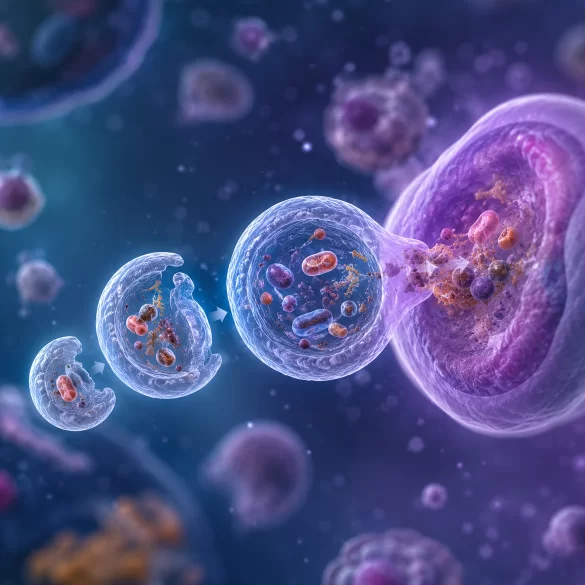
The term „autophagy” comes from the Greek language and literally means „self-eating” (auto – self, phagein – to eat). The phenomenon was described as early as the 1960s, but a breakthrough in understanding its significance occurred thanks to the research of Japanese biologist Yoshinori Ohsumi, who received the Nobel Prize in Medicine in 2016 for discoveries concerning the mechanisms of autophagy.
Autophagy is a natural system for „cleansing” cells. Under normal conditions, it enables:
- elimination of damaged cellular organelles,
- recycling of nutrients,
- maintenance of metabolic stability,
- protection against oxidative stress,
- adaptation to energy deficiency.
This process is particularly important in tissues with high metabolism, such as:
- brain,
- muscles,
- liver,
- immune system,
- skin.
Autophagy is not a pathological phenomenon. On the contrary - a properly functioning autophagy mechanism is considered one of the pillars of healthy aging. Both a deficiency in autophagy and its excessive activation can lead to the development of diseases. Disorders of this process are observed, among others, in Alzheimer's disease, Parkinson's disease, type 2 diabetes, atherosclerosis, and in some types of cancer.
Autophagy - how does it proceed in the cell?
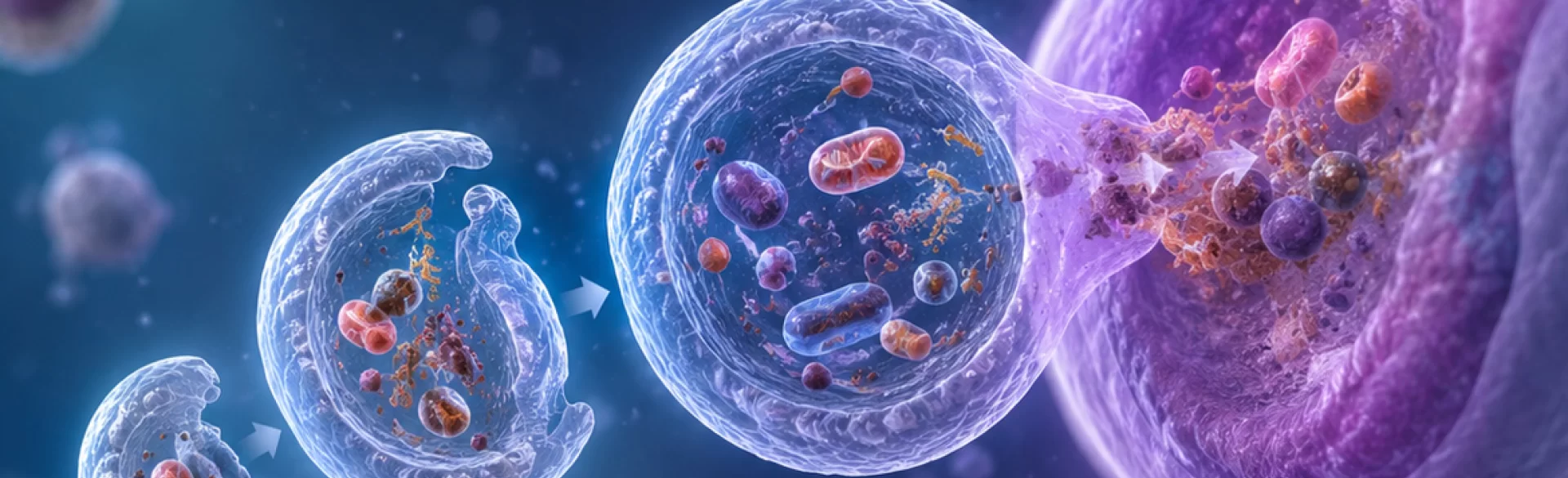
Autophagy is a multi-step process controlled by numerous genes and regulatory proteins. The best-known form is macroautophagy, commonly referred to simply as autophagy.
The process takes place in several stages:
- Recognition of damaged structures
The cell identifies abnormal proteins, cytoplasm fragments, or damaged organelles that require degradation. - Autophagosome formation
A double lipid membrane forms around the elements intended for removal, creating a vesicle called an autophagosome. - Fusion with a lysosome
The autophagosome fuses with a lysosome - an organelle containing digestive enzymes. - Degradation and recycling
The contents are broken down into amino acids, fatty acids, and other molecules that the cell can reuse.
Metabolic pathways play a key role in the regulation of autophagy:
- mTOR - inhibits autophagy when energy availability is high,
- AMPK - activates autophagy during energy deficiency,
- sirtuins - associated with longevity and resistance to cellular stress.
Autophagy remains an extremely precise process. The cell does not „destroy itself” randomly - it only removes dysfunctional or redundant elements. It can be compared to an advanced service system responsible for the maintenance and regeneration of cellular structures.
Autophagy - what stimulates it?
Autophagy is primarily activated in situations of metabolic stress. The organism then initiates mechanisms for energy conservation and the recovery of nutrients from its own cellular resources.
The most important factors stimulating autophagy include:
Caloric restriction
Temporary energy deficiency remains the strongest activator of autophagy. This phenomenon is observed, among others, during:
- intermittent fasting,
- longer breaks between meals,
- caloric restriction.
A decrease in glucose and insulin levels leads to the inhibition of the mTOR pathway and the activation of cellular repair mechanisms.
Physical exertion
Intense exertion increases the energy demand of cells and stimulates autophagy, especially in muscles and mitochondria. Regular physical activity thus supports regenerative processes and delays metabolic aging.
Oxidative stress
Moderate oxidative stress can activate cellular defense mechanisms, including autophagy. However, excessive stress leads to cellular damage and chronic inflammation.
Sleep and circadian rhythm
More and more studies indicate that autophagy shows a close link with the circadian rhythm. Sleep deprivation and chronic circadian rhythm disorders can limit the efficiency of the organism's repair processes.
Biologically active substances
Experimental studies suggest that certain compounds may modulate autophagy, including:
- resveratrol,
- spermidine,
- curcumin,
- EGCG from green tea,
- berberine.
In clinical practice, the significance of these substances remains a subject of research and they should not be treated as a standalone therapeutic method.
Autophagy - connection with aging
One of the most important functions of autophagy is slowing down cellular aging processes. With age, the body's ability to remove damaged cellular structures gradually decreases. This leads to the accumulation of abnormal proteins, dysfunctional mitochondria, and chronic inflammation referred to as “inflammaging”.
Reduced autophagy activity is associated with:
- loss of metabolic efficiency,
- accelerated skin aging,
- deterioration of immune system function,
- higher risk of neurodegenerative diseases,
- decline in tissue regeneration.
Of particular importance is so-called mitophagy, which is the selective removal of damaged mitochondria. Mitochondria are responsible for cellular energy production, and their dysfunction is one of the main mechanisms of organismal aging.
Experimental studies have shown that stimulating autophagy can:
- extend the lifespan of model organisms,
- improve metabolic functions,
- limit chronic inflammation,
- support cellular regeneration.
It should be emphasized, however, that excessive activation of autophagy can also be unfavorable. The body requires maintaining a balance between the degradation and rebuilding of cellular structures.
Autophagy - impact on skin and tissues
Autophagy plays a vital role in maintaining skin quality and the regenerative capacity of tissues. This process is involved in protecting skin cells from oxidative stress induced by:
- UV radiation,
- environmental pollution,
- chronic inflammation,
- protein glycation,
- metabolic deficiencies.
Properly functioning autophagy supports:
- fibroblast regeneration,
- collagen production,
- functioning of the hydrolipid barrier,
- healing processes,
- reduction of mitochondrial damage.
Autophagy disorders are observed in the course of skin photoaging. UV radiation leads to DNA damage and increased oxidative stress, which gradually lowers the regenerative capacity of cells.
Potential impact of regenerative therapies on autophagy mechanisms
In regenerative and aesthetic medicine, there is a growing interest in therapies inducing controlled cellular stress and tissue repair processes. Some experimental studies suggest that certain regenerative procedures may indirectly affect cellular pathways related to autophagy, extracellular matrix remodeling, and mitochondrial homeostasis. This applies, among others, to:
- fractional laser therapy,
- microneedle radiofrequency,
- biostimulating therapies,
- selected forms of LED photobiomodulation.
These mechanisms remain a subject of research, and their clinical significance in the context of autophagy has not been unequivocally confirmed.
In the offer of Ambasada Urody Clinic & SPA, procedures focused on cellular regeneration and skin remodeling, such as biostimulating treatments, anti-aging therapies, and modern technologies supporting tissue renewal, are of particular importance.

