Bacterial pimples
back to main page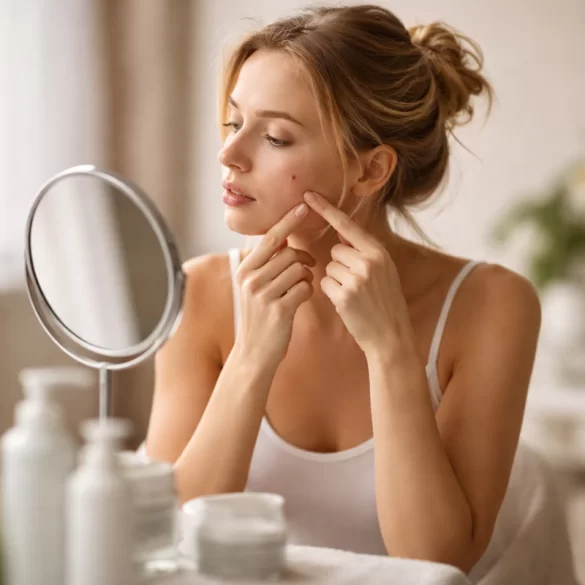

Bacterial pimples are inflammatory skin lesions that occur as a result of bacterial proliferation within hair follicles and sebaceous glands. They are most commonly part of the clinical picture of acne vulgaris, folliculitis, or purulent skin lesions. In their pathogenesis, key roles are played by excess sebum production, disorders in the keratinization of follicular openings, and bacterial colonization, mainly by Cutibacterium acnes (formerly Propionibacterium acnes) and staphylococci. These changes are inflammatory in nature and can lead to acne scars, which is why they require proper diagnosis and treatment based on current dermatological guidelines.
Bacterial Acne – Causes
The etiopathogenesis of bacterial pimples is multifactorial and involves the interaction of endogenous and environmental factors.
1. Excessive sebum production (seborrhea)
- stimulated by androgens (especially during adolescence),
- increases the viscosity of the sebaceous secretion and promotes the blockage of hair follicle openings.
2. Keratinization disorders
- excessive keratinization of the ducts of the sebaceous glands,
- formation of microcomedones which constitute an anaerobic environment for bacteria.
3. Bacterial proliferation
- Cutibacterium acnes produces lipases that break down sebum triglycerides into free fatty acids,
- activation of the immune response (IL-1β, TNF-α),
- development of local inflammation.
4. Additional factors
- stress and cortisol (impact on sebaceous glands),
- high glycemic index diet and excess dairy (impact on IGF-1),
- inappropriate skincare (comedogenic cosmetics, excessive skin drying),
- mechanical micro-injuries (friction, squeezing lesions).
In the case of individual purulent lesions, infection with Staphylococcus aureus should also be considered, especially if the lesions are painful, rapidly increasing, and tend to spread.
Bacterial pimples – what do they look like
The clinical picture depends on the depth of the inflammatory process and the type of microorganism.
Most commonly observed are:
- Inflammatory papules – raised, red lesions without visible purulent content,
- Pustules – lesions with whitish or yellow purulent content, surrounded by erythema,
- Inflammatory nodules – larger, painful infiltrations that extend deeper into the dermis,
- Purulent cysts – lesions that tend to leave scars.
Characteristic clinical features:
- Tenderness upon pressure,
- Warming of the skin around the lesion,
- Inflammatory erythema,
- Possibility of purulent discharge.
Location most commonly involves:
- Face (T-zone),
- Back and chest,
- Buttocks and thighs (in folliculitis),
- Areas subject to friction (collar, straps, underwear).
Unlike non-inflammatory lesions (comedones), bacterial pimples are associated with an active immune response, which increases the risk of post-inflammatory hyperpigmentation (PIH) and atrophic or hypertrophic scarring.
Bacterial pimples – treatment
Treatment should be tailored to the severity of the lesions and their location, and includes topical, systemic, and procedural therapy.
1. Topical Treatment
Used in mild to moderate cases:
- benzoyl peroxide (BPO) – bactericidal effect, no risk of resistance,
- topical retinoids (adapalene, tretinoin) – normalization of keratinization,
- topical antibiotics (clindamycin, erythromycin) – always in combination therapy,
- azelaic acid – anti-inflammatory and antibacterial effects.
Monotherapy with a topical antibiotic is not recommended due to the risk of antibiotic resistance.
2. Systemic Treatment
Indicated in more severe cases:
- oral antibiotics (doxycycline, limecycline) – anti-inflammatory and antibacterial effects,
- oral isotretinoin – for severe nodulocystic cases,
- hormonal therapy – in cases of androgenic disorders in women.
3. Procedural Treatment (adjuvant)
Used in the treatment of inflammatory lesions and scar prevention:
- medical peels (salicylic acid, pyruvic acid),
- high-tech cleansing using hydro-vacuum technology,
- LED light therapy with antibacterial effect,
- microneedle radiofrequency in the treatment of acne scars,
- laser treatment of inflammatory lesions and post-inflammatory hyperpigmentation.
At Ambasad Urody Clinic & Spa, the following are used:
- medical peels tailored to acne-prone skin,
- hydradermabrasion and high-tech treatments regulating sebum production,
- microneedle radiofrequency in the therapy of acne scars,
- laser treatments reducing erythema and inflammatory changes.
Supportive Measures
- avoiding squeezing of lesions,
- using non-comedogenic dermocosmetics,
- photoprotection (SPF 30–50),
- a diet with a low glycemic index.
Properly conducted therapy allows control of the inflammatory process and minimizes complications such as scars and hyperpigmentation. Early implementation of treatment is crucial, especially for patients with a predisposition to scarring.

