Blackheads
back to main page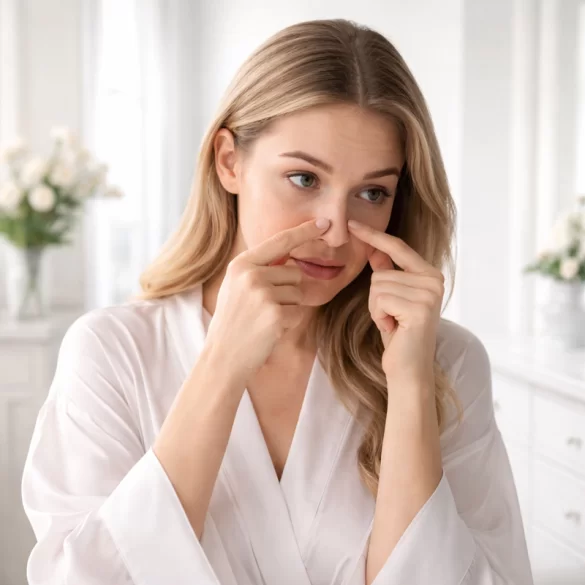

Blackheads (open comedones) are non-inflammatory acne lesions that form around the openings of hair follicles and sebaceous glands. Clinically, they appear as small, dark spots, most commonly on the nose, forehead, and chin. Their color is not due to "dirt" but rather the oxidation of melanin and lipids contained in the keratin-sebum plug. Blackheads are one of the basic elements of the comedonal acne picture, but they can also occur in individuals without full-blown acne. Their presence indicates disorders in the keratinization of hair follicle openings and overproduction of sebum. Proper management requires understanding the mechanism of their formation and avoiding actions that exacerbate inflammation.
Blackheads – what are they
A blackhead (open comedo, comedones aperti) is the result of:
- excessive sebum production by the sebaceous glands,
- hyperkeratinization – excessive cornification at the follicle opening,
- disrupted desquamation of corneocytes (cells of the stratum corneum of the epidermis),
- colonization by Cutibacterium acnes (formerly Propionibacterium acnes).
The pathophysiological process involves the formation of a keratin-sebum plug that expands the follicle opening. Contact with air causes oxidation of the lipids and melanin contained within it – hence the characteristic black color.
In contrast to:
- closed comedones (whiteheads) – blackheads have an open outlet,
- papules and pustules – they are not accompanied by active inflammation (unless secondary infection occurs).
Factors contributing to the formation of blackheads:
- genetic predisposition,
- hormonal changes (puberty, hyperandrogenism),
- comedogenic cosmetics,
- improper skincare (excessive drying of the skin),
- diet with a high glycemic index (indirect influence through IGF-1).
Blackheads are a chronic condition and tend to recur if the keratinization process is not regulated.
Blackheads – how to remove
Effective blackhead removal should include both causal treatment (regulating keratinization and sebum) and removal of existing keratin plugs.
1. Dermatological and pharmacological treatment
The highest efficacy is observed with:
- Topical retinoids (adapalene, tretinoin) – they normalize keratinization and have comedolytic effects.
- Salicylic acid (BHA) – penetrates follicular openings and dissolves sebum plugs.
- Azelaic acid – has anti-inflammatory and keratolytic effects.
- Benzoyl peroxide – reduces bacterial colonization.
In the treatment of resistant cases, oral retinoids (isotretinoin) are used – exclusively under medical supervision.
2. In-office procedures
For persistent lesions, effective procedures include:
- Medical peels (e.g., salicylic acid, pyruvic acid, retinol) – keratolytic and seboregulating action.
- Manual cleaning conducted in medical conditions – maintaining aseptic principles.
- High-tech cleaning (e.g., hydrodermabrasion, cavitation peeling in medical protocols).
- Laser therapy and IPL – in cases of coexisting inflammatory acne.
- Microneedle radiofrequency – for coexisting acne scars.
At the Beauty Embassy in Warsaw, professional medical peels, therapies regulating sebaceous gland activity, and high-tech cleaning procedures adapted to oily and combination skin are used.
It is crucial that the procedures are part of a planned therapy rather than a one-time intervention.
Blackhead squeezing
Squeezing blackheads is one of the most common skincare mistakes. Although mechanically removing the plug provides an immediate visual effect, it can lead to:
- damage to the follicle wall,
- introduction of bacteria deeper into the skin,
- development of inflammation (papules, pustules),
- post-inflammatory hyperpigmentation,
- atrophic scars.
Manipulating lesions within the so-called "danger triangle" (area of the nose and upper lip), which has rich venous vascularization, is particularly dangerous.
If extraction is necessary, it should be carried out:
- in sterile conditions,
- after appropriate skin preparation,
- by a qualified specialist.
Self-aggressive skin squeezing increases the risk of permanent aesthetic complications, which later require laser therapy or collagen stimulation.
Blackheads – Removal with Home Remedies
Home methods can support therapy, but do not replace causal treatment.
Effective and safe supportive methods:
- Regular use of salicylic acid (1–2%).
- Low concentration retinol (0.1–0.3%) – with good tolerance.
- Gentle enzymatic peels.
- Non-comedogenic cosmetics (labeled “non-comedogenic”).
Methods with limited effectiveness or risky:
- blackhead strips – remove the superficial part of the plug,
- baking soda – may damage the hydrolipid barrier,
- toothpaste – lack of scientific basis,
- excessive steaming – increases telangiectasia and sebum production.
The most common mistake: intensive skin drying. Paradoxically, this leads to a reactive increase in sebum production and worsening of the problem.
Skin prone to blackheads requires:
- regularity,
- moderate exfoliation,
- restoration of the epidermal barrier,
- sun protection (SPF 30–50).
In clinical practice, the best results come from combining home therapy with periodic medical treatments.

