Cannula
back to main page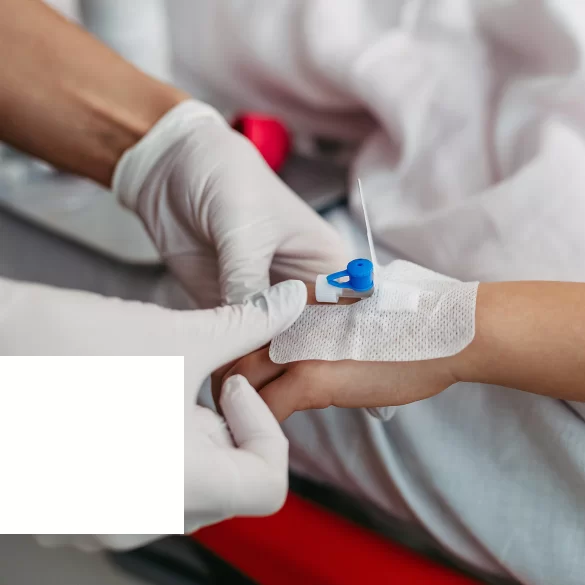

Cannula is a thin, flexible medical tube, most commonly made of surgical steel or plastic, with a blunt tip and a side opening. Unlike a traditional needle, a cannula does not have a sharp tip, which significantly reduces the risk of damaging blood vessels and nerves. For this reason, it is widely used in many fields of medicine, including anesthesiology, surgery, angiology, and aesthetic medicine. The selection of a cannula—its length, diameter, and flexibility—depends on the treatment area, the type of procedure, and the properties of the administered substance. Modern cannulas are designed to allow precise, controlled delivery of substances while enhancing patient safety.
Canula – what is it
From a technical standpoint, a cannula is an injection tool that differs from a needle in both structure and method of operation within tissues. Its key features include:
- Blunt tip, which separates tissues rather than cutting them,
- lateral exit port, enabling even distribution of the substance,
- Flexibility, allowing work in a single plane with the capability to cover a larger area without repeated punctures,
- Various lengths and diameters (gauge), adapted to the depth and type of tissue.
The introduction of a cannula into tissues is usually done through a single, initial puncture with a needle, which creates an entry point. The cannula is then moved subcutaneously or within a specified anatomical layer. This approach reduces the invasiveness of the procedure and limits the formation of hematomas and swelling.
Cannula – Application
Cannulas are used in many areas of surgical and conservative medicine. The most important applications include:
- Anesthesiology and intensive care
- Intravenous cannulas for administering medications and fluids,
- Arterial cannulas for pressure monitoring and blood sampling;
- Surgery and emergency medicine
- Cannulas for draining body cavities,
- Cannulas used in laparoscopic procedures;
- Angiology and phlebology
- Cannulas used for administering sclerosing agents or contrast;
- Aesthetic medicine and procedural dermatology
- Administration of tissue fillers,
- Application of biostimulating preparations,
- Contouring of facial and body features.
The common denominator of these applications is the need for precision, safety, and minimization of tissue trauma, which constitutes an advantage of cannulas over traditional needles in certain indications.
Canula – Aesthetic Medicine
In aesthetic medicine, the cannula has become a standard tool in many injection procedures. Its use is particularly valued in areas with a rich vascular-nerve network, such as the face. The main advantages of using a cannula in this field are:
- Reduced risk of blood vessel damage, and thus a lower likelihood of hematomas and bruises,
- Lower risk of vascular complications, including embolisms, with proper technique,
- Less painful procedure,
- Shorter recovery time,
- More even distribution of the product.
Cannulas are often used to work in layers such as the subcutaneous tissue or deep fat compartments. However, this requires a very good understanding of facial anatomy, including the course of vessels, nerves, and supporting structures. Proper cannula technique is an advanced procedure and should only be performed by appropriately trained physicians.
Treatments using cannulas
Using cannulas, a range of aesthetic and reconstructive procedures are performed aimed at improving the proportions, volume, and quality of tissues. The most frequently described in the literature include:
- facial volumetry
- restoring volume in the cheek, temple, and jawline areas,
- modeling the facial contour;
- correction of wrinkles and skin folds
- nasolabial folds,
- marionette lines;
- procedures in delicate areas
- under-eye area (the so-called tear trough),
- temporal areas;
- biostimulation and tissue revitalization
- administering preparations that stimulate collagen synthesis,
- improving skin quality without significantly altering features;
- body contouring in selected areas
- even distribution of preparations in the subcutaneous tissue.
The choice of cannula over a needle is not an automatic decision—it depends on clinical indications, the patient's anatomy, and the purpose of the procedure. In practice, combined techniques are often used, utilizing both needles and cannulas to achieve optimal results while maintaining a high safety profile.
