Cystic acne
back to main page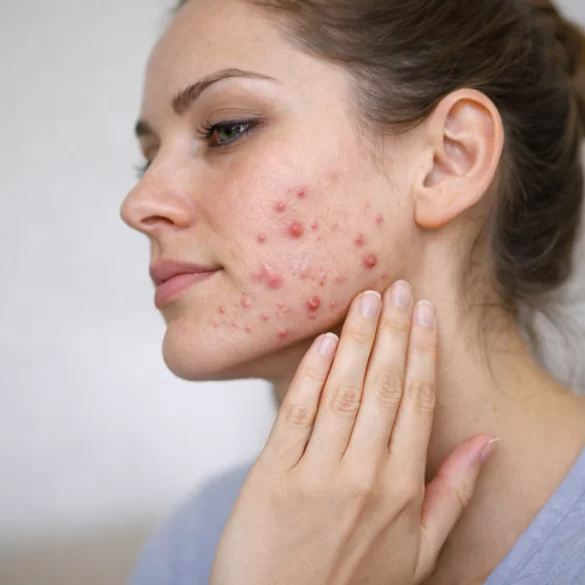
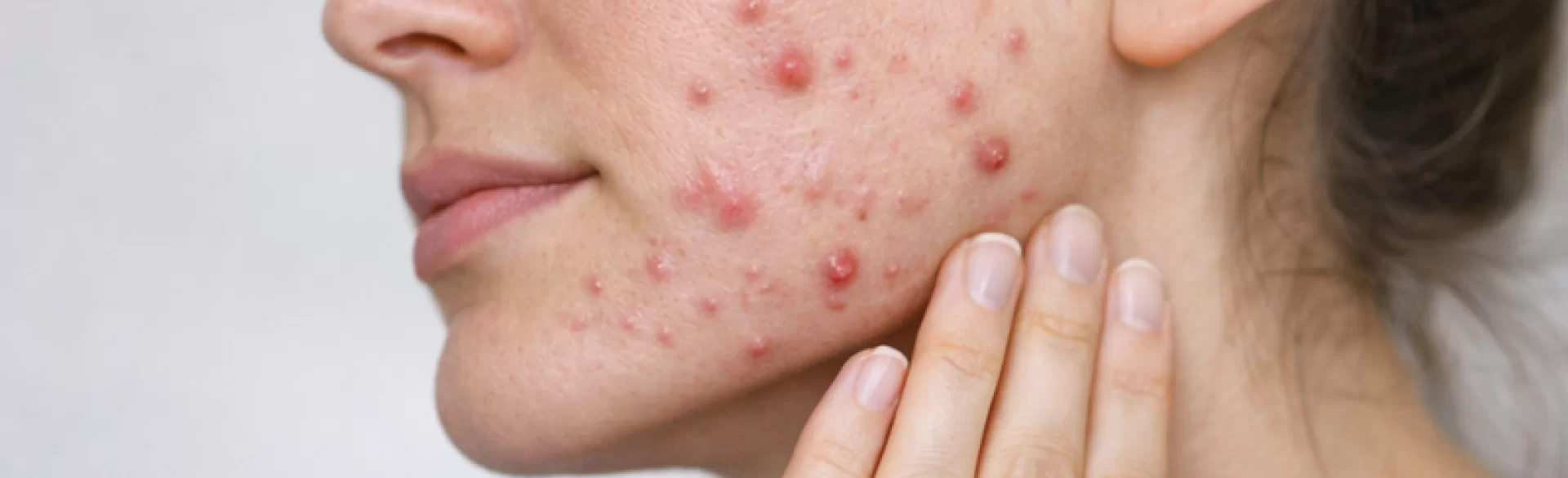
Nodular acne is a colloquial term for deep, painful inflammatory skin lesions that are located in the hair follicle-sebaceous glands and develop in the deeper layers of the dermis. They most commonly appear as hard, palpable nodules under the skin, which do not always have a visible pus-filled head. These lesions are typical of nodulocystic acne, but can also occur in the course of hormonal disorders, inflammatory skin conditions, or systemic dermatological diseases. Nodular acne is characterized by a long healing time, a high risk of scarring, and a tendency to recur. Due to the deep nature of these lesions, they require dermatological diagnostics and treatment targeted not only at the skin symptoms but also at their systemic causes.
Pimples and cystic acne – causes
The formation of cystic acne is a multifactorial process and usually results from the overlap of several pathophysiological mechanisms. A key role is played by the overactivity of sebaceous glands, leading to increased sebum production and its accumulation in hair follicle openings.
The most common causes include:
Hormonal disorders
- excess androgens (e.g., testosterone and its derivatives),
- insulin resistance and hyperinsulinemia,
- hormonal fluctuations during the menstrual cycle, pregnancy, or menopause,
- endocrine diseases (e.g., polycystic ovary syndrome).
Inflammatory and microbiological processes
- proliferation of the bacteria Cutibacterium acnes,
- activation of the immune system and secretion of pro-inflammatory cytokines,
- chronic inflammation within the dermis.
Disorders of epidermal keratinization
- excessive keratinization of the openings of hair follicles,
- formation of closed comedones, which serve as a starting point for nodular changes.
Systemic and environmental factors
- chronic stress and elevated cortisol levels,
- diet with a high glycemic index,
- deficiencies in trace elements (zinc, selenium),
- exposure to environmental pollutants.
Cystic acne often has a recurrent nature, meaning that solely topical treatment without identifying the primary cause is usually ineffective.
Cystic Acne - Treatment
The treatment of cystic acne should be multilevel and long-term as these lesions develop in the deep layers of the skin. The therapeutic approach depends on the severity of the symptoms, the patient's age, and the presence of comorbidities.
The main treatment directions include:
Dermatological treatment
- Topical therapies with anti-inflammatory effects and keratinization normalization,
- Systemic treatment aimed at reducing the activity of sebaceous glands,
- Hormonal regulation (if indicated),
- Control of chronic skin inflammation.
Supportive measures
- Individually tailored dermocosmetic care,
- Restoration of the hydrolipid barrier,
- Reduction of irritating and comedogenic factors,
- Modification of lifestyle and diet.
Procedural measures
In the treatment of cystic acne, supportive procedures are increasingly being used, which act on the deep layers of the skin, reduce inflammation, and limit the risk of developing acne scars. These procedures do not replace dermatological treatment but are a significant complement, especially in cases resistant to pharmacological treatment.
Cystic Acne – Prevention
The prevention of cystic acne primarily involves controlling risk factors and maintaining the biological balance of the skin. Due to the tendency for recurrence, preventive measures are crucial for long-term therapeutic effects.
The most important elements of prevention include:
Regular dermatological and endocrinological diagnostics
- monitoring hormone levels,
- observing metabolic disorders.
Proper skin care
- using non-comedogenic products,
- avoiding aggressive cleansing,
- protecting the epidermal barrier.
Lifestyle
- low glycemic index diet,
- stress reduction,
- adequate sleep.
Avoiding factors that exacerbate inflammation
- mechanical irritation of the skin,
- squeezing lesions,
- uncontrolled use of hormonal supplements.
Prevention does not completely eliminate the risk of developing cystic acne, but it significantly reduces their severity and frequency of recurrence.
Cystic acne treatments
The treatments used in the therapy of cystic acne aim to reduce inflammation, normalize the function of sebaceous glands, and improve skin quality. In clinical practice, procedures with proven biological effects that impact the deep structures of the skin are utilized.
The most commonly used include:
Laser therapies
- anti-inflammatory and bacteriostatic effects,
- reduction of sebaceous gland activity,
- improvement of skin structure and scar prevention.
Treatments using electromagnetic wave energy
- modulation of inflammatory processes,
- improvement of microcirculation,
- acceleration of tissue regeneration.
Injectable and regenerative therapies
- support of skin repair processes,
- regulation of inflammatory response,
- improvement of skin quality after the resolution of active lesions.
Medical-type cleansing procedures
- reduction of closed comedones,
- preparation of the skin for further treatment.
The selection of treatments should always be individualized, preceded by an assessment of the skin condition, and conducted concurrently with dermatological treatment. Inappropriately chosen procedures may exacerbate inflammation and increase the risk of complications, which is why cystic acne therapy requires strict specialist supervision.

