Dark circles under the eyes
back to main page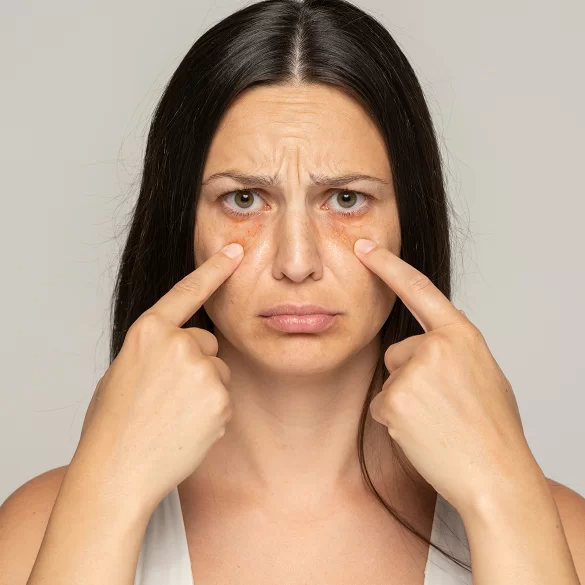

Dark circles under the eyes are one of the most common aesthetic issues on the face. They give a tired, older, or unhealthy appearance to the gaze—even in young, healthy individuals leading a hygienic lifestyle. Their presence is not always due to lack of sleep. In clinical practice, they result from complex anatomical, vascular, pigmentary, and structural processes occurring in the delicate eye area. The skin in this region is exceptionally thin, poorly vascularized, and lacking in fatty tissue, which makes any disturbances more quickly visible. Effective reduction of dark circles under the eyes requires accurate diagnosis of the cause and individually tailored therapy—there is no one-size-fits-all solution for all patients.
Dark circles under the eyes – causes
The causes of dark circles under the eyes are multifactorial and often overlap with each other. In clinical practice, several main mechanisms are distinguished:
1. Vascular disorders
- translucence of venous vessels through thin skin,
- venous and lymphatic stasis,
- tendency to swelling in the lower eyelid area.
2. Hyperpigmentation
- excessive production of melanin,
- shadows with a brownish or grayish tint,
- more common in individuals with phototype III-V and patients with a genetic predisposition.
3. Volume loss and hollowing of the tear trough
- loss of fatty tissue with age,
- deepening of the nasolacrimal groove,
- “anatomical shadow” effect, independent of skin color.
4. Skin aging
- decrease in collagen and elastin,
- thinning of the skin,
- loss of tension and poorer light reflection.
5. General factors and lifestyle
- genetic predispositions,
- allergies and chronic inflammation,
- lack of sleep, stress, smoking,
- hormonal disorders and systemic diseases.
Overlooking the actual cause and focusing solely on “brightening” the skin is a common mistake – it leads to disappointing therapeutic effects.
Dark circles under the eyes – how to eliminate
An effective reduction of dark circles under the eyes is based on precise diagnosis and causal treatment, rather than just symptomatic. In modern aesthetic medicine, a combined approach is key.
Therapeutic management may include:
- Improvement of microcirculation and lymphatic drainage,
- Thickening and regeneration of the skin,
- Evening out the skin tone,
- Restoration of lost volume,
- Collagen stimulation.
It's important to state clearly: creams and skincare cosmetics can improve hydration and comfort of the skin, but they cannot permanently remove dark circles under the eyes if the cause is tissue atrophy, transparency of vessels, or structural changes.
The best results are achieved through:
- Biostimulating therapies,
- Treatments using energy (radiofrequency, laser),
- Injectable procedures with regenerative or volumetric action,
- Treatments that improve the quality of the skin and its ability to reflect light.
The choice of method should always be preceded by an assessment of skin thickness, the color of the circles, the presence of swelling, and the degree of volume loss.
Under-eye shadows – treatment effects
Properly selected and performed treatments bring gradual but noticeable aesthetic effects. Depending on the technology used and the initial condition of the skin, patients can expect:
- Brightening of the under-eye area,
- Reduction in the visibility of blood vessels,
- Reduction of dark circles and dull skin tone,
- Improvement in skin firmness and elasticity,
- Softening of the tear trough,
- Rejuvenation and "opening" of the gaze,
- Improvement in skin quality without an artificial effect.
Effects are not always immediate – in many therapies, they develop over time with skin remodeling and collagen stimulation. This is a biological process, not an optical trick. A well-planned therapy provides a natural, fresh look without the risk of overemphasizing the eye area.
Treatments for under-eye circles
Treatment of dark circles under the eyes in aesthetic medicine is based on procedures individually tailored to the mechanism of change formation. Proper patient qualification and assessment of skin structure, vascularization, and degree of volume loss are of key importance.
Most commonly used procedures:
- Needle and microneedle mesotherapy around the eye – improves microcirculation, moisturizes, and regenerates the skin.
- Tissue biostimulators – thicken the skin, stimulate collagen, and improve structure.
- INDIBA® medical radiofrequency – enhances tension, drainage, and cellular metabolism in the delicate eye area.
- Fractional and non-ablative laser therapy – evens out skin tone and improves skin quality.
- Volumetric procedures in the tear trough area (after strict medical qualification) – rebuilds lost volume and reduces anatomical shadowing.
- Combined therapies – combining several methods to maximize effects and safety.
The effectiveness of the treatment depends on accurately diagnosing the cause of the dark circles, which is why each therapy should be preceded by a medical consultation and qualification. The eye area requires experience, precision, and knowledge of anatomy. Attempts to use a single therapeutic scheme for all patients lead to limited or short-term results, as dark circles under the eyes are a problem with a complex etiology.

