Deep under-the-skin pimples
back to main page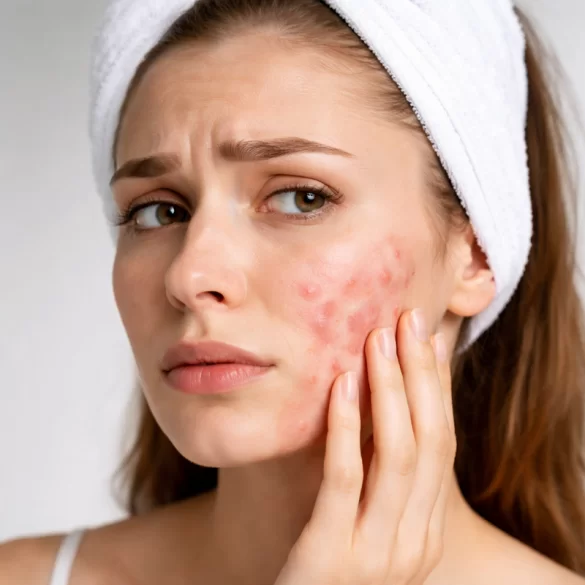
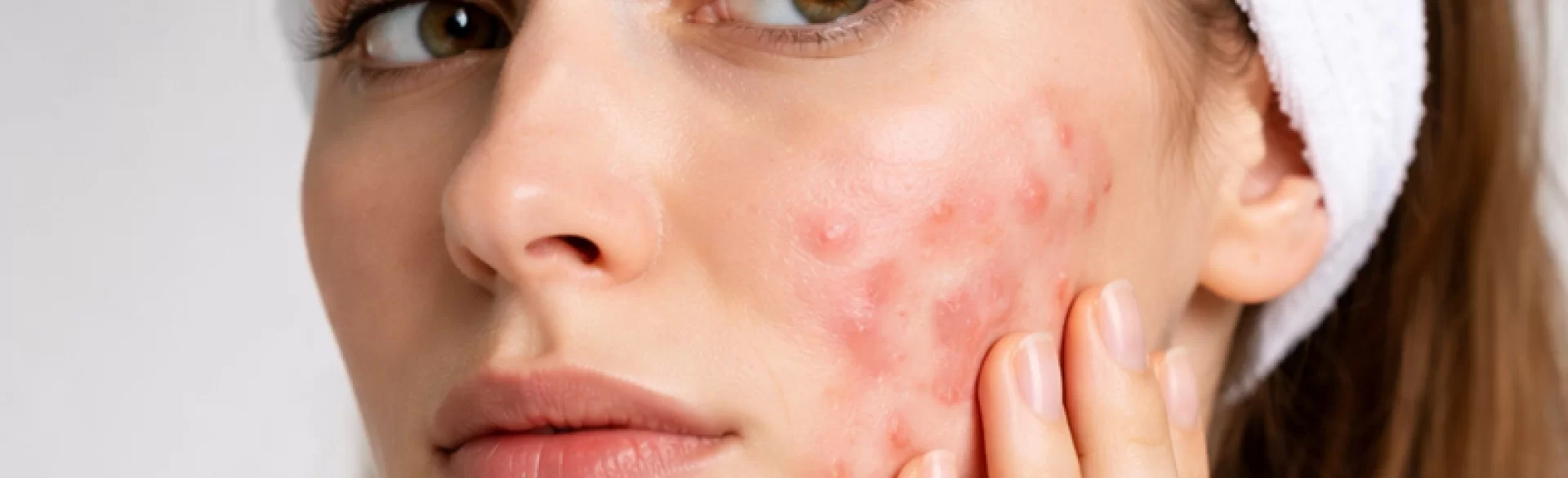
Cysts deep under the skin represent one of the most problematic and clinically significant forms of acne lesions. They are located in the deep layers of the dermis, often lacking a visible outlet on the skin surface, and their presence is manifested by a painful, hard infiltration. These lesions can persist for weeks, tend to recur, and may lead to complications such as post-inflammatory hyperpigmentation or atrophic scars. Unlike superficial comedones, subcutaneous cysts are indicative of complex inflammatory, hormonal, and immunological processes. They require careful diagnostic procedures and treatment aimed not only at the symptoms but also at the underlying causes of skin dysfunction.
Subcutaneous pimples – characteristics
Subcutaneous pimples, referred to in dermatology as nodular lesions or inflammatory infiltrates, form within the pilosebaceous unit, but the inflammatory process develops deeply in the dermis. For this reason, these lesions are palpable, often painful, tense, and sometimes radiate pain to the surrounding tissues.
Characteristics of pimples deep under the skin:
- absence of a visible "whitehead" or purulent opening,
- hard or semi-hard consistency,
- pain upon touch or facial expressions,
- slow resolution (often several weeks),
- tendency to recur in the same locations,
- high risk of post-inflammatory hyperpigmentation and scarring.
They are most commonly located:
- in the lower part of the face (jawline, chin),
- on the cheeks,
- on the back and chest,
- in the neck area.
From the pathophysiological perspective, these are lesions with high inflammatory activity, involving:
- overproduction of sebum,
- blocking of the sebaceous gland outlet,
- proliferation of anaerobic bacteria,
- an immune reaction leading to inflammatory infiltration.
Improper handling (squeezing, puncturing) almost always worsens the skin condition and increases the risk of permanent aesthetic consequences.
Under-the-skin pimples – causes of formation
The formation of deep pimples under the skin is a multifactorial process. Contrary to popular belief, it is not solely a problem of "dirty skin," but rather the result of biological and environmental disturbances.
The most common causes include:
Hormonal disturbances
- Sensitivity of sebaceous glands to androgens,
- Hormonal fluctuations related to the menstrual cycle,
- Perimenopausal periods,
- Endocrine disorders (e.g., hypothalamic-pituitary-ovarian axis disorders).
Excessive sebum production
- Sebum with altered composition promotes pore clogging,
- Disrupted sebum flow leads to the creation of an anaerobic environment.
Inflammation and immune responses
- Hyperactivity of the skin's immune system,
- Chronic, low-grade inflammation persisting in the tissues.
Environmental factors and lifestyle
- Chronic stress (impact of cortisol on sebaceous glands),
Diet with a high glycemic index,
Deficiencies in micronutrients essential for the skin,
Lack of restorative sleep.
Improper skin care
- Use of comedogenic cosmetics,
- Aggressive cleansing that disrupts the hydrolipid barrier,
- Frequent mechanical irritation of the skin.
It is worth highlighting that subcutaneous pimples are often a symptom of a systemic problem rather than merely a local skin defect. Superficial treatment typically yields short-term or apparent results.
Subcutaneous Pimples – How to Remove
Effective removal of deep-seated pimples under the skin requires a multi-step approach based on dermatological knowledge and skin physiology. It is crucial to understand that the goal is not to "squeeze out the lesion" but to mitigate inflammation and normalize the functioning of sebaceous glands.
- absolutely avoid pressing and puncturing lesions,
- gentle but regular skin cleansing,
- restoration of the hydrolipid barrier,
- protection from irritating factors.
In the treatment of subcutaneous lesions, it is crucial to:
- reduce inflammation in the deep layers of the skin,
- regulate the keratinization of hair follicle openings,
- decrease sebaceous gland activity.
In cases of recurring or painful subcutaneous lesions, procedures are applied that:
- work deeply within the dermis,
- improve microcirculation and cellular metabolism,
- accelerate regenerative processes,
- reduce the risk of scarring.
The most commonly used include:
- therapies based on controlled energy action,
- procedures regulating sebaceous gland activity,
- treatments supporting skin remodeling after inflammation.
In treating deep-seated pimples under the skin, internal factors cannot be overlooked:
- hormonal diagnostics in the case of cyclical changes,
- analysis of diet and lifestyle,
- reduction of chronic stress,
- support of the body’s regenerative processes.
- do not use irritating spot treatments on deep lesions,
- do not treat subcutaneous pimples like classic blackheads,
- do not ignore recurrences in the same locations.
Deep-seated pimples under the skin are not a cosmetic problem but a clinical symptom of skin functioning disorders. Effective treatment requires patience, consistency, and a causal approach. Attempts to "quickly get rid of" the lesion almost always result in worsening of the skin condition and long-term aesthetic consequences.

