Drooping eyelids
back to main page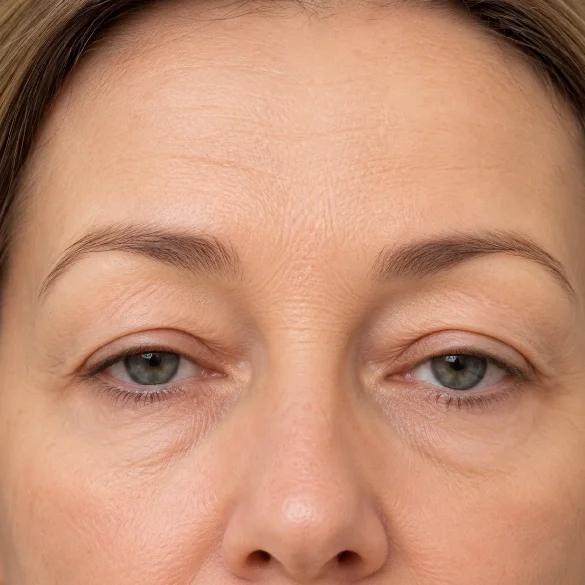
Drooping eyelids are a problem that affects both the appearance of the face and the comfort of daily functioning. In some people, they only cause the impression of a tired look and accelerate the facial aging process; in others, they limit the field of vision, making it difficult to read, drive, or perform precise activities. With age, the problem becomes increasingly visible, but it can also occur in young people with anatomical predispositions or neurological diseases.
In practice, the term “drooping eyelids” covers several different disorders that require different management. Not all excess skin means drooping of the levator palpebrae muscle, just as not every “heavy eyelid” requires surgical treatment. Therefore, the basis of effective therapy is correct diagnosis and identification of the real cause of the problem.
In aesthetic medicine and plastic surgery, many methods are available to improve the eye area – from treatments that stimulate collagen production and tighten the skin, through technologies using ultrasound or plasma energy, to surgical blepharoplasty. The choice of the appropriate therapy depends on the type of eyelid drooping, the patient's age, skin quality, and the severity of the changes.
Drooping eyelids - types
Although colloquially referred to as “drooping eyelids”, the problem may have a completely different anatomical basis. Identifying the specific type allows selecting a treatment that will be effective and yield a natural result.
Most commonly, several forms of drooping eyelids are distinguished.
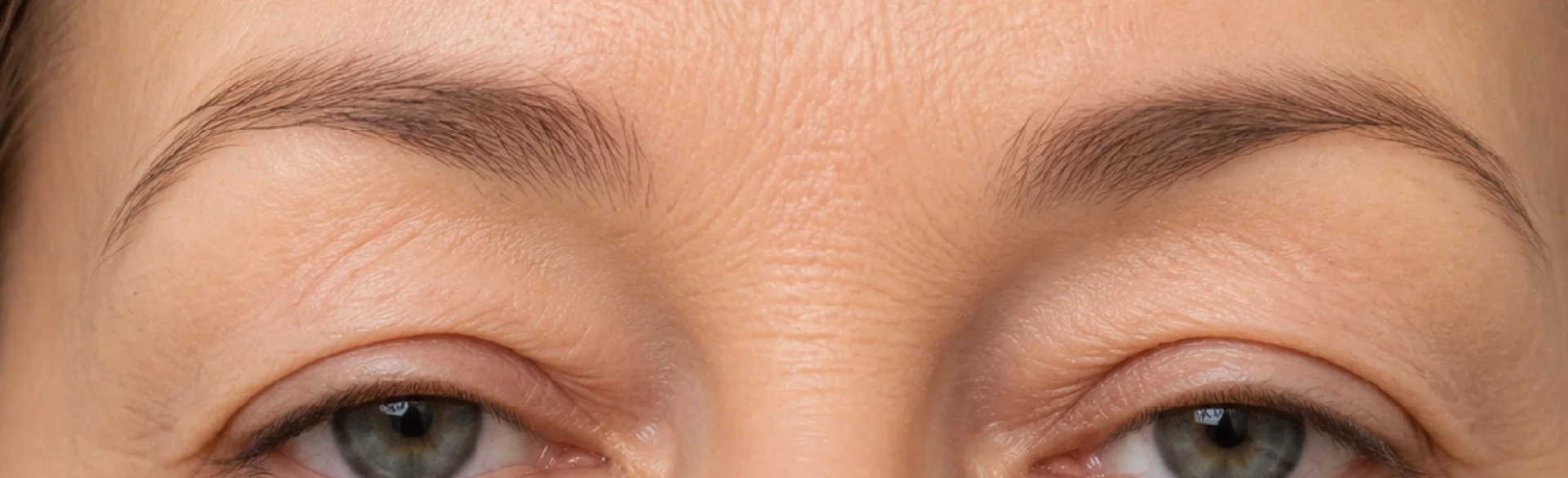
Dermatochalasis (excess eyelid skin)
This is the most common cause of the so-called heavy eyelids.
It is characterized by:
- excess loose skin of the upper eyelid,
- loss of elasticity of collagen and elastin fibers,
- gradual covering of the natural eyelid crease,
- the worsening of the problem with age.
In advanced cases, excess skin may limit the upper field of vision.
Ptosis (drooping eyelid)
Ptosis means the actual lowering of the eyelid margin due to weakness or damage of the levator palpebrae muscle.
It can be:
- congenital,
- age-related,
- post-traumatic,
- neurological,
- muscular.
In this case, aesthetic treatment usually does not solve the problem, because the cause lies deeper than the skin itself.
Eyebrow drooping
Often, the problem is not the eyelid itself, but the lowering of the eyebrow position.
It causes:
- an increase in the amount of skin above the eyelid,
- a feeling of heaviness in the eye,
- deepening of forehead wrinkles,
- the impression of a sad look.
In such cases, eyebrow-lifting procedures may be more effective than classic blepharoplasty.
Pseudoptosis
This is apparent eyelid drooping resulting from other anatomical changes, e.g.:
- loss of tissue volume,
- facial asymmetry,
- drooping of cheek tissues,
- abnormal positioning of the eyeball.
Accurate diagnosis allows avoiding inappropriate treatment.
Drooping eyelids - causes
Drooping eyelids are usually the result of the overlapping of multiple processes occurring within the skin, muscles, ligaments, and fatty tissue. The more factors act simultaneously, the faster the problem becomes visible.
The most common causes include:
- natural skin aging – a decrease in the production of collagen, elastin, and hyaluronic acid leads to a loss of firmness and sagging of the skin;
- weakening of the levator palpebrae muscle – characteristic of age-related ptosis;
- genetic predisposition – in many people, heavy eyelids occur even at a young age;
- drooping eyebrows – causes an increase in the amount of skin above the eyes;
- loss of facial tissue volume – alters the support for the eyelids;
- frequent exposure to UV radiation – accelerates skin photoaging;
- cigarette smoking – intensifies collagen degradation;
- neurological diseases – e.g., myasthenia gravis, oculomotor nerve palsy, or Horner's syndrome;
- injuries to the orbital area;
- complications after eye surgery;
- chronic eye rubbing and allergies causing weakening of the delicate eyelid structures.
The rate at which the problem deepens is also affected by chronic oxidative stress, improper care, and weight loss leading to a reduction in the volume of facial tissues.
Drooping eyelids - upper eyelid drooping vs. lower eye bags - difference
Patients often equate all changes around the eyes with one problem. Meanwhile, a drooping upper eyelid and bags under the eyes develop as a result of completely different processes and require different treatment.
Drooping upper eyelid
Most commonly results from:
- excess skin,
- weakness of the levator muscle,
- drooping eyebrows,
- loss of tissue tone.
Symptoms include:
- feeling of heavy eyelids,
- reduced visibility of the mobile part of the eyelid,
- difficulty applying makeup,
- tired appearance of the face,
- limitation of the field of vision in advanced cases.
Bags under the eyes
They arise primarily as a result of:
- bulging of the orbital fat pads,
- laxity of the orbital septum,
- lymphatic edema,
- loss of cheek volume.
They manifest as:
- bulging under the lower eyelid,
- shadows and hollows,
- swelling worsening in the morning,
- tired appearance of the eye area.
Although both problems can coexist, their treatment often requires the use of different therapeutic methods.
Drooping eyelids - when is it a medical problem, and when an aesthetic one
Not every drooping of the eyelids is solely a cosmetic defect. In some situations, it may be a symptom of a disease requiring urgent ophthalmic or neurological diagnostics.
Aesthetic problem
It most commonly affects people with:
- age-related excess skin,
- skin laxity,
- slight drooping of the eyebrows,
- deterioration of the appearance of the eye area.
In such cases, the goal of treatment is to rejuvenate the look and improve facial proportions.
Medical problem
Specialist consultation is necessary when the following occur:
- sudden drooping of one eyelid,
- double vision,
- restricted mobility of the eyeball,
- significant deterioration of the field of vision,
- asymmetry developing in a short time,
- neurological symptoms,
- chronic headaches or visual disturbances.
Such symptoms may indicate neurological diseases, nerve damage, muscle disorders, or other conditions requiring causal treatment.
In some patients, excess skin of the upper eyelid limits the field of vision so significantly that blepharoplasty can be performed not only for aesthetic, but also for functional reasons.
Drooping eyelids - blepharoplasty and non-surgical treatments
Modern aesthetic medicine offers a wide range of methods for improving the appearance of the eye area. The selection of therapy should take into account the degree of skin laxity, the presence of ptosis, tissue quality, and the patient's expectations.
Blepharoplasty
Upper eyelid blepharoplasty remains the gold standard for the treatment of significant excess skin.
The procedure consists of:
- removal of excess skin,
- possible removal or repositioning of excess fat tissue,
- restoration of the correct eyelid contour,
- improvement of the field of vision in people with a large excess of skin.
The effects last for many years, although the skin aging process continues to progress.
Non-surgical procedures
With mild and moderate severity of the problem, very good results can be brought by modern procedures stimulating skin remodeling.
The most commonly used are:
- HIFU technologies, which stimulate collagen remodeling in the deep layers of tissues,
- microneedle radiofrequency increasing skin tension,
- fractional laser treatments improving skin quality and density,
- medical plasma enabling non-surgical skin contraction in selected patients,
- tissue biostimulators supporting collagen reconstruction,
- mesotherapy improving hydration and quality of the thin skin of the eyelids.
However, it should be emphasized that non-surgical treatments do not remove significant excess skin nor do they correct true ptosis of the levator muscle of the eyelid. Their greatest advantage is improving skin quality, increasing its tension, and slowing down the aging process, thanks to which the need for surgical treatment can be postponed for years in many patients.
The best results are achieved after individual qualification and matching the therapy to the actual cause of the problem. In reputable aesthetic medicine centers, the treatment plan often combines several complementary methods, which allows for natural rejuvenation of the eye area, maintaining proper eyelid function, and avoiding the effect of excessive intervention.

