Excess skin
back to main page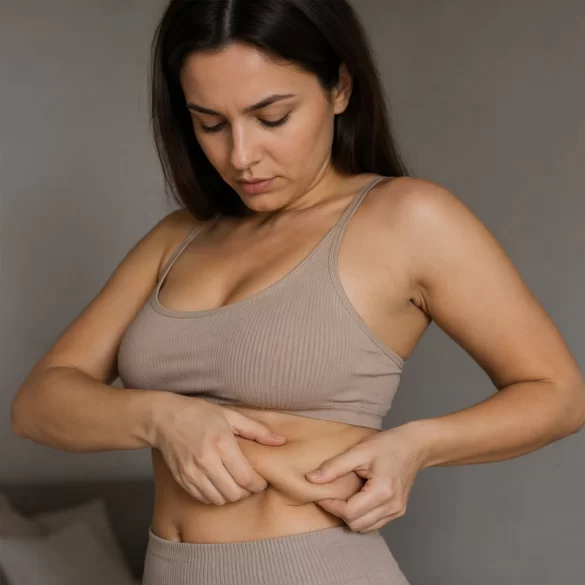

Excess skin is a condition characterized by a loss of tension, elasticity, and the ability of tissues to retract (contract), leading to the formation of lax skin folds. This phenomenon results primarily from disturbances in the structure of the dermis, including the degradation of collagen and elastin fibers as well as changes in the extracellular matrix. Excess skin can be physiological, associated with the aging process, or secondary – most often following rapid weight loss or pregnancy. The degree of severity depends on genetic predispositions, age, and the regenerative capacity of the body.
Excess skin – causes
The etiology of excess skin is complex and involves both biological mechanisms and environmental factors. A key role is played by the gradual weakening of fibroblast function - the cells responsible for the production of collagen and elastin, which provide the skin with elasticity and mechanical strength.
The main causes include:
- skin aging process (chronoaging) - a decrease in the synthesis of type I and III collagen and fragmentation of elastin fibers,
- photoaging - UV radiation activates matrix metalloproteinases (MMPs), leading to collagen degradation,
- rapid weight loss - long-term skin stretching exceeds its regenerative capacity,
- pregnancy and hormonal changes - the influence of estrogens and relaxin on the loosening of the skin's supportive structures,
- genetic predisposition - determining the quality and quantity of collagen fibers,
- oxidative stress and chronic inflammation - damage to skin cells and acceleration of degenerative processes.
At the molecular level, the imbalance between collagen synthesis and degradation is significant, with a predominance of catabolic processes. As a result, there is a weakening of the skin's structure and a loss of its ability to maintain tension.
Excess skin – where it most commonly appears
The distribution of excess skin is not accidental and results from the biomechanical properties of individual body areas and their susceptibility to stretching and the effects of gravitational forces.
The most common locations include:
- abdominal area - especially after pregnancy or significant weight loss; often coexists with diastasis recti,
- arms ("bat wings") - sagging skin in the back of the arms, associated with loss of tension and fat reduction,
- thighs and buttocks - reduction in skin firmness and change in body contour,
- knee area - thin skin with a limited amount of supporting tissue,
- face and neck - sagging of the facial oval (so-called tissue ptosis), formation of "jowls," and laxity of the neck skin,
- eyelids (dermatochalasis) - excess skin of the upper eyelids limiting the field of vision in advanced cases.
Within the face, this process is further intensified by the atrophy of adipose tissue and remodeling of bone structures, which leads to a change in proportions and loss of support for soft tissues.
Excess skin removal
Selecting the treatment method for excess skin requires considering the severity of the problem, skin quality, and patient expectations. In clinical practice, a graded approach is used - from stimulating methods to surgical interventions.
1. Non-invasive and minimally invasive methods (for mild and moderate excess skin):
- radiofrequency (RF) - controlled heating of the skin (40-45°C) leads to the contraction of collagen fibers and stimulation of fibroblasts,
- HIFU - focused ultrasound acting at the level of the superficial musculoaponeurotic system (SMAS), producing a lifting effect,
- fractional laser therapy - induction of micro-damage and skin remodeling through the healing process,
- needle and microneedle mesotherapy - micro-punctures initiating regeneration and delivery of active substances,
- carboxytherapy - increasing blood flow and improving tissue metabolism,
- tissue stimulators - preparations biostimulating collagen synthesis (e.g., based on polynucleotides, calcium hydroxyapatite).
The mechanisms of action of these methods include:
- neocollagenesis (formation of new collagen fibers),
- remodeling of the extracellular matrix,
- improvement of microcirculation and tissue oxygenation.
The effects are gradual and require a series of treatments.
2. Surgical methods (for advanced excess skin):
- abdominoplasty - removal of excess skin and improvement of abdominal wall tension,
- brachioplasty - correction of arm sagging,
- thigh lift,
- blepharoplasty - removal of excess eyelid skin,
- face and neck lift - tissue repositioning and removal of excess skin.
Surgical procedures allow for an immediate and clear effect, but require appropriate qualification and a recovery period.
Excess skin – treatment prices
The costs of excess skin therapy vary and depend on the technology, the treatment area, and the number of required procedures. In clinical practice, an individual treatment plan, often including combined therapy, is of significant importance.
Estimated price ranges:
Face and neck treatments:
- RF, HIFU, laser therapy: several thousand PLN per treatment,
- tissue stimulators: 1,000-2,900 PLN,
- mesotherapy: 500-1,500 PLN.
Body treatments:
- RF and firming technologies: 500-3,000 PLN per area,
- combined therapies (series of treatments): several thousand PLN.
Surgery:
- blepharoplasty: from approx. 4,000 PLN,
- abdominoplasty: 15,000-30,000 PLN,
- body lift: even above 40,000 PLN.
The final cost is influenced by:
- number of sessions (often 3-6 in non-invasive therapies),
- extent of the area,
- skin quality and the degree of its damage,
- the physician's experience and the clinic's standard.
High effectiveness is achieved through individual combinations of methods, which allow for action at both the structural and functional levels of the skin.

