Facial fat pads
back to main page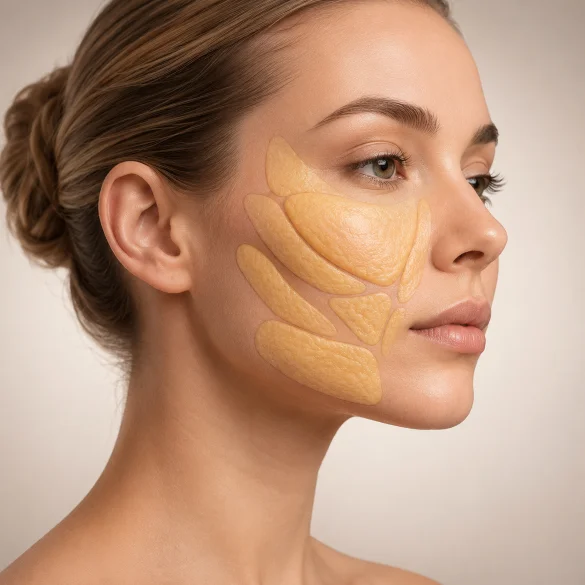
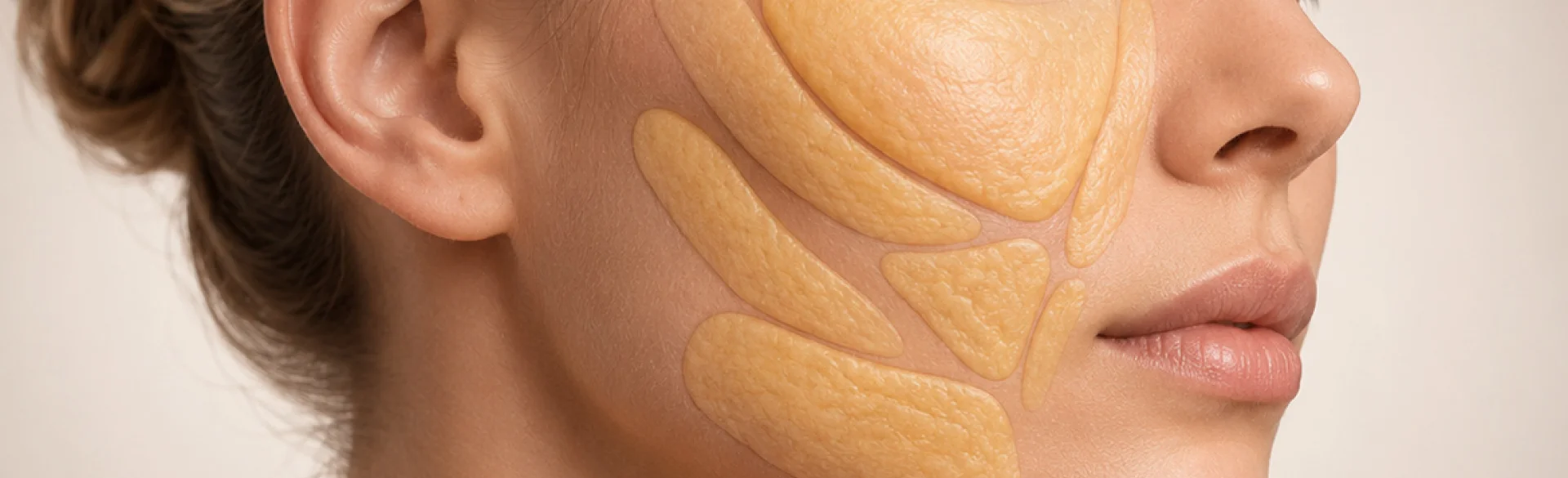
Facial fat pads are anatomically distinct adipose tissue structures located in different layers of the face, responsible for its volume, proportions, and youthful appearance. They do not constitute a random accumulation of fat, but precisely distributed fat compartments separated by ligaments and connective tissue septa. In aesthetic medicine and plastic surgery, their significance is considered crucial for facial aging processes. Changes in volume, shifting, and atrophy of the fat pads affect the appearance of folds, the loss of the facial oval, and the hollowing of the cheeks. Modern aesthetic anatomy treats facial adipose tissue as a dynamic element responsible not only for appearance, but also for the biomechanics and support of soft tissues.
Facial fat pads - what they are
Facial fat pads, also referred to as facial fat compartments, are specialized clusters of adipocytes, or fat cells, distributed in specific anatomical areas. They form a system of deep and superficial fat compartments responsible for shaping facial contours.
Unlike body fat, facial fat is characterized by:
- a more complex architecture,
- a close connection with the mimic muscles,
- great supportive importance,
- a significant impact on facial expressions and proportions.
Anatomically, the following are distinguished:
- superficial fat pads – located closer to the skin,
- deep fat pads – located closer to bony structures.
The most important include:
- buccal fat pad,
- deep medial cheek fat,
- malar fat pads,
- temporal fat,
- fat pads of the mandibular region,
- orbital fat pads.
Each of these compartments ages at a different rate and responds differently to metabolic and hormonal processes, as well as weight loss. Therefore, the face does not age evenly, but segmentally.
Facial fat pads - where are they located
Facial fat tissue is distributed in multiple layers and covers practically the entire face. Individual fat pads are responsible for the volume of specific anatomical areas.
The most important locations include:
Location | Aesthetic function |
|---|---|
Cheeks | providing youthful fullness |
Zygomatic area | emphasizing the cheekbones |
Temples | maintaining a smooth contour of the lateral part of the face |
Infraorbital area | supporting the lower eyelid |
Jawline | preserving a defined oval |
Nasolabial area | cushioning mimetic movements |
Of particular importance is the so-called Bichat's fat pad (buccal fat pad), located deep in the middle part of the cheek. It is responsible for the volume of the lower face and influences the proportions between the cheeks and the jaw.
Fat pads remain connected with:
- retaining ligaments,
- mimic muscles,
- skin,
- facial fascial system.
With age, these connections weaken, leading to tissue sagging and changes in facial contours.
Facial fat pads - role in facial aesthetics
Fat pads are one of the most important elements responsible for a youthful facial appearance. Their appropriate volume ensures:
- harmonious proportions,
- soft transitions of light and shadow,
- a smooth facial contour,
- tissue firmness,
- natural skin support.
A young face is characterized by an even distribution of volume, especially in the midface. The dominant features then are:
- full cheeks,
- clear projection of the zygomatic bones,
- no hollows under the eyes,
- a smooth jawline.
A reduction in the volume of the fat pads leads to:
- deepening of the nasolabial folds,
- formation of the tear trough,
- loss of cheek volume,
- temple hollowing,
- the appearance of so-called jowls.
Modern aesthetic medicine is moving away from excessive removal of facial fat, as overly aggressive volume reduction often accelerates the aging effect. This applies particularly to:
- excessive facial liposuction,
- removal of Bichat's fat pads without indications,
- intense weight loss,
- uncontrolled use of weight-reducing medications.
Aesthetic treatments currently utilize procedures aimed at:
- restoring lost volume,
- improving skin quality,
- stimulating fibroblasts,
- improving the tension of supporting ligaments.
Clinical practice utilizes, among others:
- tissue biostimulators,
- hyaluronic acid,
- autologous fat transfer,
- radiofrequency microneedling,
- HIFU ultrasound,
- lifting and collagen-stimulating technologies.
Facial fat pads - what causes their loss
Atrophy of facial fat pads is a multifactorial process associated with both biological aging and environmental and metabolic factors.
The most important causes include:
Chronological aging
With age, the following occur:
- a decrease in the number of adipocytes,
- atrophy of deep fat tissue,
- weakening of facial ligaments,
- loss of collagen and elastin.
This process leads to the downward displacement of volume.
Rapid weight loss
Rapid weight loss can cause a significant reduction in facial volume. This has become particularly visible after the popularization of GLP-1 agonists used in the treatment of obesity. The phenomenon referred to as “Ozempic face” is precisely associated with the rapid atrophy of fat pads.
Hormonal factors
A decline in estrogen:
- reduces the ability of tissues to regenerate,
- affects fat metabolism,
- accelerates the loss of facial volume.
Genetic predisposition
Some individuals naturally have:
- thinner facial fat tissue,
- more prominent bone structures,
- a greater tendency for volume loss.
Lifestyle
A negative impact is shown by:
- tobacco smoking,
- chronic stress,
- lack of sleep,
- intense UV exposure,
- chronic inflammation.
Facial fat pads and aging - connection
Modern concepts of facial aging indicate that this process does not result solely from skin sagging. A key role is also played by the remodeling of deep facial structures, including precisely the fat pads.
Aging simultaneously involves:
- volume loss,
- tissue displacement,
- weakening of ligaments,
- resorption of craniofacial bones,
- decline in skin quality.
As a result, the face gradually changes shape:
- from the inverted triangle characteristic of youth,
- to a heavier oval with a predominance of the lower face.
The most characteristic symptoms are:
- sunken cheeks,
- tear trough,
- sagging tissues of the midface,
- loss of the jawline,
- deepened folds.
This process can begin as early as after the age of 30, especially in people who are:
- slim,
- intensively practicing endurance sports,
- after significant weight loss,
- with genetically thin subcutaneous tissue.
The modern approach to facial rejuvenation is based on rebuilding lost supporting structures, rather than solely on skin tightening. Therefore, modern aesthetic medicine focuses on:
- volume reconstruction,
- improving tissue quality,
- skin regeneration,
- restoring natural facial proportions.

