Facial psoriasis
back to main page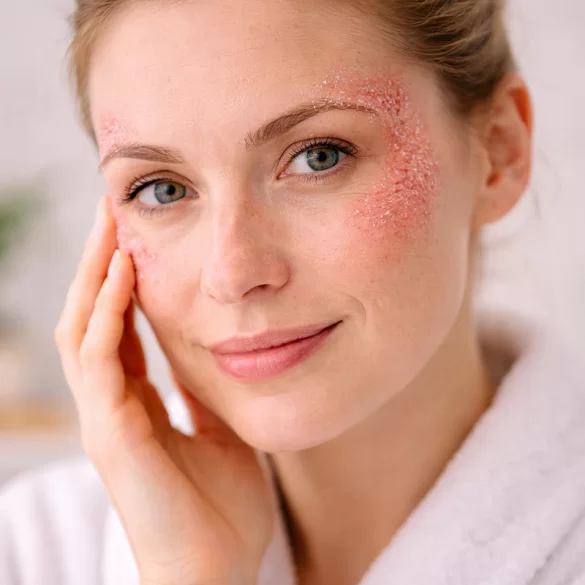
Facial psoriasis is a chronic inflammatory skin disease with an immunological basis, belonging to the spectrum of plaque psoriasis. Lesions located on the face hold particular clinical and psychosocial significance due to their visibility and the thin, highly vascularized, and sensitive structure of the skin in this area. The pathomechanism of the disease involves excessive proliferation of keratinocytes, shortening of their maturation cycle, and chronic activation of the inflammatory axis involving T lymphocytes and pro-inflammatory cytokines. Facial psoriasis can occur as an isolated form or coexist with other locations of psoriatic lesions, and its course can vary from mild to chronically relapsing.
Facial psoriasis – what it looks like
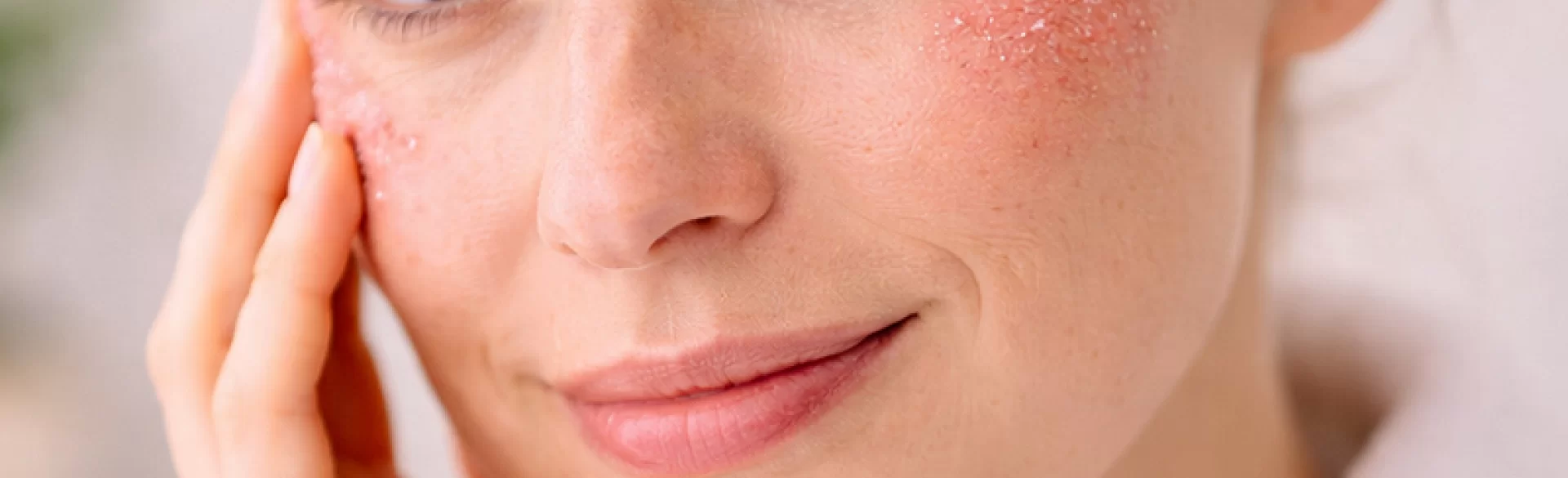
The clinical picture of facial psoriasis can differ from the classic lesions observed on the scalp or limbs. Due to the specificity of this area, the scales tend to be thinner and the erythema more pronounced.
Most commonly observed are:
- well-defined erythematous patches with an irregular shape,
- fine scaling with a whitish or silvery color,
- feeling of tightness, burning, or itching, which intensifies under the influence of irritating factors,
- the location of lesions in areas such as:
- nasolabial folds,
- eyebrows and interbrow region,
- hairline,
- eyelids (with diagnostic caution).
Unlike seborrheic dermatitis, psoriatic lesions are more distinctly defined and have a more chronic, recurrent nature.
Facial Psoriasis - The Beginnings
The initial stage of facial psoriasis can be challenging to definitively diagnose because the symptoms may resemble other inflammatory dermatoses. Early changes are often overlooked or inadequately treated, which can lead to their persistence.
Typical early symptoms include:
- Subtle erythema in the central part of the face,
- Intermittent scaling, worsened by washing or exposure to environmental factors,
- Skin hypersensitivity to cosmetics, detergents, and temperature changes,
- Temporary flare-ups associated with stress, infections, or hormonal disturbances.
In some patients, facial lesions constitute the first manifestation of the disease, while in others, they appear during the course of already diagnosed psoriasis in another location.
Facial psoriasis – how to treat
Treatment of facial psoriasis requires an individualized approach and particular caution due to the risk of side effects and damage to the skin barrier. The therapeutic approach aims to alleviate inflammation, normalize keratinization, and restore the skin's protective functions.
The basic elements of treatment include:
- appropriately selected dermatological care, focused on:
- rebuilding the hydrolipid barrier,
- limiting transepidermal water loss,
- reducing skin reactivity,
- topical treatment with anti-inflammatory and epidermal proliferation-regulating effects (always under medical supervision),
- avoiding exacerbating factors, such as:
- aggressive cosmetics,
- excessive exposure to UV radiation,
- chronic stress,
- in selected cases, systemic treatment when facial lesions are part of a more severe form of the disease.
It should be emphasized that the facial skin does not tolerate the prolonged and uncontrolled use of strong topical preparations, so therapy should be conducted in stages and monitored.
Treatments for psoriasis on the face
Supportive treatments applied to the facial area can be a significant complement to dermatological treatment, provided the patient is properly qualified and the disease is in a stable phase.
Procedures used as adjuncts include:
- Therapies based on controlled radiofrequency energy, supporting skin regeneration and microcirculation improvement,
- Biostimulating treatments, aiming to:
- Modulate inflammatory processes,
- Improve skin quality,
- Increase resistance to external factors,
- Regenerative procedures with cellular action, aiding tissue reconstruction and epidermal barrier function,
- Medical-grade care treatments, focused on alleviating erythema and skin dryness.
These treatments do not replace causal therapy but can extend remission periods, improve patient comfort, and enhance skin quality, provided they are performed in accordance with current medical knowledge and after excluding contraindications.

