Facial pores
back to main page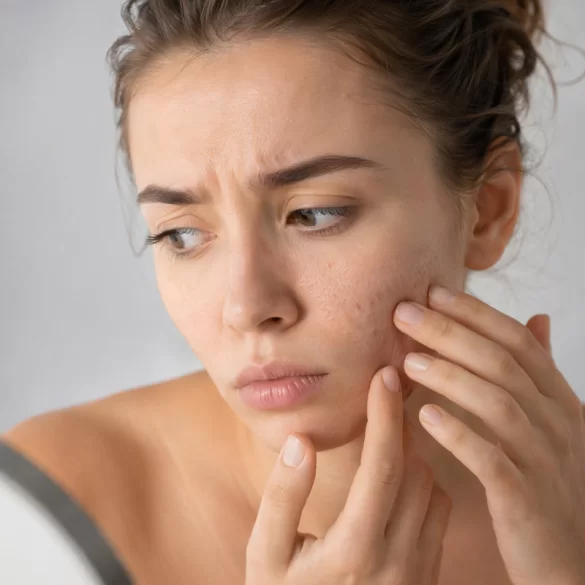
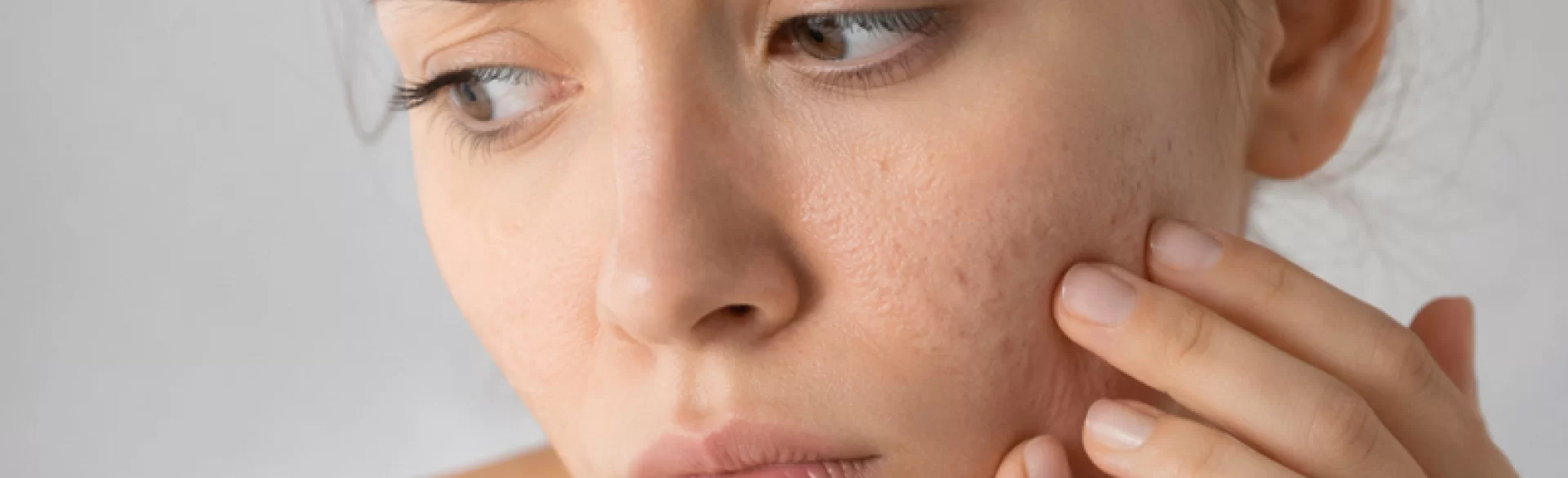
Facial pores are natural openings of hair follicles and sebaceous glands that play a key role in skin physiology. They are part of the pilosebaceous unit, responsible for the production and secretion of sebum – a lipid substance that protects the skin against water loss and external factors. Pore visibility is an individual trait, depending on genetic predispositions, sebaceous gland activity, skin structure, and aging processes. Excessive pore dilation is considered an aesthetic concern, often co-occurring with oily, acne-prone, or aging skin.
Facial pores – what are they
Skin pores are microscopic structures that are the openings of hair follicles and sebaceous gland ducts. Their primary function is:
- secretion of sebum, which forms the hydrolipid layer,
- removal of metabolic waste products,
- participation in thermoregulation and skin barrier protection.
Under normal conditions, pores remain almost invisible. Their enlargement results from several key pathophysiological mechanisms:
- excessive sebum production (seborrhea),
- accumulation of keratin and impurities in the follicle openings,
- loss of skin elasticity (decrease in collagen and elastin),
- sun damage (photoaging),
- inflammatory processes, e.g., in the course of acne.
Areas with high sebaceous gland activity, i.e., the so-called T-zone (forehead, nose, chin), are particularly predisposed to visible pores. It is worth emphasizing that pores do not have muscles, therefore "closing" them in a physiological sense is not possible - however, their visibility can be reduced by influencing the skin structure and regulating the work of the sebaceous glands.
Facial pores – how to minimize them
Reducing the visibility of pores is based on addressing etiological factors rather than mechanical "closing" of pores. Effective strategies include:
1. Regulation of sebum secretion
- retinoids (vitamin A derivatives) - normalize keratinization and reduce the activity of sebaceous glands,
- niacinamide - has sebo-regulating and anti-inflammatory effects,
- salicylic acid (BHA) - penetrates pore openings and cleanses them of excess sebum.
2. Exfoliation of the epidermis
Regular exfoliation prevents the accumulation of corneocytes (dead skin cells):
- chemical peels (AHA, BHA, PHA),
- proteolytic enzymes (e.g., papain, bromelain).
3. Improvement of skin structure
Densification of the dermis reduces the visibility of pores by increasing skin tension:
- stimulation of fibroblasts to produce collagen,
- improvement of the extracellular matrix.
4. Sun protection
UV radiation leads to the degradation of collagen and elastin, which intensifies pore dilation. Daily photoprotection is a fundamental element of the therapy.
It should be emphasized that the effectiveness of actions depends on their consistency and proper adjustment to the skin type. Therapy should be long-term and multi-directional.
What for pores on the face
Modern dermatology and aesthetic medicine offer advanced methods for reducing the visibility of pores by influencing the skin structure, regulating seborrhea, and stimulating regenerative processes.
Treatments with documented effectiveness:
- salicylic, mandelic, glycolic acid, TCA
They have a keratolytic effect, cleanse the pore openings, and regulate epidermal renewal.
2. Laser therapy and IPL light
- improvement of skin structure,
- seborrhea reduction,
- collagen stimulation.
3. Microneedling radiofrequency
- controlled micro-injuries leading to neocollagenesis (formation of new collagen fibers),
- skin thickening and reduction of pore visibility.
4. Microneedling mesotherapy
- induction of repair processes,
- improvement of skin quality and its tension.
5. Medical skin cleansing
- removal of blackheads and excess sebum,
- preparation of the skin for further therapies.
6. Treatments using regenerative technologies (e.g., INDIBA)
- improvement of microcirculation,
- stimulation of cellular metabolism,
- increase in skin density.
Supplementary procedures (home and dermatological):
- dermocosmetics with retinoids and acids,
- sebo-regulating preparations (niacinamide, zinc),
- gentle cleansing without disrupting the hydrolipid barrier,
- avoiding comedogenic cosmetics.
The highest effectiveness is achieved by combining professional treatments and home care, while simultaneously considering the cause of the problem. In clinical practice, pore reduction is an element of comprehensive therapy, encompassing both aesthetic and dermatological aspects.

