Fungal infection under the breasts
back to main page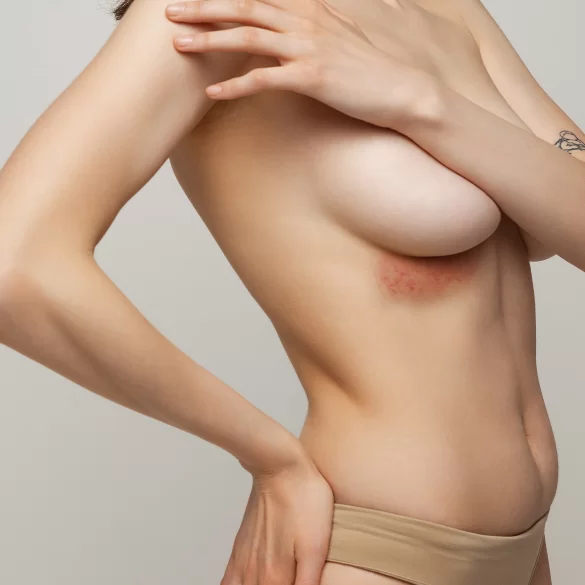
Fungal infection under the breasts (Latin: *intertrigo mycotica*) is a common skin infection that develops in the inframammary fold, an area particularly susceptible to moisture, limited air access, and friction. It is most frequently caused by yeast from the genus *Candida*, and less commonly by dermatophytes. This condition primarily affects women with large breasts, overweight individuals, hormonal imbalances, or metabolic disorders, but it can occur in anyone given the right conditions. Untreated submammary fungal infection tends to recur, become chronic, and may lead to bacterial superinfections, which is why early diagnosis and appropriate treatment are crucial.
Fungal infection under the breasts – what it looks like
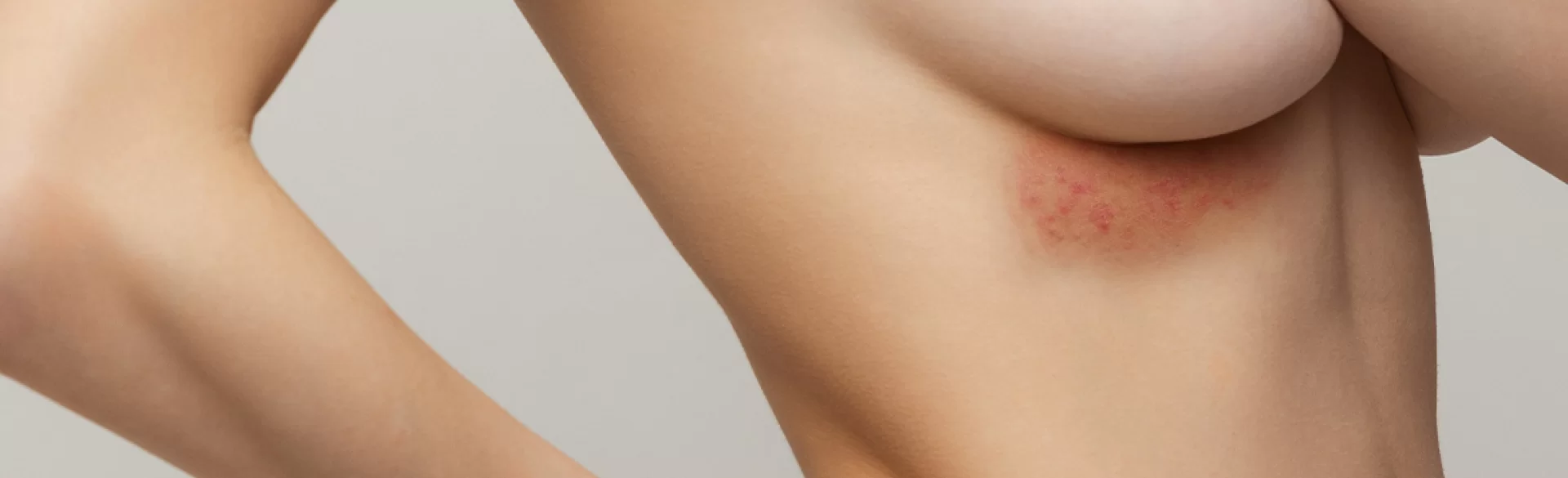
The clinical presentation of a fungal infection under the breasts is quite characteristic, although in the early stages, it can be mistaken for a rash or allergic dermatitis. The lesions are symmetrically located in the inframammary fold and may also affect adjacent skin areas.
The most common symptoms include:
- Erythema with a bright red color, clearly demarcated from the healthy skin,
- Maceration of the epidermis (the skin is moist and swollen),
- Peeling and cracks, sometimes with oozing,
- Itching, burning, or pain, which intensify with sweating and friction,
- Small satellite pustules on the periphery of the lesion (particularly typical for *Candida* infections),
- Unpleasant odor, especially with concurrent bacterial superinfection.
In some patients, the lesions have a chronic course, with periods of apparent improvement and relapses. In such cases, the skin in the inframammary fold becomes thickened, more prone to micro-injuries and secondary infections.
Fungal infection under the breasts – treatment
Treatment of fungal infections under the breasts should be targeted not only at eliminating the pathogen but also at removing factors that favor infection. The therapy is selected based on the severity of the lesions, their duration, and any coexisting diseases.
The basic elements of treatment include:
- topical antifungal treatment – preparations containing, among others, azoles (e.g., clotrimazole, miconazole, ketoconazole) or ciclopirox,
- maintaining a dry skin environment – thoroughly drying the inframammary fold after bathing, avoiding occlusion,
- reducing friction and moisture – appropriately selected underwear, preferably cotton, without underwires that compress the fold,
- treating predisposing conditions – glycemic control in patients with diabetes, normalization of body weight,
- avoiding the self-use of steroid ointments, which can mask symptoms and worsen the course of the fungal infection.
In cases that are extensive, recurrent, or resistant to topical treatment, the doctor may consider systemic antifungal treatment. Each time this decision should be preceded by a clinical assessment and, in case of doubt, by mycological examination.
Treatment of fungal infection under the breasts
Effective treatment of fungal infection under the breasts is multi-stage and requires consistency. The mere elimination of symptoms is not equivalent to a cure – the key is to fully regenerate the skin barrier and prevent recurrences.
Therapeutic management includes:
- Regular use of antifungal medications for the full prescribed period (usually 2–4 weeks), even after symptoms have subsided,
- Mild skin hygiene – avoiding aggressive detergents, alkaline soaps, and prolonged soaking,
- Preparations supporting epidermis regeneration, such as those containing panthenol, allantoin, or zinc,
- Recurrence prevention, which includes keeping the skin dry, controlling perspiration, and responding quickly to the first signs of irritation,
- Medical consultation in case of frequent recurrences, which may suggest immune disorders, diabetes, or other systemic diseases.
From a medical standpoint, fungal infection under the breasts is not a trivial condition. Ignoring symptoms leads to chronic inflammation, decreased quality of life, and an increased risk of bacterial superinfections. Rational, consistent treatment and elimination of contributing factors are the foundation for a lasting therapeutic effect.

