Infiltration anesthesia
back to main page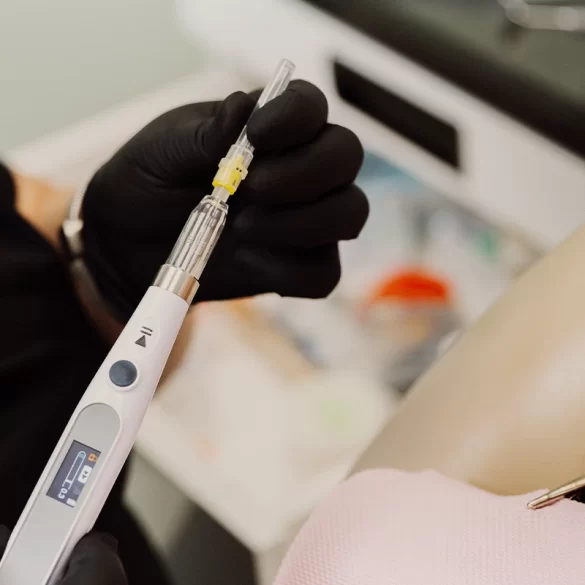
Infiltration anesthesia is one of the most commonly used methods of local anesthesia in medicine, involving the administration of an anesthetic agent directly into the tissues in the area of the planned procedure. Its goal is to temporarily eliminate the sensation of pain by blocking nerve conduction at the level of nerve endings. This method is characterized by its simplicity of execution, a high safety profile, and the ability to precisely control the area of effect. Infiltration anesthesia is used in many fields of medicine, including general surgery, dermatology, dentistry, aesthetic medicine, and gynecology. Due to its rapid onset of action and limited systemic impact, it is the standard procedure for minor and moderately extensive diagnostic and therapeutic procedures.
Infiltration anesthesia – what is it?
Infiltration anesthesia is a form of local anesthesia in which an anesthetic agent (most commonly lidocaine, mepivacaine, or articaine) is administered intradermally or subcutaneously in a layered manner to "saturate" the tissues involved in the procedure. The anesthetic substance diffuses within the tissues, blocking sodium channels in the cell membranes of sensory neurons, which prevents the conduction of pain impulses.
Characteristics of infiltration anesthesia:
- effect limited to the site of administration,
- no impact on the patient's consciousness,
- rapid onset of analgesic effect,
- possibility of gradually expanding the anesthesia field,
- low risk of systemic effects with proper dosing.
In clinical practice, combined preparations with the addition of adrenaline are often used, as adrenaline constricts blood vessels, prolongs the duration of anesthesia, and reduces intraoperative bleeding. Infiltration anesthesia can be used on its own or as a supplement to other local analgesia techniques.
Infiltration anesthesia - how long does it last
The duration of infiltration anesthesia depends on several factors, including the type of anesthetic used, its concentration, the volume administered, and the individual characteristics of the patient. The presence of vasoconstrictors also plays a significant role.
Approximate duration of action for the most commonly used anesthetics:
- Lidocaine: 1–2 hours (up to 3 hours with adrenaline)
- Mepivacaine: 2–3 hours
- Articaine: 1–2 hours, with a fast onset of action
After the anesthesia wears off, temporary paresthesias, a sensation of fullness, or tenderness at the injection site may occur, which typically resolve spontaneously. It is important to note that the duration of analgesia is not equivalent to the time of complete tissue recovery—lack of pain does not yet mean full healing.
Factors shortening the duration of anesthesia:
- Increased blood flow at the injection site
- Inflammation of tissues
- Absence of a vasoconstrictor
- Rapid drug metabolism in the patient
Infiltration anesthesia – application
Infiltration anesthesia finds a very broad application in medical procedures that do not require regional or general anesthesia. It is the first-choice method for superficial and limited operative field procedures.
Most common areas of application:
- general surgery (removal of minor skin lesions, wound suturing),
- dermatology (skin biopsies, removal of moles, treatment of abscesses),
- aesthetic medicine (injection procedures, scar corrections, minor surgical procedures),
- dentistry (procedures on soft tissues),
- gynecology (minor outpatient procedures),
- vascular surgery and phlebology (superficial procedures).
Clinical advantages of this method:
- possibility to perform the procedure on an outpatient basis,
- no need for hospitalization,
- quick return of the patient to daily activities,
- good control of intra- and post-procedure pain,
- high patient comfort with maintained consciousness.
Infiltration anesthesia is particularly valued in aesthetic medicine, where precision, safety, and the ability to individually tailor the extent of anesthesia are crucial to the quality of the procedure and patient satisfaction.
Infiltration anesthesia – complications
Although infiltration anesthesia is considered a safe method, like any medical intervention, it may involve the risk of complications. Their frequency is low and usually related to improper administration technique, exceeding doses, or the patient's individual reaction.
Possible local complications:
- pain and swelling at the injection site,
- hematoma or bruise,
- temporary sensory disturbances,
- infection at the injection site (rare).
Systemic complications (rare):
- allergic reactions to the anesthetic,
- toxic symptoms with overdose (dizziness, paraesthesia, heart rhythm disturbances),
- temporary increase in blood pressure or tachycardia (especially with the addition of adrenaline).
The risk of complications is minimized by:
- a thorough medical history,
- adherence to maximum anesthetic doses,
- using sterile technique,
- monitoring the patient's reaction during and after the procedure.
Properly performed infiltration anesthesia has a very good safety profile and is considered the standard of care in many medical procedures with low to moderate invasiveness.

