Inveterate psoriasis
back to main page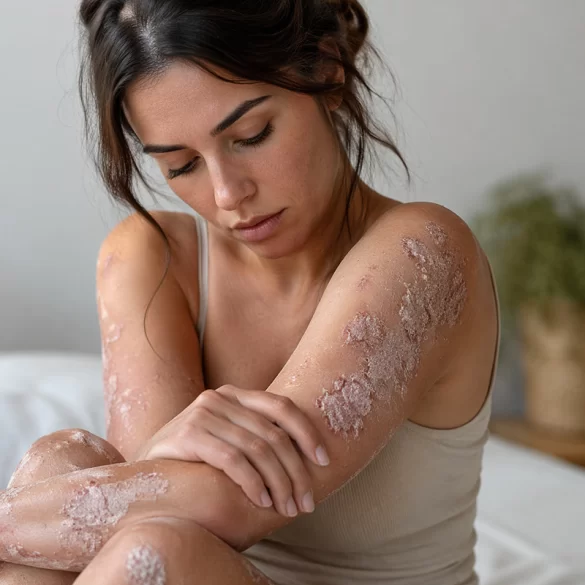
Inveterate psoriasis is a chronic, long-term form of inflammatory skin disease with an autoimmune background, characterized by persistent skin lesions and frequent recurrences. Unlike the early stages of the disease, inveterate psoriasis is characterized by greater resistance to treatment, intensified hyperkeratosis of the epidermis, and structural changes within the skin. It involves chronic activation of the immune system, excessive proliferation of keratinocytes (epidermal cells), and persistent inflammation. The long-term course of the disease can lead to systemic complications, including psoriatic arthritis and metabolic disorders.
Inveterate psoriasis – what it looks like
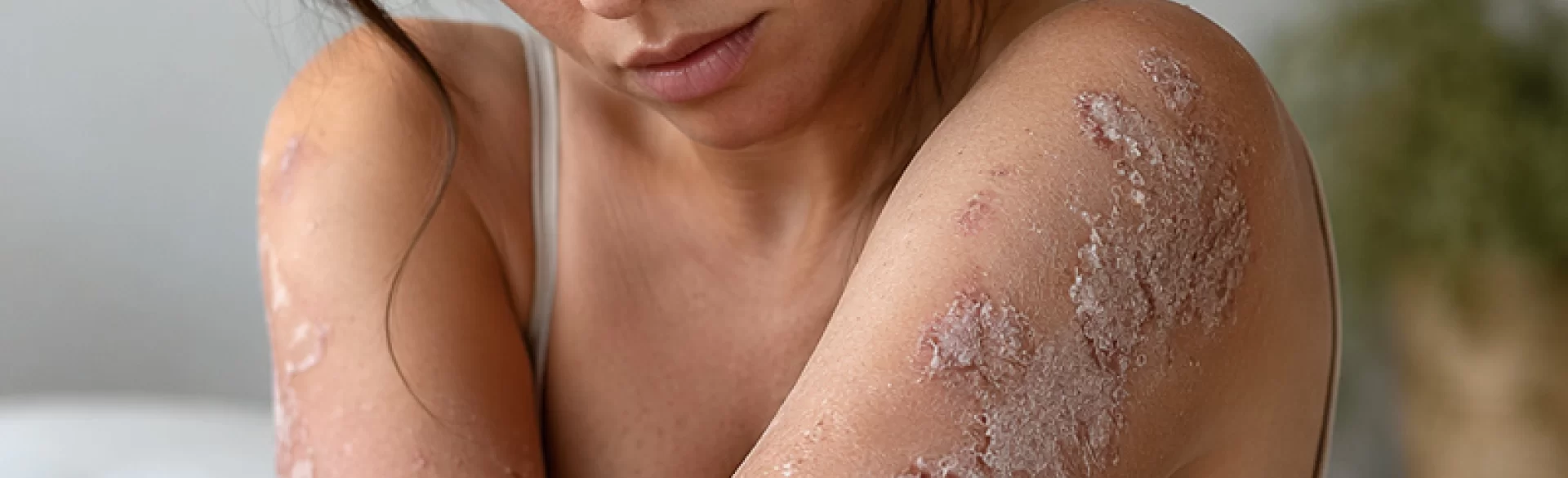
The clinical presentation of long-standing psoriasis differs from recent lesions primarily in the intensity and persistence of symptoms. Skin lesions take the form of chronic, well-demarcated inflammatory foci that persist for a long time without a tendency for spontaneous resolution.
Characteristic features include:
thick, hyperkeratotic (excessively cornified) plaques with distinct borders, intense silvery scale, often difficult to remove, intense erythema (redness of the skin) resulting from chronic inflammation, symmetrical distribution of lesions (e.g., on the elbows, knees, scalp), fissures and erosions within the thickened skin, pruritus and a feeling of skin tension.
In the course of long-term disease, secondary changes may also appear, such as:
lichenification – thickening and increased visibility of the skin markings, post-inflammatory discoloration, scarring as a result of chronic epidermal damage.
Nail involvement (nail psoriasis) is also frequently observed, manifesting as thickening, brittleness, and the presence of characteristic punctate depressions (so-called pitting).
Inveterate psoriasis – causes
The pathogenesis of inveterate psoriasis is a continuation of the mechanisms responsible for the development of the disease, but with greater intensity and consolidation of pathological processes. A key role is played by chronic activation of the immune system, particularly the T-lymphocyte axis (Th1 and Th17) and the secretion of pro-inflammatory cytokines.
The most important factors influencing the development and persistence of inveterate psoriasis include:
Immunological and genetic factors
- excessive activation of the immune system,
- increased production of cytokines (including TNF-α, IL-17, IL-23),
- genetic predisposition (e.g., presence of the HLA-Cw6 allele).
Environmental factors and lifestyle
- chronic psychological stress,
- tobacco smoking and alcohol abuse,
- obesity and metabolic disorders,
- improper pro-inflammatory diet.
Iatrogenic factors and comorbidities
- long-term use of certain medications (e.g., beta-blockers, lithium),
- chronic infections (e.g., streptococcal),
- autoimmune and metabolic diseases.
Local factors
- mechanical skin irritation (Koebner phenomenon),
- chronic skin dryness,
- lack of proper dermatological care.
In inveterate psoriasis, a vicious cycle of inflammation becomes established - chronic inflammation stimulates excessive proliferation of keratinocytes, leading to further intensification of skin lesions.
Long-standing psoriasis – treatment
Treatment of long-standing psoriasis requires a comprehensive, multidirectional therapeutic approach, including topical therapy, systemic therapy, as well as modern supportive methods.
Topical treatment
The basis of therapy is preparations applied directly to the skin:
- corticosteroids – anti-inflammatory and immunosuppressive action,
- vitamin D3 analogues (e.g., calcipotriol) – regulation of keratinocyte proliferation,
- keratolytics (e.g., salicylic acid) – removal of the excessive stratum corneum,
- emollients – restoration of the skin's hydrolipid barrier.
Systemic treatment
In advanced cases, the following are used:
- immunosuppressive drugs (e.g., methotrexate, cyclosporine),
- retinoids (vitamin A derivatives),
- biological drugs (e.g., TNF-α, IL-17, IL-23 inhibitors) – modern targeted therapy.
Phototherapy
One of the most effective methods of treating chronic lesions is:
- UVB 311 nm – selective anti-inflammatory effect,
- PUVA (psoralen + UVA) – photochemical therapy used in more severe cases.
The mechanism of phototherapy's action involves inhibiting epidermal cell proliferation and modulating the immune response.
Supportive and procedural therapies
In the treatment of long-standing psoriasis, procedures in the field of dermatology and aesthetic medicine also play an important role, improving skin condition and supporting the regeneration process:
- chemical peels (e.g., using TCA acid) – reduction of hyperkeratosis,
- skin mesotherapy – improvement of tissue hydration and nutrition,
- LED light therapies – anti-inflammatory and regenerative action,
- microneedle radiofrequency – stimulation of skin remodeling,
- laser treatments – reduction of inflammatory lesions and improvement of skin structure.
In clinical practice, procedures available in modern facilities are also used, such as:
- dermatological phototherapy,
- advanced medical peels,
- skin regenerative therapies based on collagen stimulation.
Importance of lifestyle
In the therapy of long-standing psoriasis, it is also extremely important to:
- maintain a healthy body weight,
- anti-inflammatory diet (rich in omega-3 fatty acids),
- stress reduction,
- regular skin care.
Effective treatment requires individualization of therapy and a long-term approach, taking into account both dermatological and systemic aspects.

