Jawline pimples
back to main page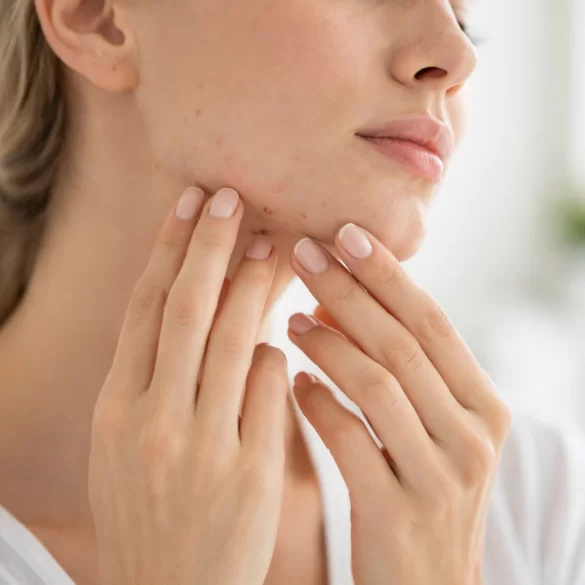
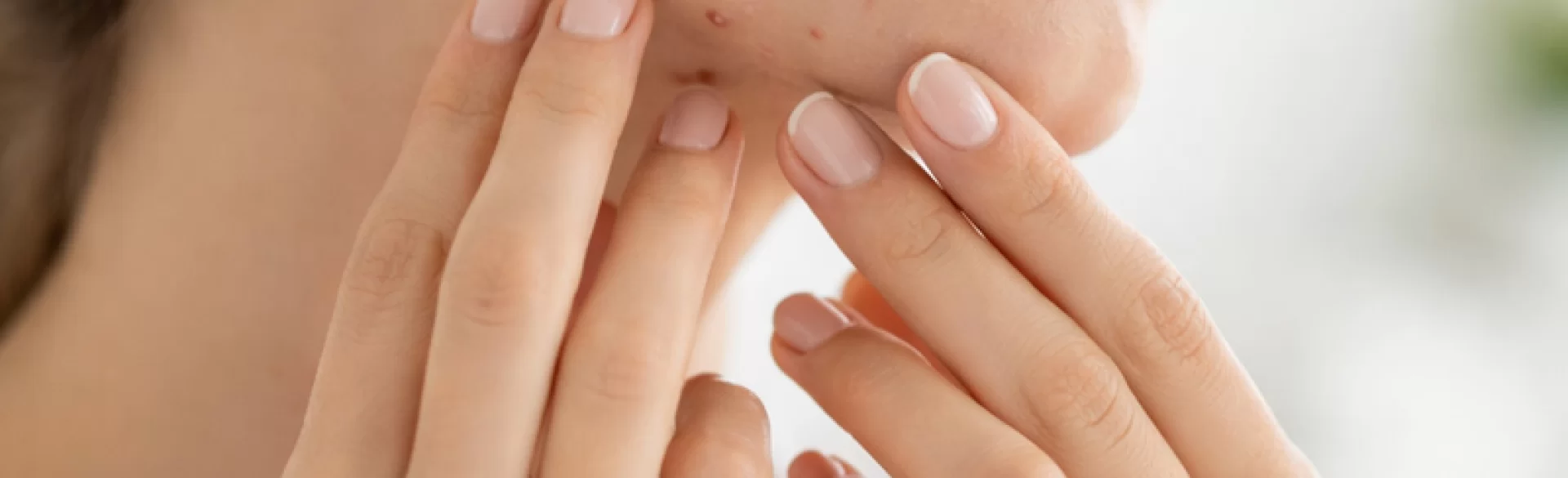
Pimples on the jawline are skin lesions that can be either inflammatory or non-inflammatory, located in the lower part of the face – along the jawline, the angle of the jaw, and the transition to the submandibular area. They most commonly appear as papules, pustules, inflammatory cysts, or comedones and are a typical location for adult acne, particularly in women. In this area, the lesions often have a hormonal basis, are painful, deeply embedded, and tend to recur. The location on the jawline is diagnostically significant – it may indicate hormonal axis disorders, chronic skin inflammation, or improper skin care with comedogenic effects.
Jawline acne – causes
The etiopathogenesis of changes in this location is multifactorial and involves both systemic and local mechanisms.
1. Hormonal Factors (the most common cause)
The jawline and lower face area are particularly sensitive to the effects of androgens (e.g., testosterone, dihydrotestosterone). These hormones:
- increase sebum production by the sebaceous glands,
- enhance keratinization of hair follicle openings,
- promote the development of Cutibacterium acnes bacteria,
- induce inflammation.
Pimples on the jawline often:
- worsen in the second phase of the menstrual cycle,
- accompany polycystic ovary syndrome (PCOS),
- appear in the course of hyperandrogenism,
- occur during the perimenopausal period.
2. Adult Acne (acne tarda)
In women over 25 years old, inflammatory lesions dominate in the lower part of the face:
- inflammatory papules,
- painful subcutaneous nodules,
- inflammatory cysts,
- chronic lesions with a tendency to post-inflammatory hyperpigmentation.
Unlike adolescent acne, these lesions less frequently involve the forehead and more commonly affect the jawline and neck.
3. Local and Environmental Factors
- Comedogenic cosmetics (mineral oils, occlusive silicones).
- Prolonged use of protective masks (“maskne”).
- Friction (e.g., mobile phone, scarf).
- Improper skin cleansing.
- Chronic stress (cortisol's impact on sebaceous glands).
4. Metabolic and Dietary Disorders
Literature points to a possible link between:
- high glycemic index diet,
- excessive dairy intake,
- insulin resistance,
and the exacerbation of inflammatory changes in the lower face area.
Differential diagnosis should include:
- rosacea,
- folliculitis,
- perioral dermatoses,
- epidermal cysts.
In the case of painful, recurrent, and treatment-resistant lesions, a dermatological consultation is recommended, and if necessary, hormonal diagnostics (testosterone, DHEA-S, SHBG, LH/FSH, prolactin).
Jawline Acne - Treatment
Therapeutic management depends on the severity of the changes, their nature, and the systemic background.
1. Topical Treatment
Used in mild and moderate forms:
- Topical retinoids (adapalene, tretinoin) – normalize keratinization and reduce the formation of microcomedones.
- Benzoyl peroxide – has antibacterial and anti-inflammatory effects.
- Azelaic acid – reduces inflammation and post-inflammatory hyperpigmentation.
- Topical antibiotics (clindamycin) – short-term, in combination therapy.
2. Systemic Treatment
In cases of deep, cystic, or recurrent lesions:
- Oral antibiotics (e.g., doxycycline) – anti-inflammatory action.
- Hormonal treatment (anti-androgenic contraception, spironolactone).
- Oral isotretinoin – in severe and resistant cases.
Decisions regarding systemic treatment should be made by a dermatologist after a thorough patient qualification.
3. Dermatological and Aesthetic Medicine Procedures
Support pharmacological treatment and limit the risk of scars and hyperpigmentation:
- Medical peels (salicylic acid, azelaic acid, pyruvic acid).
- LED light therapies – anti-inflammatory action.
- Fractional laser therapy – for acne scars.
- Microneedle radiofrequency – reduces inflammatory lesions and improves skin texture.
- High-tech cleansing – controlled, without traumatizing the skin.
In the case of skin prone to chronic inflammation, it is worth considering biostimulatory therapies that support regeneration and modulate the skin's inflammatory response.
- gentle cleansing 2× a day,
- avoiding squeezing blemishes (risk of scars and discoloration),
- using SPF filters,
- cosmetics labeled as “non-comedogenic”.
The recurrent nature of changes in this location requires a comprehensive approach – including systemic diagnostics, pharmacotherapy, and individually tailored procedural treatments. Symptomatic treatment alone, without identifying the cause, usually leads to short-term improvement and quick recurrence of changes.

