Large breasts
back to main page
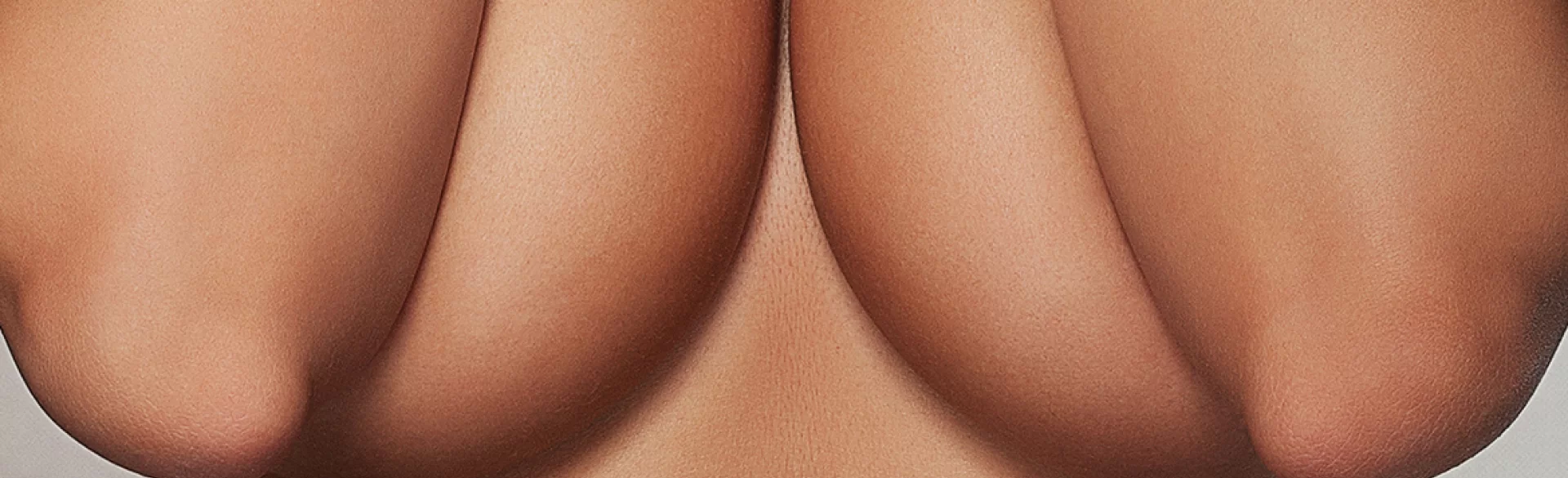
Large breasts (macromastia, hypertrophy of the mammary glands) are a condition characterized by the excessive development of breast tissue in relation to body structure. It can affect one or both breasts and can be either congenital or acquired. The size of the breasts is a result of the amount of glandular tissue, fat tissue, and connective tissue, as well as their response to hormonal stimuli. For some women, large breasts do not cause discomfort, while for others, they lead to significant health problems, functional limitations, and a reduced quality of life. In clinical practice, it is important to differentiate between physiological and pathological macromastia and to assess whether the breast size translates into somatic symptoms that require treatment.
Large breasts – causes
The etiology of large breasts is multifactorial and includes genetic, hormonal, and environmental factors. The most commonly described causes include:
- Genetic predisposition
Hereditary tendencies for the growth of glandular and fatty breast tissue. - Influence of sex hormones
Breast tissue hypersensitivity to estrogens and progesterone, especially during puberty, pregnancy, and lactation. - Endocrine disorders
Including thyroid diseases, hyperprolactinemia, and hypothalamic-pituitary-ovarian axis disorders. - Body weight and fat distribution
Weight gain contributes to an increase in breast volume, especially when the fatty component predominates. - Medications and iatrogenic factors
Hormone replacement therapy, oral contraception (in some patients). - Rare pathological conditions
Gigantomastia, including juvenile and gestational forms, with a rapid course.
Large Breasts – Health Issues
Excessive breast mass can lead to a range of orthopedic, dermatological, and functional issues. The most commonly reported problems are:
- Back pain
Particularly in the cervical and thoracic regions, resulting from the overload of musculoskeletal structures. - Postural disorders
Rounding of the back, forward shoulder protrusion, compensatory pelvic positioning. - Muscular discomfort
Chronic tension of the neck and shoulder girdle muscles. - Skin changes
Chafing, maceration, intertrigo, and recurrent inflammation in the inframammary fold. - Limitations in physical activity
Difficulty in running, dynamic exercises, and issues with choosing sports bras. - Neurological symptoms
Paresthesia of the upper limbs related to muscle tension and compression of nerve structures. - Psychological aspect
Discomfort, lowered self-esteem, and difficulties in choosing clothing.
Large breasts – treatment
Therapeutic management depends on the severity of symptoms, the cause of breast enlargement, as well as the age and health status of the patient. Treatment can be either conservative or surgical.
Conservative treatment includes:
- selecting appropriate supportive bras,
- physiotherapy aimed at strengthening the back muscles and correcting posture,
- weight reduction if fatty tissue plays a significant role,
- treatment of hormonal disorders if they have been diagnosed.
Conservative methods can alleviate discomfort; however, they usually do not lead to significant breast volume reduction, especially when the glandular component is dominant.
Large breasts – how to reduce
Breast reduction can be considered in two aspects: functional and volumetric.
- Weight loss
Effective mainly when the breasts contain a large amount of fatty tissue. - Nonsurgical procedures
Procedures affecting skin tension and local fat reduction can improve comfort, but do not replace surgical treatment in cases of macromastia. - Surgical treatment
The only method that allows for permanent and predictable reduction of breast volume and simultaneous correction of their shape and position.
The decision on the method choice should be preceded by detailed diagnostics and an assessment of the realistic effects that can be achieved in a given case.
Breast reduction procedures
Breast reduction (reduction mammoplasty) is a surgical procedure that involves the removal of excess glandular tissue, fat, and skin, while simultaneously reshaping the breasts. Different surgical techniques are employed depending on the initial size and anatomy.
Goals of the procedure:
- reduce the weight of the breasts,
- improve body proportions,
- alleviate pain,
- lift and reshape the breasts,
- improve skin quality in the inframammary area.
The most commonly used techniques differ in:
- the extent of tissue removed,
- the method of repositioning the nipple-areola complex,
- the pattern of postoperative scars.
The procedure has not only an aesthetic, but primarily a therapeutic dimension, as it leads to significant improvement in functioning and quality of life for most patients. Qualification for surgery is based on medical history, clinical examination, and analysis of health symptoms, rather than solely on breast size.

