Localized fat
back to main page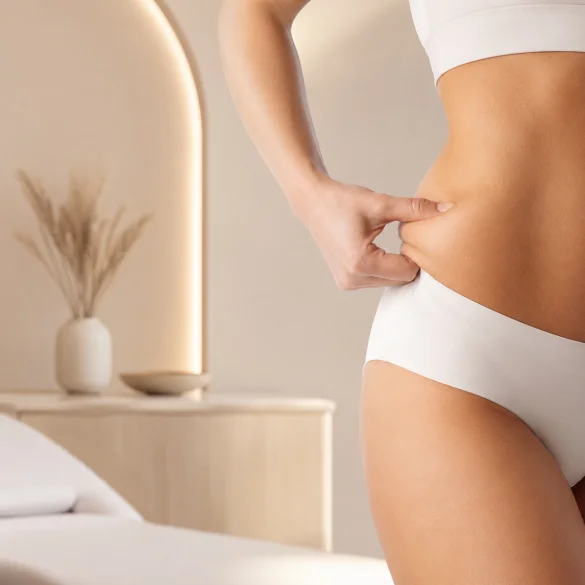

Localized adiposity is an uneven accumulation of adipose tissue in specific parts of the body, which remains visible even in individuals with normal body weight or those leading an active lifestyle. This phenomenon results from the body's individual metabolic, hormonal, and genetic characteristics, as well as differences in the functioning of fat cells, i.e., adipocytes. Localized fat deposits most commonly appear in the area of the abdomen, hips, thighs, buttocks, arms, back, or chin. In aesthetic medicine, localized adiposity is treated as an issue concerning body contour and proportions, and not solely excessive body weight. A characteristic feature of this phenomenon remains its high resistance to a reduction diet and physical exercise.
Localized fat - what it is
Adipose tissue plays an important metabolic, hormonal, and energy function. The body stores fat as an energy reserve, mechanical protection, and an element of hormonal regulation. Under normal conditions, the distribution of adipose tissue depends on sex, age, and genetic predisposition. The problem arises when there is an excessive accumulation of fat in specific areas of the body.
Localized fat accumulation can be:
- subcutaneous – located directly under the skin,
- deep – involving adipose tissue located between muscle structures,
- hormonally dependent – related to the action of estrogens, androgens, cortisol, or insulin.
In contrast to general obesity, localized fat accumulation is not always associated with excess weight. A slim person can have distinct fat deposits in the area of the abdomen, love handles, or thighs. This results from the local activity of fat cell receptors. Some areas of the body show a greater tendency to store fat and slower release of fatty acids during weight loss.
In clinical practice, localized fat accumulation is sometimes confused with:
- lymphedema,
- lipodystrophy,
- cellulite,
- skin laxity,
- changes in body proportions after weight loss.
Therefore, diagnosis should include an assessment of body composition, adipose tissue distribution, and the quality of the skin and subcutaneous tissue.
Localized fat - why fat tissue accumulates locally
Localized fat deposition results from biological differences between adipocytes in different parts of the body. Fat cells do not function identically throughout the body. They differ in the number of hormone receptors, metabolic activity, and susceptibility to lipolysis, i.e., fat breakdown.
Of key importance are:
- genetic predisposition,
- hormonal balance,
- insulin resistance,
- cortisol levels,
- lifestyle and diet,
- age and metabolic rate.
There are two main types of adrenergic receptors in adipose tissue:
- beta-receptors – stimulating fat burning,
- alpha-2 receptors – inhibiting lipolysis.
Areas such as the hips, thighs, or lower abdomen contain more alpha-2 receptors, which is why adipose tissue in these locations is reduced much more slowly. From a biological point of view, the body treats these areas as strategic energy stores.
In women, an important role is played by estrogens, which promote the deposition of adipose tissue in the lower body. In men, fat accumulation is more commonly observed in the abdominal area and sides, which is associated with the action of androgens and greater activity of visceral fat.
Chronic stress is also of significance. Elevated cortisol levels increase the tendency to store fat in the abdominal area, as well as affect the increase in appetite and insulin regulation disorders. Additionally, a sedentary lifestyle limits the local utilization of fatty acids by muscles.
Localized fat - typical locations
The distribution of localized fat depends on sex, age, hormonal predispositions, and lifestyle. Some areas of the body show a particular tendency to accumulate fat tissue.
The most common locations include:
In women
- hips and the “breeches” area,
- inner thighs,
- lower abdomen,
- buttocks,
- arms,
- knee area.
In men
- abdomen,
- flanks,
- chest,
- nape area,
- chin.
In both sexes
- back and the area under the shoulder blades,
- armpit area,
- area above the knees,
- chin and jawline.
In aesthetic medicine, fat deposits that disrupt the proportions of the silhouette are particularly problematic. Even a small volume of fat in the chin area can alter the facial contour, just as the accumulation of adipose tissue in the lower abdomen can affect the appearance of the entire silhouette.
It is worth emphasizing that localized fat accumulation often coexists with:
- cellulite,
- skin laxity,
- microcirculation disorders,
- swelling,
- loss of tissue firmness.
Therefore, effective therapy usually requires a multidirectional approach, encompassing both the reduction of adipose tissue and the improvement of skin quality.
Localized fat and diet and exercise - can it be reduced?
Reduction of localized fat is one of the greatest challenges in body contouring. The body does not burn fat selectively from a specific area of the body. During weight loss, fat is released according to an individual, genetically encoded metabolic program.
This means that:
- abdominal exercises do not guarantee fat reduction from the abdomen,
- thigh training does not selectively remove fat from the thighs,
- localized fat burning practically does not occur.
A reduction diet and physical activity remain the basis of therapy because they improve:
- insulin sensitivity,
- lipid metabolism,
- hormonal balance,
- the body's energy balance.
The best results are brought by a combination of:
- strength training,
- aerobic activity,
- adequate protein intake,
- calorie intake control,
- regeneration and sleep.
Despite this, some fat deposits remain resistant even with significant weight loss. In such cases, aesthetic medicine and cosmetology procedures are used, utilizing the mechanisms of lipolysis, cooling, or thermal energy.
The most commonly used methods include:
- cryolipolysis,
- injection lipolysis,
- RF radio waves,
- HIFU ultrasound,
- endermologie,
- laser body contouring treatments,
- technologies utilizing acoustic waves and vacuum.
In the case of larger fat deposits, surgical procedures, primarily liposuction, are used. However, it should be emphasized that no method replaces weight stabilization and a healthy lifestyle. Even the most advanced technology does not change the biological mechanisms of energy storage by the body. This is precisely why localized fat so often „returns”, when the patient expects the treatment to permanently replace daily metabolic habits.

