Subcutaneous tissue
back to main page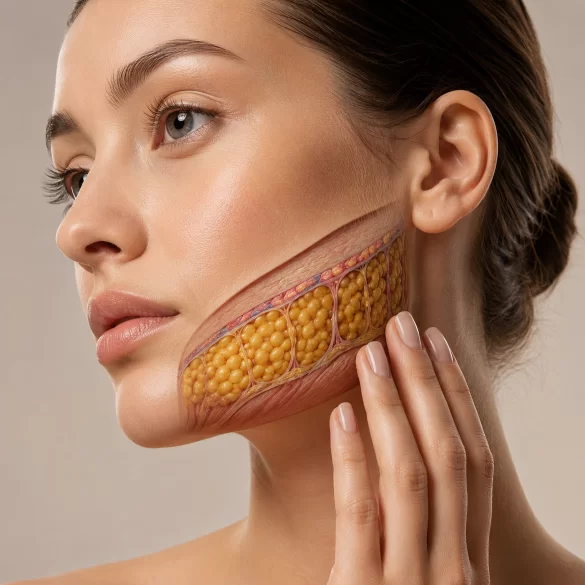
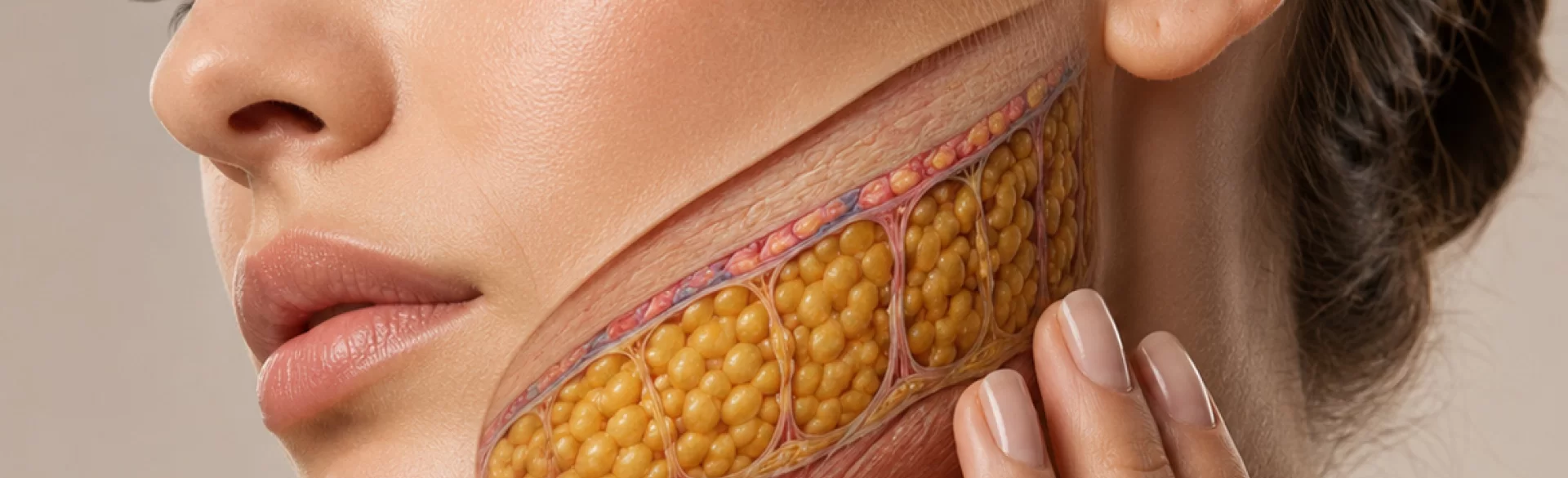
Subcutaneous tissue, also referred to as the hypodermis (Latin: subcutis), constitutes the deepest layer of human skin, located directly beneath the dermis. It is composed mainly of fat cells, collagen fibers, blood vessels, and nerve structures. Its thickness and distribution vary depending on age, gender, genetic factors, and lifestyle. Subcutaneous tissue performs an important metabolic, protective, and thermoregulatory function, while at the same time playing a key role in body contouring and aging processes. In aesthetic medicine and dermatology, it is an area of particular interest, as it is precisely within this layer that changes associated with cellulite, localized accumulation of fat tissue, or loss of skin firmness develop.
Subcutaneous tissue - structure and location
The subcutaneous tissue is located between the dermis and the muscular fascia. It is not formally recognized as a part of the skin, however, it remains functionally and anatomically connected to it. The main component of the hypodermis are adipocytes, i.e., fat cells forming lobules separated by connective tissue septa. These structures contain collagen and elastin fibers, as well as a rich network of blood and lymphatic vessels.
The thickness of the subcutaneous tissue shows significant individual variability. It remains the thinnest in the area of the eyelids and auricles, while it reaches the greatest volume within the abdomen, hips, thighs, and buttocks. In women, the distribution of adipose tissue is gynoid in nature, which means a greater tendency to deposit fat in the lower parts of the body. In men, the android type is more commonly observed, associated with the accumulation of adipose tissue in the abdominal area.
The subcutaneous tissue also contains:
- nerve endings responsible for the reception of mechanical stimuli,
- lymphatic vessels involved in the drainage of tissue fluid,
- cells of the immune system,
- fibroblasts producing extracellular matrix components.
Modern medicine views adipose tissue not solely as an energy store, but as an active endocrine organ. Adipocytes produce numerous biologically active substances, including leptin, adiponectin, or pro-inflammatory cytokines, which affect metabolism, hormonal balance, and inflammatory processes of the body.
Subcutaneous tissue - role in the body
Subcutaneous tissue performs many functions essential for the proper functioning of the body. The most well-known remains the energy function — adipocytes store triglycerides constituting an energy reservoir used in periods of increased metabolic demand.
The most important functions of subcutaneous tissue include:
Protective function
Adipose tissue acts as a natural shock absorber protecting muscles, bones, and internal organs from mechanical injuries. It is of particular importance within the feet, buttocks, and hands, where it reduces pressure and strain.
Thermoregulatory function
The fat layer limits heat loss and participates in maintaining a constant body temperature. In people with a very low level of body fat, thermoregulation disorders and greater sensitivity to cold are more frequently observed.
Metabolic and hormonal function
Adipocytes actively participate in the regulation of hormonal balance. They secrete adipokines that affect:
- appetite and the feeling of satiety,
- tissue sensitivity to insulin,
- inflammatory processes,
- lipid and glucose metabolism.
Excessive growth of adipose tissue can lead to chronic low-grade inflammation, increasing the risk of metabolic and cardiovascular diseases, and insulin resistance.
Aesthetic and supportive function
Subcutaneous tissue is responsible for the volume, softness, and contour of the body. With age, changes in its distribution and its gradual loss in certain areas of the face occur, which leads to the loss of the oval, deepening of furrows, and sagging of the skin. Paradoxically, local hypertrophy of adipose tissue may simultaneously occur in other regions of the body.
Subcutaneous tissue, cellulite and aesthetic treatments
Subcutaneous tissue plays a central role in the development of cellulite, i.e., gynoid lipodystrophy. This phenomenon results from microcirculation disorders, hypertrophy of adipocytes, and changes in the structure of collagen fibers separating fat lobules. Enlarged fat cells exert pressure on the dermis, while fibrous septa pull the tissues downward, creating the characteristic “orange peel” appearance.
Cellulite occurs primarily in women, which is associated with a different structure of connective tissue and the hormonal influence of estrogens. The intensification of these changes is favored by:
- a sedentary lifestyle,
- lymphatic circulation disorders,
- a diet rich in simple sugars and salt,
- hormonal fluctuations,
- chronic stress,
- lack of physical activity.
Współczesna medycyna estetyczna oferuje liczne procedury oddziałujące na tkankę podskórną oraz poprawiające jakość skóry. Terapie koncentrują się na redukcji objętości adipocytów, stymulacji mikrokrążenia, przebudowie kolagenu i poprawie napięcia tkanek.
The most commonly used methods include:
- LPG endermologie — mechanical tissue stimulation improving lymphatic drainage and microcirculation,
- microneedle radiofrequency — stimulating collagen remodeling and skin densification,
- acoustic waves and shockwave — supporting the reduction of fibrous cellulite,
- cryolipolysis — selective cooling leading to the reduction of fat cells,
- injection lipolysis — administration of substances causing the breakdown of adipocytes,
- laser and ultrasound technologies — used in body contouring and localized fat reduction,
- vacuum massages and lymphatic drainage — improving lymph flow and reducing swelling.
The offer includes, among others, body contouring procedures, anti-cellulite treatments, LPG endermologie, acoustic waves, radiofrequency, and modern technologies supporting fat reduction and skin quality improvement.
It should be emphasized that the effectiveness of aesthetic therapies depends on a comprehensive approach that also includes physical activity, an anti-inflammatory diet, proper hydration of the body, and body weight stabilization. Aesthetic treatments can significantly improve the appearance and condition of tissues, but they do not eliminate the biological mechanisms of fat accumulation.

