PDO threads
back to main page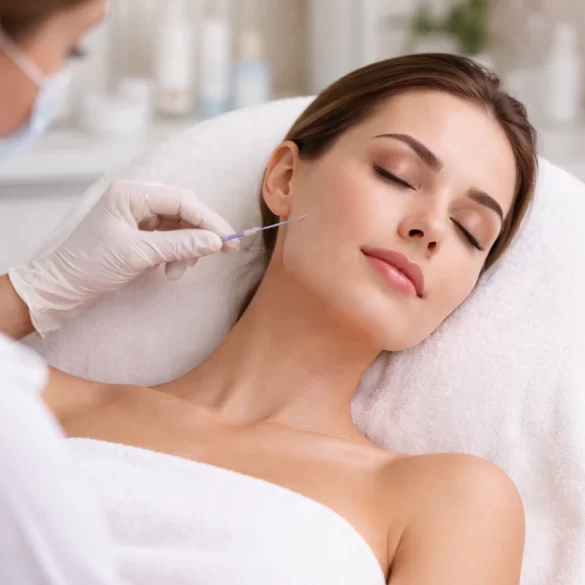
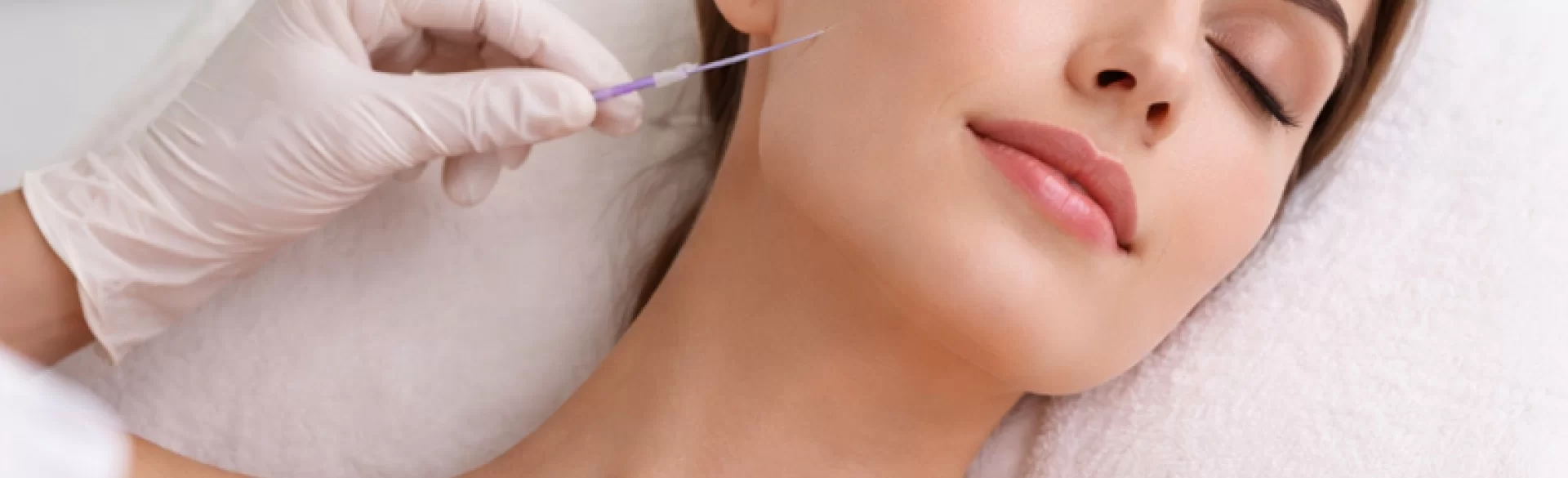
PDO threads (polydioxanone threads) are absorbable, synthetic threads implanted into the skin and subcutaneous tissue to achieve a lifting effect and stimulate regenerative processes. They are made from polydioxanone—a polymer with high biocompatibility, used for decades in surgery as a dissolvable suture material. In aesthetic medicine, they are used for their ability to induce a controlled tissue response leading to neocollagenesis, which is the formation of new collagen fibers. PDO threads do not constitute a permanent implant—they gradually undergo hydrolysis over several months, while the biological effect of skin remodeling lasts significantly longer. The procedure is minimally invasive and serves as an alternative to surgical lifting for patients with moderate tissue laxity.
PDO threads - what is it
Polydioxanone (PDO) is a synthetic, monofilament polymer belonging to the polyester group. It is characterized by:
- high biocompatibility,
- predictable degradation time (approx. 6–8 months),
- minimal immunogenic potential,
- ability to induce a controlled low-grade inflammatory response.
The mechanism of action of PDO threads involves two main components:
1. Mechanical effect
In the case of threads with barbs (cog) or twisted construction, there is an immediate, albeit moderate, tissue lifting by anchoring them in the subcutaneous layer.
2. Biological effect
The implantation of threads causes microinjury, which activates fibroblasts – the cells responsible for the production of type I and III collagen, elastin, and components of the extracellular matrix. As a result, this leads to:
- skin densification,
- improvement in skin tension,
- increased elasticity,
- reorganization of collagen fibers.
There are three basic types of threads:
- mono (smooth) – mainly used in biostimulation and improving skin quality,
- screw (twisted) – providing a densification effect and subtle volume,
- cog (with barbs) – intended for lifting and repositioning sagging tissues.
The choice of thread type depends on the biological age of the skin, the degree of ptosis (sagging of tissues), and the desired aesthetic effect.
PDO Threads – Treatments
The PDO thread implantation procedure is performed on an outpatient basis under local anesthesia. The duration of the procedure usually ranges from 30 to 60 minutes, depending on the number and type of implanted threads.
Stages of the procedure:
- Detailed medical qualification and exclusion of contraindications.
- Analysis of facial statics and dynamics.
- Planning of lifting vectors according to fascial anatomy.
- Aseptic preparation of the surgical field.
- Implantation of threads using a needle or cannula.
The most common indications include:
- loss of facial contour,
- sagging cheeks,
- deepened nasolabial folds and marionette lines,
- skin laxity of the neck and chin,
- drooping eyebrows,
- skin laxity of the body (arms, abdomen, above the knees).
PDO threads do not replace traditional surgical lifting in advanced ptosis, but in moderate stages, they provide an effective method with significantly lower systemic risk. In clinical practice, they are often combined with biostimulating therapies, which enhance the intensity of tissue remodeling.
PDO threads – effects
The effects of therapy can be divided into immediate and delayed effects.
Immediate effects:
- improvement of the jawline contour,
- subtle lifting of the cheeks,
- reduction of sagging of the facial outline,
- tightening of the skin at the implantation site.
Delayed effects (2–12 weeks):
- increase in skin density,
- improvement in its firmness and elasticity,
- smoothing of fine wrinkles,
- improvement in skin quality and texture.
Histological studies confirm increased collagen synthesis and angiogenesis (formation of new blood vessels), which improves tissue trophism.
The effect lasts on average 12–18 months, depending on:
- the patient's age,
- metabolic condition,
- exposure to UV radiation,
- lifestyle (smoking accelerates collagen degradation),
- individual fibroblast activity.
It should be emphasized that PDO threads do not act like fillers—they do not cause a significant increase in volume, but improve the quality and firmness of tissues through a process of biological remodeling.
PDO threads – complications
The safety profile of PDO threads is high, provided there is proper patient qualification and knowledge of facial anatomy. Like any invasive procedure, the treatment may involve adverse effects.
- swelling,
- bruising,
- tenderness upon pressure,
- temporary feeling of tightness.
- asymmetry,
- thread migration,
- material show-through,
- bacterial infection,
- inflammatory granuloma.
Contraindications include:
- active skin infections,
- uncontrolled autoimmune diseases,
- coagulation disorders,
- tendency to form keloids,
- pregnancy and lactation.
Improper patient qualification (e.g., significant excess skin requiring surgical intervention) leads to unsatisfactory results — hence a realistic assessment of indications is crucial.
Our PDO thread treatments
At Ambasadzie Urody, treatments utilizing PDO threads are preceded by a detailed, multi-level structural analysis of the face. The assessment covers not only visible signs of aging but most importantly, their anatomical causes. The consultation includes:
- degree of tissue ptosis, which is the extent of sagging of facial structures around the cheeks, jawline, and chin area,
- distribution and displacement of subcutaneous fat tissue, affecting the loss of facial contour and deepening of grooves,
- skin quality, including its density, elasticity, and the level of collagen fiber degradation,
- tension in fascial structures (including the SMAS layer), responsible for maintaining the stability and support of soft tissues.
This approach allows for precise planning of the direction and depth of thread implantation and selecting the type of threads according to the patient's actual anatomical needs, rather than just the visible signs of aging.
Depending on the indications, PDO threads can be combined with treatments that enhance the biological effect, such as:
- tissue stimulators,
- needle mesotherapy (platelet-rich plasma, collagen preparations, growth factors),
- microneedle radiofrequency,
- HIFU (high-intensity focused ultrasound),
- treatments using infrared technology (Zaffiro, Deep IR).
The combined approach allows targeting various aging levels: dermal, subdermal, and fascial. The therapy is planned individually, considering the patient's biological age and the realistic possibilities of the method.
