Ozempic face
back to main page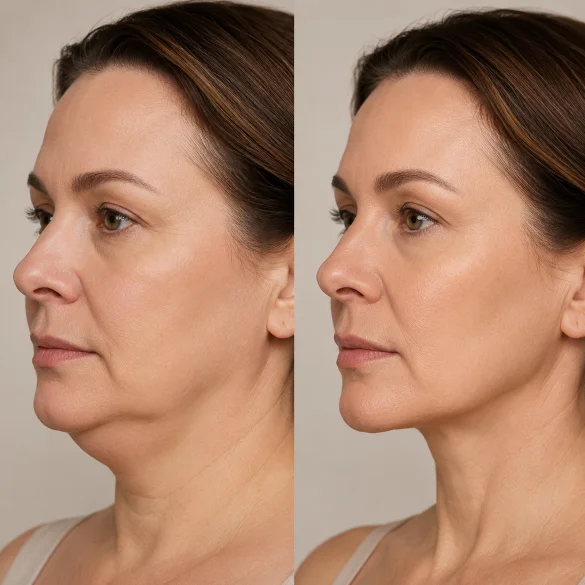
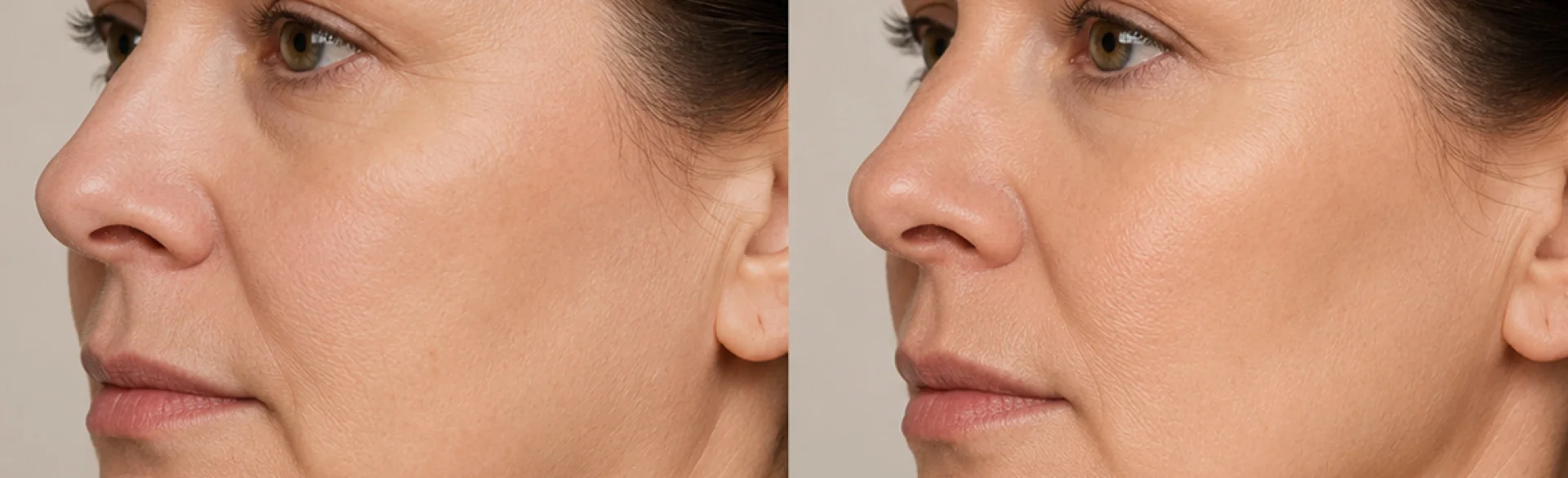
"Ozempic face" is a colloquial term for changes in facial appearance observed in some people using GLP-1 receptor agonist medications, such as Ozempic. This phenomenon is primarily associated with rapid weight loss and a reduction in subcutaneous fat, rather than a direct toxic effect of the medication itself on the skin. As a result, the face may appear more sunken, tired, and biologically older. This leads to the deepening of furrows, loss of cheek volume, bone structures becoming more prominent, and increased skin laxity. This issue is particularly common in people over 35-40 years of age, in whom the amount of collagen, elastin, and fat tissue in the face naturally decreases.
Ozempic face - what it is
The term "Ozempic face" is not a disease entity or an official medical diagnosis. It is a term describing characteristic aesthetic changes that appear after a rapid reduction of facial fat during intensive pharmacological weight loss. They are most commonly observed in patients taking semaglutide or tirzepatide in the treatment of obesity and overweight.
Facial fat plays an important supportive and volume-providing function. It gives youthful features, affects skin tension, and cushions bone and muscle structures. When its rapid loss occurs, the face loses its natural "fullness". This phenomenon resembles changes observed after significant weight loss following bariatric surgery or restrictive weight loss diets.
Contrary to media simplifications, not every person using semaglutide experiences such changes. A lot depends on:
- the patient's age,
- the rate of weight loss,
- skin quality,
- genetic predisposition,
- the baseline amount of facial fat,
- lifestyle and nutrition.
These changes are primarily aesthetic in nature, although in some patients they also affect psychological well-being and the perception of their own appearance.
Ozempic face - what it looks like
The appearance of the face after rapid weight loss can be very characteristic. Most commonly, there is a loss of volume in the midface, which causes a more "skeletal" and tired appearance.
Typical features include:
- sunken cheeks,
- deepening of the tear trough,
- more visible nasolabial folds,
- loss of the facial oval,
- skin laxity in the jaw area,
- prominence of the cheekbones and eye sockets,
- thinner, less taut skin,
- greater visibility of static wrinkles.
In some people, a "hollow face" effect also appears, which means a significant loss of soft tissue volume with a preserved bone structure. The face may appear older than before weight loss despite the improvement of the body's metabolic parameters.
The greatest changes are usually observed:
- in the cheek area,
- temples,
- jawline,
- under the eyes,
- in the lower part of the face.
In clinical practice, it is important to distinguish physiological volume loss from increased skin laxity associated with the aging process or photoaging.
Ozempic face - why changes occur
The primary cause of the changes is the rapid loss of subcutaneous fat. Drugs from the GLP-1 agonist group reduce appetite, prolong gastric emptying, and lead to a significant caloric deficit, resulting in body weight reduction. However, the body does not selectively choose the sites of fat loss. Facial fat deposits are also reduced.
This process can lead to:
- loss of support for the skin,
- weakened tissue tension,
- accentuation of natural aging processes,
- disruption of facial volume proportions.
The biological age of the skin also plays a significant role. After the age of 25, the production of collagen and elastin by fibroblasts gradually decreases. As a result, the skin loses its ability to contract after volume loss. The older the patient, the greater the risk of tissue laxity and hollowing.
The following are also important:
- protein deficiencies,
- low nutrient intake,
- dehydration,
- tobacco smoking,
- chronic oxidative stress,
- UV exposure.
It is worth emphasizing that similar changes can occur after any rapid body weight reduction, regardless of the weight loss method. Semaglutide only increased the frequency of observation of this phenomenon due to the high efficacy of the therapy.
Ozempic face - who is most at risk
The greatest risk occurs in people who lose a significant amount of weight in a short period of time. Patients with pre-existing loss of facial volume or features of tissue aging are particularly predisposed.
The increased risk group includes:
- people over 40 years of age,
- perimenopausal women,
- patients with thin skin,
- people with low baseline BMI,
- people with a small amount of facial fat before treatment,
- patients after significant weight loss,
- people who smoke cigarettes,
- people with severe photoaging.
The risk is also increased by a very rapid rate of weight reduction. The body and skin need time to adapt to volume changes. Gradual weight loss usually helps to limit the severity of aesthetic deformities.
In the practice of aesthetic medicine, patients are often observed in whom the improvement of the figure coexists with a deterioration in the quality and proportions of the face. Therefore, the modern approach to weight loss therapies increasingly includes simultaneous prevention of tissue aging.
Ozempic face - are the changes permanent
The degree of reversibility of changes depends on the patient's age, skin quality, the scale of weight loss, and the individual regenerative abilities of the body. In younger individuals with good skin elasticity, partial improvement may appear spontaneously after weight stabilization.
In the case of more pronounced volume loss or laxity, aesthetic and regenerative medicine procedures supporting tissue reconstruction are used. In clinical practice, the following are used, among others:
- collagen biostimulators,
- hyaluronic acid preparations restoring volume,
- fibroblast-stimulating treatments,
- microneedle radiofrequency,
- HIFU ultrasound,
- fractional laser therapy,
- regenerative therapies using platelet-rich plasma,
- lifting treatments improving skin tension.
The offer of Ambasada Urody also utilizes technologies supporting skin remodeling and improving its firmness, including radiofrequency, biostimulating treatments, and regenerative procedures improving tissue quality.
The best results are achieved through:
- controlled pace of weight loss,
- adequate protein intake,
- prevention of collagen loss,
- sun protection,
- simultaneous skin quality therapy during weight loss.

