Pimples between buttocks
back to main page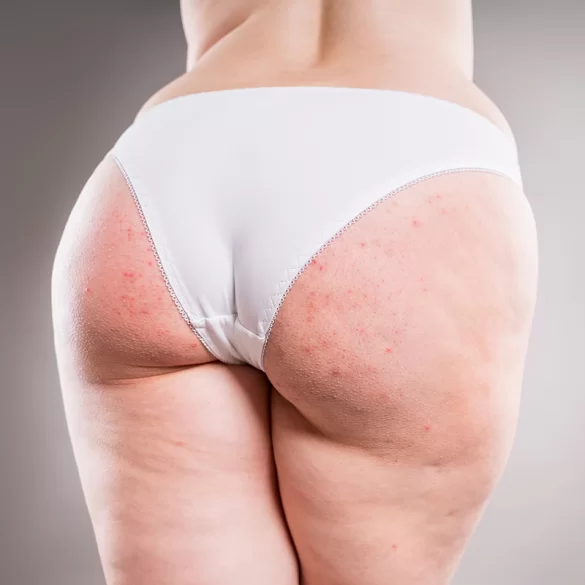
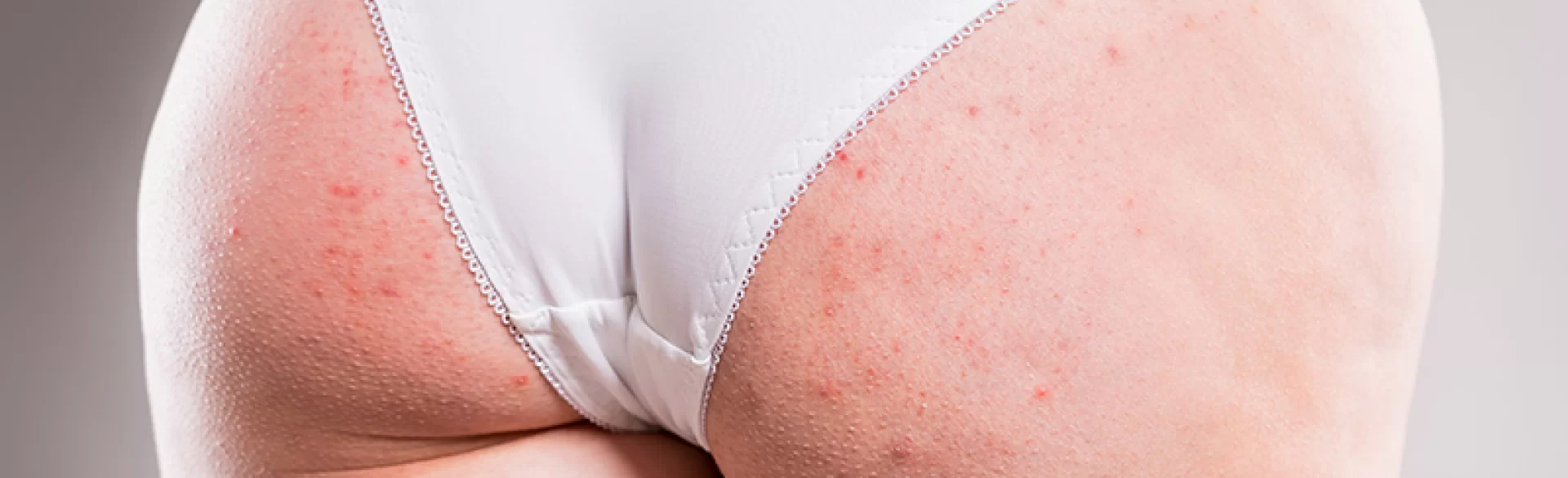
Pimples between the buttocks are inflammatory skin lesions, most commonly including papules, pustules, nodules, or purulent lesions located within the intergluteal cleft. This area is characterized by a specific microenvironment – increased humidity, limited ventilation, and intensified friction – which promotes the development of skin inflammation. These lesions can have various causes, from superficial folliculitis and acne lesions to chronic diseases such as acne inversa or pilonidal cysts. Proper diagnosis is crucial, as a similar clinical presentation may correspond to different disease entities requiring different treatments.
Pimples between the buttocks – causes
The development of skin lesions in this area is the result of the interaction of local and systemic factors. A special role is played by the imbalance between the skin microbiota and the defense mechanisms of the epidermis.
The most important causes include:
1. Mechanical and environmental factors:
- chronic skin friction (e.g., during sitting, physical activity),
- increased sweating and moisture leading to maceration of the epidermis,
- wearing tight, non-breathable clothing made of synthetic materials.
2. Bacterial infections and microbiome disturbances:
- the dominant role of Staphylococcus aureus bacteria in folliculitis,
- excessive colonization of the skin by opportunistic bacteria,
- skin micro-injuries facilitating the entry of microorganisms.
3. Disorders of keratinization and sebaceous gland function:
- hyperkeratosis of the hair follicle openings leading to their blockage,
- overproduction of sebum favoring the formation of an anaerobic environment,
- the development of acne-like lesions.
4. Systemic and metabolic factors:
- obesity increasing friction and moisture within skin folds,
- insulin resistance and hormonal disturbances affecting the function of sebaceous glands,
- chronic inflammatory states of the body.
5. Factors related to skin care:
- improper hygiene (both insufficient and excessive),
- use of cosmetics with comedogenic or irritating effects,
- hair removal leading to ingrown hairs and secondary inflammation.
In clinical practice, special attention is paid to chronic, painful, and recurring lesions, which may indicate acne inversa (hidradenitis suppurativa) - an inflammatory disease of hair follicles and apocrine glands, or a pilonidal cyst, which requires surgical treatment.
Pimples between the buttocks – differential diagnosis
The clinical presentation of lesions in this location can be misleading, so it is important to differentiate them from other disease entities. Proper diagnosis allows for avoiding a chronic course and complications.
The most common entities requiring differentiation:
- Folliculitis
Superficial lesions, often multiple, associated with bacterial infection. They take the form of small pustules located around the hair.
- Hidradenitis suppurativa
A chronic inflammatory disease manifesting as painful nodules, abscesses, and fistulas. It often leaves scars.
- Pilonidal cyst
A lesion most commonly located in the intergluteal cleft, containing hair and keratinous material. It can become infected and form an abscess.
- Furunculosis
A deep bacterial infection involving the hair follicle and surrounding tissues, leading to the formation of a painful purulent nodule.
- Fungal or yeast infections
They occur in moist conditions, often accompanied by itching and redness.
Differentiation is based on the clinical presentation, the course of the disease, and – in selected cases – microbiological or dermoscopic examinations.
Pimples between the buttocks – recommendations
Therapeutic management includes causal and symptomatic treatment as well as preventive measures. The elimination of factors predisposing to recurrence is of key importance.
1. Topical treatment:
- antiseptic preparations (e.g., chlorhexidine, octenidine),
- keratolytic agents (salicylic acid, azelaic acid) regulating keratinization,
- topical antibiotics in case of confirmed bacterial infection.
2. Systemic treatment (in selected cases):
- oral antibiotic therapy for extensive or recurrent lesions,
- retinoids (e.g., isotretinoin) in acne-like lesions,
- biological treatment in severe forms of acne inversa.
3. Hygiene and lifestyle:
- daily skin cleansing with physiological pH preparations,
- thorough drying of the skin after bathing,
- wearing breathable cotton underwear,
- weight reduction in case of overweight or obesity,
- limiting prolonged sitting.
4. Dermatological and aesthetic medicine procedures:
- chemical peels normalizing the keratinization process,
- laser therapy with anti-inflammatory effects and reducing bacterial colonization,
- laser hair removal limiting ingrown hairs and recurrence of folliculitis.
Pimples between the buttocks – course and possible complications
In most cases, the lesions are mild and resolve after appropriate treatment is implemented. However, the lack of proper therapy or the chronic action of irritating factors can lead to complications.
The most common include:
- chronic skin inflammation,
- the formation of abscesses requiring surgical intervention,
- scars and post-inflammatory discoloration,
- development of skin fistulas in the course of acne inversa,
- recurrent course of the disease.
In chronic and treatment-resistant cases, specialist diagnostics and interdisciplinary treatment, including a dermatologist and – if necessary – a surgeon, become particularly important.

