Pimples on the décolletage
back to main page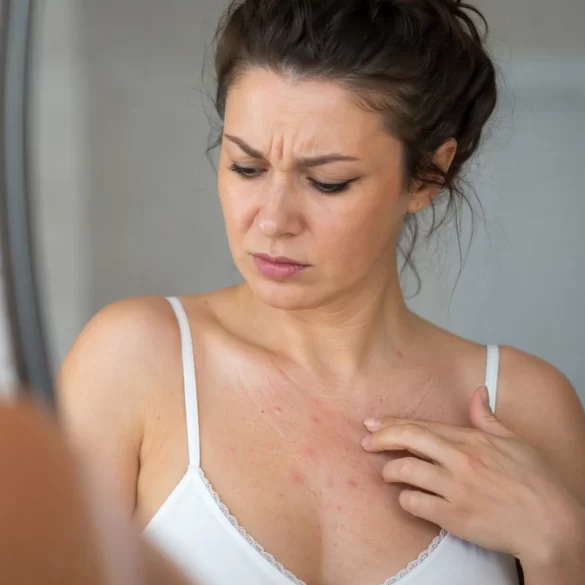

Pimples on the décolletage are skin lesions of an inflammatory or non-inflammatory nature, which most often take the form of papules, pustules, comedones, or cystic lesions. This location, due to high sebaceous gland activity and frequent contact with clothing and cosmetics, constitutes an area particularly predisposed to the development of dermatoses of acne-related, bacterial, or hormonal origin. Pimples on the décolletage can have a chronic course and show a tendency to recur, and their presence is often associated with impaired epidermal barrier function, overproduction of sebum, and colonization by microorganisms such as Cutibacterium acnes.
Pimples on the cleavage – what causes them
The etiopathogenesis of pustules on the cleavage is multifactorial and includes both internal and environmental factors. A key role is played by excessive sebum production (seborrhoea), leading to the blockage of hair follicle openings and the formation of comedones.
The most common causes include:
- hormonal disorders – especially an excess of androgens (e.g., in polycystic ovary syndrome), which increases sebaceous gland activity,
- acne vulgaris – involving not only the face, but also the chest and back,
- folliculitis – caused by bacteria (Staphylococcus aureus) or yeast (Malassezia),
- skin occlusion – wearing tight, synthetic clothing that promotes overheating and skin sweating,
- reactions to comedogenic cosmetics – especially heavy creams, oils and perfumes applied to the cleavage,
- mechanical factors – friction, pressure, as well as manipulation of lesions (squeezing),
- stress and a high glycemic index diet – affecting the hormonal-metabolic axis.
Disruption of the skin microbiome and chronic inflammation, which can lead to post-inflammatory hyperpigmentation (PIH) and scarring, are also of significant importance.
Pimples on the neckline – how to get rid of them
Therapeutic management depends on the etiology and severity of the lesions. Treatment should be aimed at reducing seborrhea, normalizing keratinization, and eliminating the inflammatory factor.
The following are used in therapy:
1. Topical treatment:
- retinoids (e.g., adapalene) – regulate keratinization and have anti-inflammatory effects,
- benzoyl peroxide – antibacterial effect,
- azelaic acid – anti-inflammatory and depigmenting properties,
- topical antibiotics – in case of bacterial superinfection.
2. Systemic treatment (in selected cases):
- oral antibiotic therapy,
- oral retinoids (e.g., isotretinoin) – in severe forms,
- hormonal therapy – in female patients with endocrine disorders.
3. Dermatological and aesthetic procedures:
Method | Mechanism of action | Indications |
|---|---|---|
chemical peels (salicylic acid, mandelic acid) | exfoliation of the epidermis, unclogging of pores | comedones, mild inflammatory lesions |
laser therapy | reduction of bacteria and inflammation | inflammatory lesions, scars |
LED light (blue) | antibacterial effect | inflammatory acne |
medical cleansing | removal of comedones | non-inflammatory lesions |
The effects of therapy take time – the first results are usually observed after 4–8 weeks, while full improvement may require several months of treatment. Consistency and the elimination of factors exacerbating the lesions are of key importance.
Pimples on the neckline – home remedies
Home management plays a supportive role and should be based on the principles of evidence-based dermatology. Incorrect care can exacerbate lesions, which is why an approach based on skin physiology is necessary.
Recommended actions include:
- regular, gentle skin cleansing – preparations without harsh detergents (SLS),
- use of non-comedogenic dermocosmetics – light emulsions, gels,
- low-concentration acids (e.g., salicylic acid, mandelic acid) – to regulate keratinization,
- avoiding skin occlusion – choosing clothing made of natural, breathable materials,
- limiting manipulation of lesions – reduces the risk of scarring and discoloration,
- low glycemic index diet – reduction of hyperinsulinemia affecting sebum production,
- hygiene of accessories – regular changing of towels and clothing in contact with the skin.
Contrary to popular belief, the use of highly drying preparations (e.g., alcohol, excessive zinc pastes) can lead to a secondary increase in sebum production and a worsening of the skin condition.

