Postpartum belly
back to main page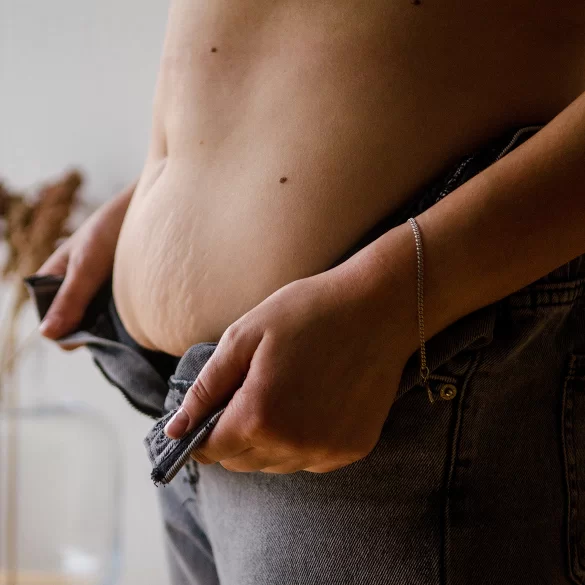
Postpartum belly refers to structural and functional changes within the abdominal area that occur as a result of pregnancy and childbirth. These changes involve the skin, subcutaneous tissue, musculo-fascial system, and trunk stabilization mechanics. They are a consequence of prolonged tissue stretching, hormonal adaptation, and reconstruction of the muscular system during pregnancy. For some women, regenerative processes lead to a gradual reversal of symptoms, but for many patients, these changes become permanent. Postpartum belly is not merely an aesthetic issue; it can also be associated with disturbances in body biomechanics, deep muscle function, and central stabilization.
Postpartum Belly – Appearance
The clinical picture of the abdomen after childbirth is varied and depends on the degree of tissue adaptation to the changes occurring during pregnancy. The most commonly observed are:
- Reduced skin tension and decreased elasticity,
- Excess skin in the lower abdomen,
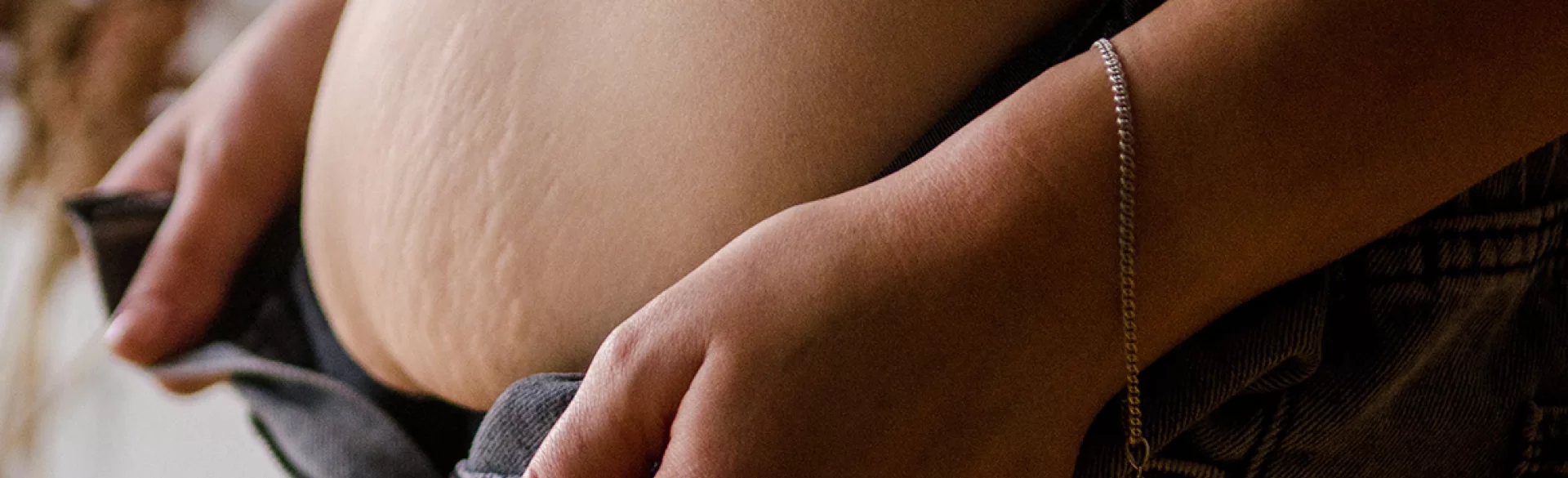
- Presence of stretch marks with varying degrees of severity,
- Protrusion of the abdominal wall, independent of the amount of adipose tissue,
- Altered contour of the abdomen, described as "domed" or "soft" abdomen.
An important pathophysiological element is the diastasis recti abdominis, which involves the widening of the linea alba and the separation of the rectus abdominis muscle edges. This condition can result in:
- Weakening of the trunk's stabilizing function,
- Increased load on the lumbar spine,
- Dysfunction of the deep muscles,
- Changes in pelvic alignment.
It should be emphasized that changes in the appearance of the abdomen in the first weeks postpartum are physiological. The processes of uterine contraction, collagen remodeling, and muscle regeneration can last from several months to over a year.
Postpartum belly - treatment
The therapeutic approach for postpartum abdomen should be based on functional and structural assessment of the abdominal wall. Treatment is staged and depends on the severity of the changes.
Basic elements of the approach include:
Postpartum Physiotherapy
This forms the basis of treatment, especially in cases of rectus abdominis diastasis. Its aims are:
- restoration of proper activation of the transverse abdominal muscle,
- improvement of fascial tension,
- normalization of intra-abdominal pressure,
- restoration of central stabilization.
Conservative Management
This includes:
- gradual introduction of physical activity,
- avoiding overloads that increase intra-abdominal pressure,
- weight control,
- supporting tissue regeneration through appropriate nutrition.
Supportive Treatment
In cases of persistent structural changes, therapies aimed at improving the quality of the skin and subcutaneous tissue can be implemented. Their goals are:
- increasing skin density,
- improving the tension of the abdominal wall,
- supporting regenerative processes.
Surgical treatment is considered only in cases of significant excess skin or large, persistent diastasis when conservative methods do not yield improvement.
Postpartum belly reduction treatments
Postpartum abdominal reduction treatments complement postpartum physiotherapy and conservative management. Their aim is to improve skin quality, soft tissue tension, and reduce persistent changes within the subcutaneous tissue. The selection of procedures depends on the dominant clinical problem: skin laxity, reduced myofascial tension, or localized fat accumulation.
Mechanical tissue stimulation treatments
This group includes technologies that use vacuum and multidimensional mechanical stimulation, such as LPG endermology and Icoone®. They act on the skin and subcutaneous tissue, leading to:
- improvement of lymphatic drainage,
- reduction of fluid retention,
- improvement of tissue elasticity,
- support in abdominal contouring.
These treatments do not affect the separation of the rectus abdominis muscles and do not replace the rehabilitation of deep muscles.
Firming treatments based on radiofrequency energy
Aesthetic radiofrequency uses radiofrequency energy for controlled heating of the dermis and subcutaneous tissue. An example of technology combining radiofrequency with ultrasound is Accent Prime or radiofrequency with vacuum massage Velashape or Reaction RF. The effects include:
- contraction of existing collagen fibers,
- stimulation of collagen remodeling,
- improvement in skin tension and density.
These treatments are primarily used for patients with skin laxity after pregnancy, without significant excess fat tissue.
Treatments reducing localized fat tissue
In cases of persistent localized fat accumulation, technologies that directly affect adipocytes are used. An example is Coolwaves® microwaves (ONDA), which lead to:
- selective damage to fat cells,
- gradual reduction of their volume,
- improvement in abdominal contour.
These treatments do not affect the muscle structure of the abdomen or excess skin.
Treatments supporting myofascial tension
Complementary therapies may include procedures affecting deep tissues and fascia, used to improve regenerative conditions. An example is therapies based on radiofrequency currents, such as INDIBA® 448 kHz, which:
- improve microcirculation,
- increase cellular metabolism,
- support soft tissue regeneration after stretching in pregnancy.
These methods serve a supportive role and do not constitute a treatment for rectus abdominis muscle separation.
The best clinical results are achieved by combining physiotherapy with supportive procedures, maintaining the proper sequence and patient qualification.

