Prosak on the eyelid
back to main page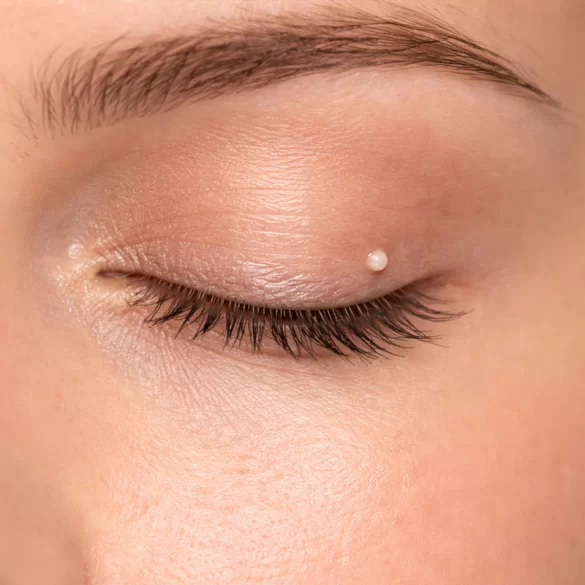
A milium on the eyelid is a benign skin lesion characterized as a keratin cyst, formed due to the accumulation of keratin under the epidermis. It is most commonly located in the delicate eyelid area—both upper and lower—where the skin is thin, and the openings of sebaceous glands can easily become blocked. These lesions are neither inflammatory nor cancerous and are not related to infections, but for aesthetic and diagnostic reasons, they often require dermatological consultation. Milia can occur singly or in multiples and can affect individuals of any age, even with proper skin hygiene. Their presence can be confused with other lesions (e.g., epidermoid cysts), making correct diagnosis and the selection of a safe removal method, especially around the eye, crucial.
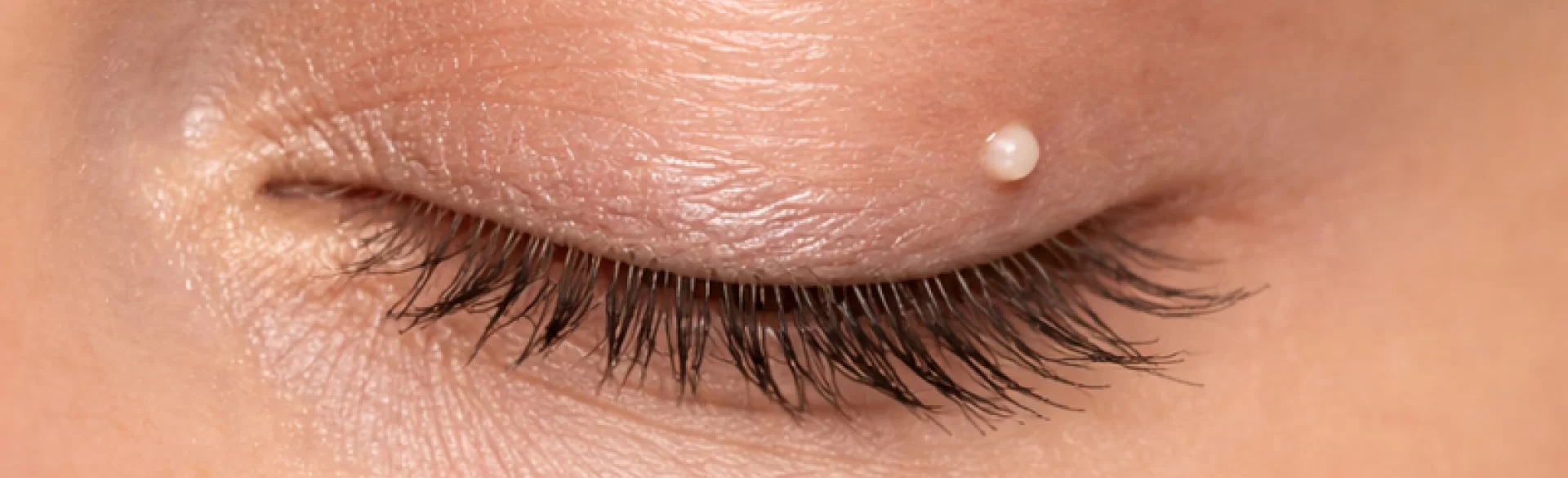
Milia on the eyelid – what do they look like
Milia on the eyelids have a characteristic clinical appearance that facilitates their recognition, although they can be mistaken for other minor skin lesions.
Typical features of milia:
- Color: white or pearly-yellow,
- Size: usually 1–2 mm in diameter,
- Shape: regular, spherical,
- Consistency: hard, solid,
- Skin surface: smooth, without redness,
- Lack of inflammatory symptoms: no pain, itching, or tenderness.
Most common locations:
- lower eyelids (infraorbital area),
- upper eyelids,
- medial canthus of the eye.
Milia do not have an opening on the skin surface, which is why they cannot be "safely extracted." Attempts at mechanical removal at home can lead to:
- micro-injuries,
- secondary infections,
- scarring and post-inflammatory hyperpigmentation, which in this area constitutes a significant aesthetic and functional problem.
Milia on the eyelid – causes of formation
The mechanism behind the formation of milia is the retention of keratin within the epidermis or upper layers of the dermis. Unlike acne, this process is not dependent on bacteria or inflammation.
Most common causes and predisposing factors:
- disorders in the process of keratinization of the epidermis,
- tendency for clogging of the sebaceous gland openings,
- use of heavy, occlusive eye cosmetics,
- improper makeup removal around the eyelids,
- chronic exposure to UV radiation,
- micro-injuries to the skin (e.g., post-procedures, peels, lasers),
- genetic predispositions.
Additional factors:
- thin, dry, or dehydrated skin,
- dermatological diseases with impaired epidermal barrier,
- long-term use of topical corticosteroids,
- age (more common in adults, but possible in children as well).
It is worth noting that milia are not the result of poor hygiene and can occur in individuals who maintain proper skin care.
Milia on the eyelid – how to remove
Removing milia around the eyelids requires special precision, experience, and adherence to aseptic principles due to the proximity to the eyeball and the thin structure of the skin.
Effective methods for removing milia:
- puncture and evacuation of contents
- performed with a sterile needle or lancet,
- quick, precise procedure,
- requires operator's experience,
- minimal risk of scarring with correct technique;
- electrocoagulation
- point removal of lesion using current,
- good control over depth of action,
- small scab, short healing time;
- fractional or ablative laser
- especially for multiple milia,
- allows simultaneous improvement of skin quality,
- requires appropriate patient qualification;
- medical peels (cautiously)
- only as a supportive method,
- does not remove existing milia but limits recurrences,
- tailored individually to skin type.
What not to do:
- do not squeeze milia on your own,
- do not use aggressive exfoliating products under the eyes,
- do not ignore recurring or multiple lesions (diagnosis required).
After the procedure, it is recommended to:
- use sun protection,
- apply gentle care to rebuild the epidermal barrier,
- avoid makeup for a few days (as advised by the specialist).
Treatments for milia on the eyelids
The treatment procedure for milia on the eyelids should be individually tailored, taking into account the number of lesions, skin type, and recurrence risk.
Commonly used procedures:
- dermatological procedures based on precise mechanical removal,
- electrothermal techniques with a focused effect,
- laser procedures adapted to the eye area,
- therapies that improve the quality of the epidermis and regulate keratinization.
Goals of the procedures:
- complete removal of existing milia,
- minimization of the risk of scars and discoloration,
- improvement of the eyelid skin structure,
- reduction in recurrence of lesions.
In the case of recurrent or numerous milia, it is necessary not only to remove them but also to adjust home care and possibly conduct dermatological diagnostics for keratinization disorders.

