Purulent pimples on the buttocks
back to main page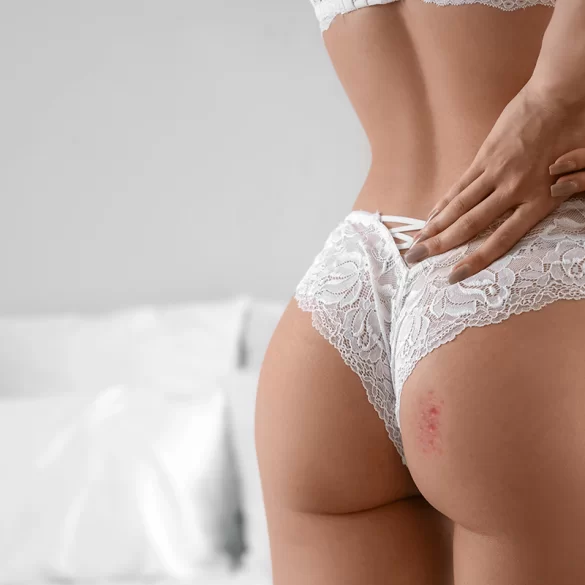

Pustular acne on the buttocks are inflammatory skin lesions in the form of pustules, filled with purulent content, located within the skin of the buttocks. They are most often associated with folliculitis, mechanical acne, excessive keratinization of follicle openings, or bacterial infection. Due to specific anatomical conditions—constant friction, occlusion, moisture, and increased temperature—this area is prone to the development of inflammatory changes. In some cases, the lesions are mild and self-limiting; however, recurrent, painful, or multiple acne may require dermatological diagnostics for conditions such as hidradenitis suppurativa, boils, or metabolic disorders.
Purulent pimples on the buttocks – causes
The etiology of purulent lesions in this location is multifactorial and includes both local and systemic factors.
The most common causes are:
- Folliculitis – usually caused by bacteria, primarily Staphylococcus aureus. It leads to redness, tenderness, and the formation of pustules with a purulent plug in the center.
- Acne mechanica – occurs as a result of:
- prolonged pressure (e.g., sedentary lifestyle),
- wearing tight, synthetic underwear,
- excessive sweating and occlusion.
- Keratosis pilaris – excessive keratinization of hair follicle openings leads to their blockage and secondary inflammation.
- Furuncles – deep infection of the hair follicle and surrounding tissues, often painful, with a tendency to form abscesses.
- Hidradenitis suppurativa – a chronic inflammatory disease of hair follicles and apocrine glands, characterized by painful nodules, fistulas, and scarring.
- Metabolic and hormonal disorders, including:
- insulin resistance,
- obesity,
- diabetes,
- hyperandrogenism.
- Improper hygiene or excessive hygiene (overly aggressive cleansing agents damaging the hydrolipid barrier).
Exacerbating factors include: chronic stress, a diet with a high glycemic index, smoking, and chronic micro-injuries to the skin. In the case of recurring lesions, it is necessary to exclude skin colonization by staphylococcus strains and assess the patient's overall health.
Purulent pimples on the buttocks – treatment
Therapeutic management depends on the severity, depth, and frequency of recurrences of the lesions.
1. Topical Treatment
In mild cases, the following are used:
- Antiseptic preparations (octenidine, chlorhexidine),
- Topical antibiotic ointments (e.g., mupirocin, fusidic acid),
- Topical retinoids (adapalene) – normalizing follicular keratinization,
- Benzoyl peroxide preparations – antibacterial and keratolytic action,
- Salicylic or azelaic acid – reducing hyperkeratosis and inflammation.
It is important to avoid mechanical squeezing of lesions, as this leads to the spread of infection, scarring, and post-inflammatory hyperpigmentation.
2. Systemic Treatment
In cases of:
- numerous, painful boils,
- recurrent furunculosis,
- suspected hidradenitis suppurativa,
the following are considered:
- Oral antibiotic therapy (e.g., doxycycline, clindamycin),
- isotretinoin treatment in selected cases,
- anti-inflammatory and immunomodulating therapy in HS.
In patients with metabolic diseases, glycemic control and weight reduction are crucial.
3. Procedural and Dermatological Management
For chronic lesions and post-inflammatory scars, the following are used, among others:
- Medical peels with acids (e.g., salicylic, pyruvic) – reducing keratinization and bacteria,
- Fractional laser therapy – skin remodeling and scar reduction,
- Microneedle radiofrequency – improving skin structure and reducing the tendency to inflammation,
- for abscesses – surgical incision and drainage.
The Ambasada Urody Clinic & Spa in Warsaw offers professional chemical peels, laser therapies, and microneedle radiofrequency treatments, which support the treatment of inflammatory lesions and minimize the risk of permanent scarring.

