Russian Lips
back to main page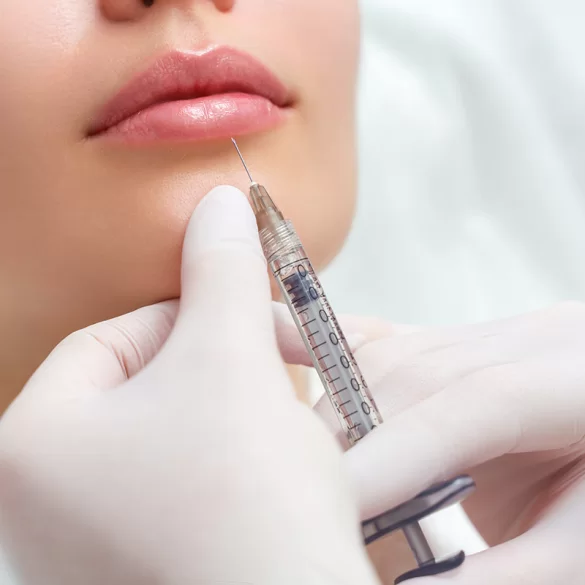

Russian Lips is an advanced lip modeling technique using hyaluronic acid-based fillers, aimed at increasing the height of the vermilion border and distinctly defining the Cupid's bow, without excessively projecting the lips forward. This method originates from the practices of Eastern European doctors and has gained popularity as an alternative to classic lip augmentation, which often leads to the effect of over-projection ("duck lips"). Russian Lips focuses on vertical lip work, precise volume control, and maintaining facial proportions. The procedure requires extensive anatomical and technical experience, as it involves an area that is highly vascularized and innervated. For this reason, Russian Lips is considered a procedure with a higher degree of difficulty and should be performed only by a qualified aesthetic medicine doctor.
Russian Lips Technique - What Is It
The Russian Lips technique involves the vertical administration of hyaluronic acid, most commonly using linear or micro-point deposition methods, applied from the base of the vermilion border to its upper margin. Unlike classical volumetric techniques, the product is not primarily distributed horizontally to push the lip forward but is used to "lift" and enhance its shape.
Key features of the Russian Lips technique:
- Vertical injection vector – modeling the height of the lip, not its projection.
- Precise work on the vermilion border – with particular emphasis on the Cupid's bow.
- Controlled volume – typically smaller amounts of product than in classical augmentation.
- Individualized layering of the product – tailored to the patient's anatomy.
The procedure is most often performed using a needle, which allows for very precise modeling, although a cannula can be used in selected cases in the lateral areas of the lips. This requires excellent knowledge of the vascular anatomy (especially the superior and inferior labial arteries) to minimize the risk of vascular complications.
Russian Lips - what it involves
The Russian Lips procedure begins with a thorough analysis of the facial and lip anatomy, which includes:
- evaluation of the proportions of the upper and lower lip,
- analysis of symmetry,
- assessment of the philtrum length,
- evaluation of tissue quality (elasticity, hydration level, presence of scars).
The procedure itself involves several stages:
- Local anesthesia – usually in the form of a cream or dental anesthesia.
- Precise vertical injections – the product is administered gradually, with high volume control.
- Manual modeling – gentle, point-based, without aggressive massaging.
- Symmetry assessment and correction – possible supplementation at critical points.
An important element of the Russian Lips technique is the conscious limitation of volume. The procedure is not intended for radical lip augmentation, but rather for their modeling and aesthetic "lifting." Too much product can lead to disproportion, excessive tissue tension, and an increased risk of swelling and migration of hyaluronic acid.
Russian Lips – effects
The effects of the Russian Lips technique are noticeable yet more elegant and structured compared to traditional lip augmentation. Key results include:
Aesthetic effects:
- increased height of the vermilion border,
- clearly defined Cupid’s bow,
- “heart-shaped” upper lip,
- optical rejuvenation of the lip area,
- improved lip symmetry.
Functional and structural effects:
- better support of lip tissues,
- improved hydration and tension due to hyaluronic acid properties,
- reduction of fine perioral wrinkles (indirect effect).
The effect typically lasts 6–12 months, depending on:
- the type of product used,
- the patient's metabolism,
- facial expressions,
- lifestyle (smoking, UV exposure).
It should be noted that Russian Lips is not a technique for everyone. For patients with a very thin vermilion border, significant tissue laxity, or a tendency for swelling, this technique may require modification or staged treatment.
Russian Lips treatments
Russian Lips procedures should be performed exclusively in medical settings, using certified fillers and in accordance with aseptic principles. In clinical practice, this procedure often constitutes part of a comprehensive aesthetic plan for the lip area, which may include:
- lip shaping using the Russian Lips technique as a primary procedure,
- prior tissue preparation (e.g., biostimulating or moisturizing treatments),
- secondary corrections to maintain shape,
- supplementary procedures to improve skin quality around the lips.
Contraindications for the procedure include:
- active infections in the lip area,
- autoimmune diseases in the active phase,
- blood clotting disorders,
- pregnancy and breastfeeding,
- tendency to develop keloids (relative).
Russian Lips is a technique that requires not only manual dexterity but above all a critical approach to aesthetics. If a patient's goal is solely to maximize lip volume, this method will not be the optimal choice. However, if the priority is proportions, structure, and a controlled effect, Russian Lips remains one of the most demanding yet precise lip modeling techniques in modern aesthetic medicine.

