Scabies
back to main page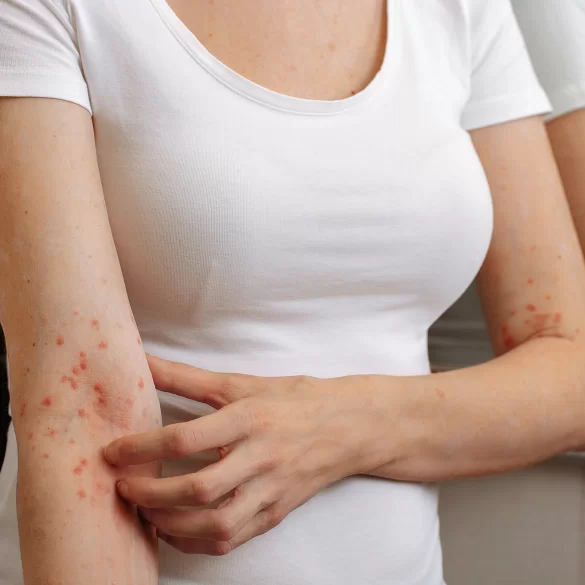
Scabies is a contagious parasitic skin disease caused by the mite Sarcoptes scabiei var. hominis. The parasite burrows into the stratum corneum of the epidermis, where it lays eggs, causing an inflammatory-allergic reaction in the body. Infection primarily occurs through direct, prolonged skin-to-skin contact, and less frequently indirectly through everyday objects. The disease can affect individuals of any age and is not related to personal hygiene levels. Untreated scabies leads to severe symptoms, bacterial superinfections, and permanent skin changes, including scars and post-inflammatory discolorations. Early diagnosis and proper treatment are crucial both for the patient and for limiting the spread of infection in the environment.
Scabies - what it looks like
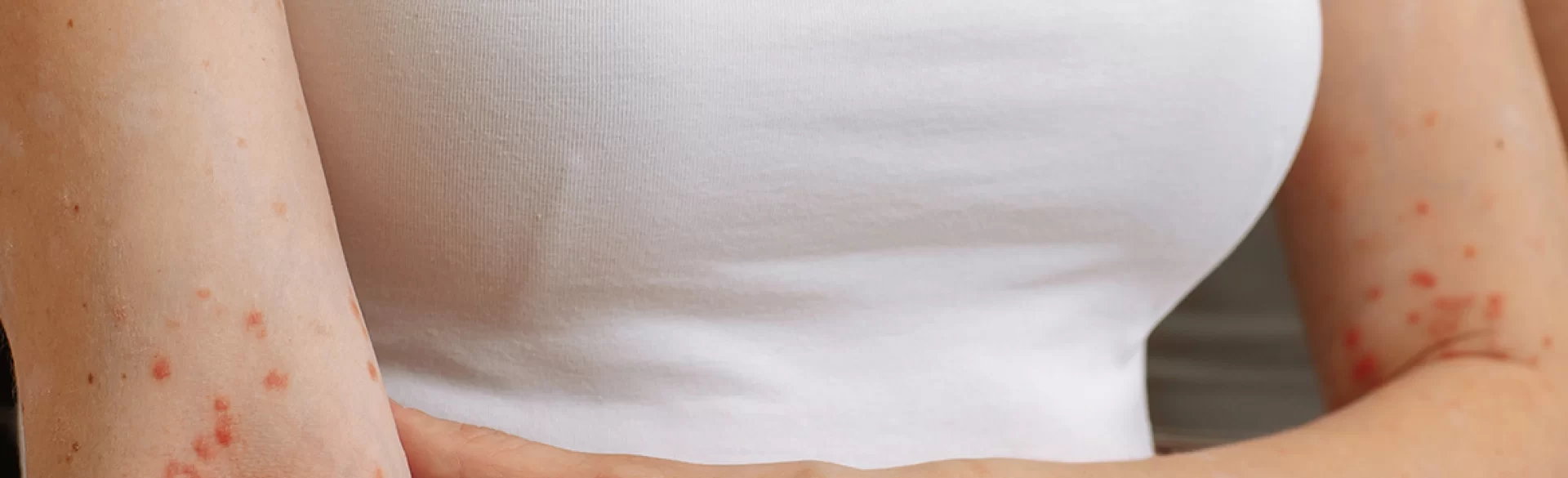
The clinical picture of scabies is quite characteristic, although it can be mistaken for other inflammatory dermatoses. Skin lesions result from mechanical damage to the epidermis by the parasite and an immune response to its antigens.
Most commonly observed are:
- small papules, pustules, and vesicles,
- linear or winding scabies burrows, several to several tens of millimeters long,
- excoriations and erosions resulting from intense scratching,
- local crusts and secondary inflammatory changes.
Typical locations of lesions include:
- interdigital spaces of the hands,
- wrists and flexor areas,
- armpits, navel area,
- buttocks and genital area,
- in children, also the scalp, face, and soles of the feet.
In individuals with weakened immunity, Norwegian (hyperkeratotic) scabies may develop, characterized by extensive, thick keratotic layers and very high contagiousness.
Scabies - symptoms
The most bothersome symptom of scabies is itching of the skin, which has several characteristics typical of this disease:
- it intensifies in the evening and at night,
- it affects many areas of the body simultaneously,
- it often does not subside despite improved hygiene.
Other clinical symptoms include:
- burning and feeling of skin discomfort,
- inflammatory erythema around the lesions,
- pain in case of bacterial superinfections,
- insomnia and chronic fatigue caused by nocturnal itching.
In some patients, especially after starting treatment, there may be a persistent so-called post-scabetic itch, which does not indicate an active infection but rather a sustained immune response of the skin. This phenomenon is often mistakenly interpreted as treatment inefficacy.
Scabies - How to Treat
Treatment of scabies requires simultaneous pharmacological and sanitary actions. Therapy should always be conducted in accordance with a doctor's recommendations, as improper procedures can lead to recurrence of the disease.
The basic principles of treatment include:
- use of antiparasitic preparations for topical or systemic use,
- simultaneous treatment of all household members and close contacts, even if they do not show symptoms,
- repeating the treatment after a specified time, if recommended by a doctor.
Supportive actions:
- relief of itching with anti-inflammatory and soothing preparations,
- treatment of bacterial superinfections if they occur,
- regular dermatological check-ups until complete resolution of lesions.
It should be emphasized that the cessation of itching is not equivalent to a cure, just as persistent itching does not always indicate ineffective treatment. The effectiveness of therapy is determined by the elimination of the parasite and the prevention of infection transmission.
Scabies - How to Avoid Infection
Prevention of scabies primarily relies on limiting contact with an infected person and adhering to proper environmental hygiene practices. The disease easily spreads in crowded places such as homes, care facilities, or hotels.
Recommended preventive actions:
- avoiding direct, prolonged skin-to-skin contact with an infected person,
- washing underwear, bed linens, and clothes at a temperature of at least 60°C,
- ironing fabrics with a hot iron,
- storing items that cannot be washed in sealed bags for several days,
- thorough cleaning and vacuuming of rooms.
It is important to clearly emphasize: scabies is not a result of hygiene neglect, and excessive washing of the skin does not prevent infection and may even exacerbate irritation.
Treatments for scars and discoloration caused by scabies pimples
After successfully treating scabies, some patients may have secondary changes such as post-inflammatory hyperpigmentation, skin thickening, or small atrophic scars. These occur due to chronic inflammation and intense scratching.
Treatment of these changes involves dermatologically proven procedures, including:
- laser therapies – stimulate collagen remodeling and even out skin tone,
- microneedle radiofrequency – improves skin structure and density,
- skin mesotherapy – supports regeneration and repair processes,
- medical peels – reduce hyperpigmentation and smooth the epidermis,
- biostimulating therapies – accelerate skin reconstruction after inflammation.
The choice of method depends on:
- the type and depth of changes,
- skin phototype,
- the time elapsed since the disease was cured,
- the patient's individual regenerative predispositions.
It is crucial that procedures are performed only after complete recovery from scabies, when there is no longer an active infectious process. This ensures the safe and gradual restoration of the skin's normal appearance.

