Scarring acne
back to main page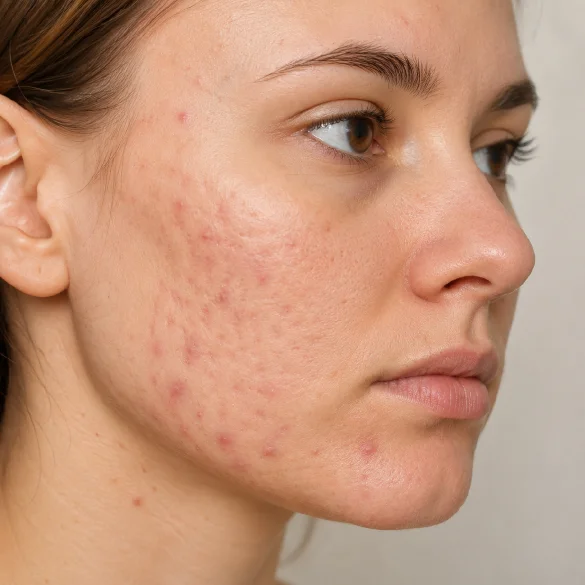
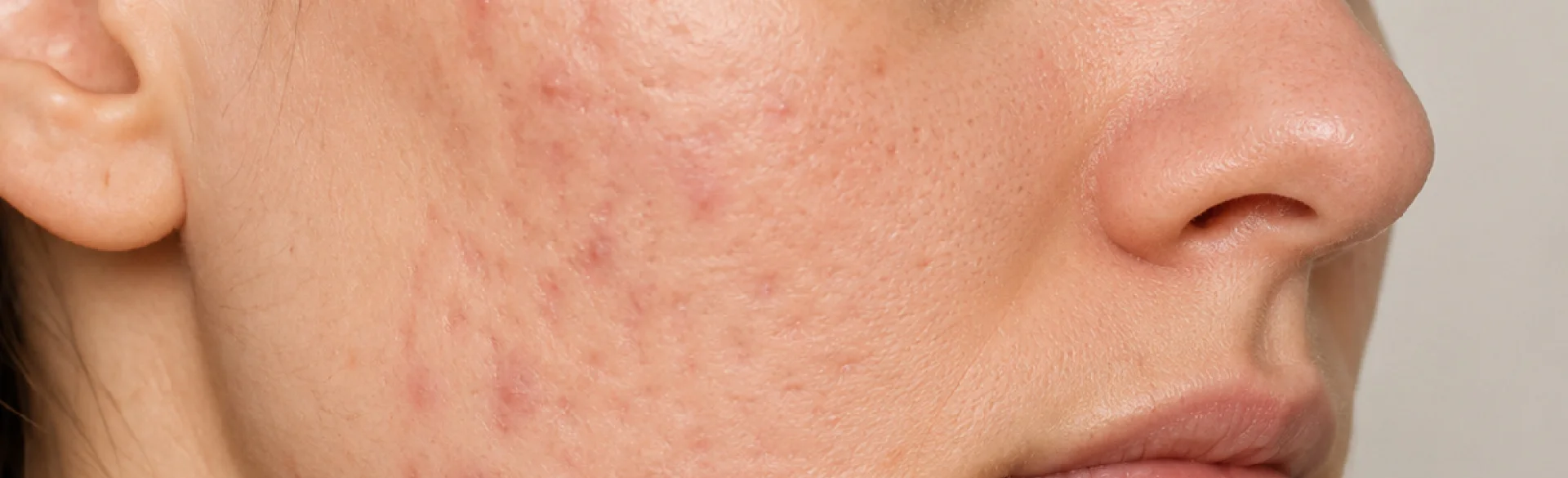
Scarring acne is a form of acne in which the inflammatory process leads to permanent damage to the dermis and the formation of irreversible scars. Scarring lesions most often develop as a result of deep papules, nodules, and inflammatory cysts, but they can also appear after less severe lesions in individuals with an individual predisposition to abnormal healing. Acne scars are not only an aesthetic problem but also a medical one, as they indicate a loss of the proper skin structure. Modern dermatology emphasizes that the most effective method of limiting scarring remains early and appropriately selected treatment of active acne and rapid resolution of inflammation.
Scarring acne - what is it
Scarring acne is not a separate disease entity, but a term describing the course of acne in which permanent tissue damage occurs. The mechanism of scar formation is associated with intense inflammation involving the deep layers of the skin and the destruction of collagen and elastin fibers. In the healing process, the body does not recreate the original architecture of the skin, but replaces it with scar tissue.
The risk of scar development is primarily increased by:
- severe nodulocystic acne,
- long-lasting inflammatory lesions,
- delayed initiation of dermatological treatment,
- mechanical squeezing and scratching of lesions,
- genetic predisposition to abnormal healing,
- recurrent inflammation in the same areas of the skin.
Scars are most commonly located on the cheeks, temples, chin, jawline, back, and chest. Their presence can lead to disruption of the skin barrier function, deterioration of skin quality, and a significant reduction in the patients' quality of life.
In clinical practice, it is emphasized that the scarring process can begin at an early stage of active acne, before the lesions become very extensive. Therefore, any chronically persisting inflammatory lesion requires appropriate treatment.
Scarring acne - why some pimples leave scars and others don't
Not every acne lesion leads to the formation of a scar. The depth of the inflammatory process, its duration, and the individual response of the body to tissue damage are of decisive importance.
Superficial comedones and small pustules usually involve only the epidermis or superficial layers of the skin, which is why they heal without leaving permanent marks. Deep inflammatory lesions, which destroy collagen and the skin's supporting structures, progress completely differently. After they resolve, a loss of tissue or, less frequently, its excessive overgrowth remains.
Biological factors are also important, such as:
- intensity of the inflammatory reaction,
- activity of collagen-degrading enzymes (metalloproteinases),
- the ability of fibroblasts to rebuild the skin,
- genetic predisposition,
- skin phototype,
- coexisting hormonal disorders.
An important risk factor is the self-manipulation of lesions. Squeezing pimples increases damage to hair follicles, facilitates the spread of inflammation to deeper layers of the skin, and prolongs the healing process. As a result, the risk of both atrophic scars and post-inflammatory hyperpigmentation increases significantly.
Studies also indicate that even moderate acne, persisting for many months without treatment, can leave permanent scars. Therefore, the severity of the lesions does not always correspond to the risk of their formation.
Scarring acne - types of acne scars
Acne scars differ in structure, appearance, and the mechanism of their formation. Their correct classification is crucial for choosing the appropriate therapy.
The most common are atrophic scars, which account for about 80-90% of all acne scars.
They can be divided into three main types:
Scar type | Characteristics |
|---|---|
Ice pick | very narrow, deep, pitted defects resembling a puncture with a sharp tool |
Boxcar | wide, round or oval depressions with sharply demarcated borders |
Rolling | gentle, wavy depressions resulting from the presence of fibrous bands pulling the skin downwards |
Much less frequently observed are hypertrophic scars, which remain limited to the site of the previous skin injury, and keloids, which exceed the boundaries of the original lesion. These types of scars more often develop on the chest, shoulders, and back.
In many patients, several types of scars coexist simultaneously. Additionally, the clinical picture is often complemented by:
- enlarged pores,
- post-inflammatory hyperpigmentation,
- post-inflammatory erythema,
- uneven skin texture,
- reduced skin elasticity.
For this reason, treatment usually requires the use of combination therapies tailored to the dominant type of damage.
Scarring acne - how to prevent scars
The prevention of acne scars begins as soon as the first inflammatory lesions appear. The faster the inflammatory process is inhibited, the greater the chance of preserving the proper skin structure.
The key principles of prevention include:
- prompt initiation of dermatological treatment,
- regular use of prescribed topical or systemic medications,
- not squeezing inflammatory lesions,
- proper skincare supporting the reconstruction of the epidermal barrier,
- daily photoprotection,
- controlling disease recurrence.
In the case of severe acne, systemic treatment is often necessary, including, among others, isotretinoin, antibiotics, or hormone therapy, depending on clinical indications. Properly managed treatment not only reduces the number of new lesions, but above all, limits the risk of permanent skin damage.
Modern guidelines also recommend implementing therapies that improve skin remodeling as early as possible after the active inflammatory process has been controlled. This can reduce the risk of permanent deformities and improve the final treatment outcome.
Scarring acne - acne scar treatments
Treatment of acne scars should only be started after achieving control over active acne. Otherwise, new inflammatory lesions may lead to the formation of more scars, limiting the effectiveness of the therapy.
The choice of method depends on the type, depth, and extent of the scars, as well as the skin phototype.
The most commonly used procedures include:
- fractional ablative and non-ablative lasers, stimulating collagen remodeling and smoothing of the skin surface,
- microneedle radiofrequency, combining microneedling with controlled heating of the dermis,
- microneedling, stimulating regenerative processes,
- medical peels, improving skin structure and smoothing superficial irregularities,
- subcision, which is the mechanical cutting of fibrous bands responsible for rolling scars,
- biostimulating therapies, supporting collagen rebuilding and improving skin quality,
- tissue fillers, used in selected cases of deep atrophic scars.
The best results are achieved through combination therapies that combine several methods in an individually planned treatment program. Collagen remodeling occurs gradually, which is why full improvement develops over several months after the end of therapy and usually requires a series of treatments.
It should be emphasized that the complete removal of acne scars is currently rarely possible. The goal of treatment is primarily to reduce their depth, smooth the skin surface, improve its quality, and reduce the visibility of lesions, which in many cases allows for a very significant aesthetic improvement.

