Pus-filled pimples on the back
back to main page
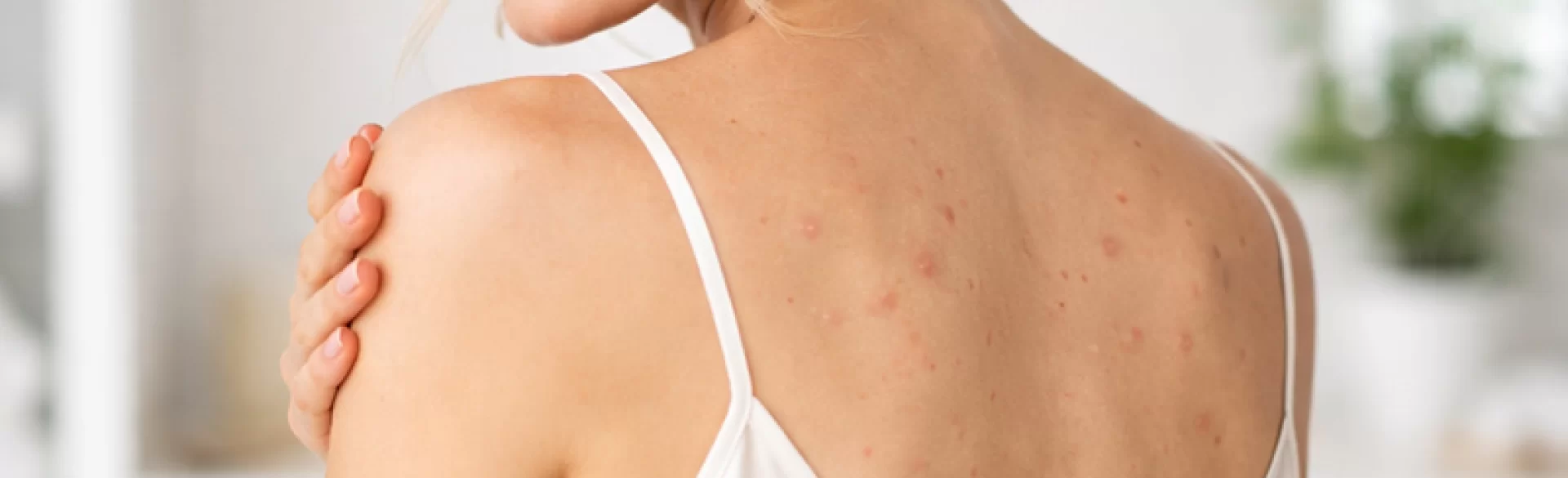
Purulent pimples on the back are inflammatory skin lesions in the form of pustules, whose interior contains purulent material composed of leukocytes, bacteria, and fragments of epidermal cells. They are most often associated with common acne (acne vulgaris), inflammation of hair follicles (folliculitis), or excessive activity of the sebaceous glands. The skin of the back is one of the areas particularly prone to the development of such lesions because it contains numerous sebaceous glands and hair follicles. Purulent lesions may present as single pustules or multiple inflammatory foci, which in more severe cases can lead to acne scarring and post-inflammatory hyperpigmentation. This problem affects both adolescents during puberty and adults.
Pus-filled pimples on the back – causes
The development of purulent skin lesions on the back is a multifactorial process associated with dysfunction of the pilosebaceous unit. A key role is played by excessive sebum production, i.e. skin oil, which in combination with dead keratinocytes leads to blockage of hair follicle openings. Under such conditions bacteria develop, primarily Cutibacterium acnes, which initiate an inflammatory reaction.
The most common factors that favor the formation of purulent pimples on the back include:
- excessive activity of the sebaceous glands, often related to the action of androgens,
- disorders of keratinization of hair follicle openings, leading to the formation of comedones,
- proliferation of Cutibacterium acnes bacteria within clogged hair follicles,
- friction and pressure on the skin, e.g., from tight clothing, backpacks, or sports equipment,
- excessive sweating, which promotes bacterial growth,
- use of comedogenic cosmetics or body oils,
- hormonal disorders, including hyperandrogenism,
- genetic predisposition.
Lifestyle can also be an important factor. A diet with a high glycemic index, chronic stress, or lack of sleep can exacerbate inflammatory processes in the skin. In some patients, purulent lesions on the back are also associated with bacterial folliculitis, which clinically can resemble acne.
Pus-filled pimples on the back – what do they look like
Purulent pimples on the back are inflammatory skin lesions referred to in dermatology as pustules (pustulae). They are small, raised inflammatory foci filled with purulent material that arises as a result of the body's immune response to the presence of bacteria and the breakdown products of epidermal cells. These lesions most often develop within the pilosebaceous unit, i.e. the structure comprising the hair follicle and the adjacent sebaceous gland.
Morphologically, purulent pimples can take various forms. Most commonly observed are:
- purulent pustules (pustulae) – lesions filled with yellowish or whitish purulent material, usually surrounded by an erythematous inflammatory halo,
- inflammatory papules (papulae) – firm, red lesions without visible purulent content, which may develop into pustules,
- inflammatory nodules (noduli) – deeper and more painful inflammatory lesions that occur in more severe forms of acne.
An important diagnostic feature is distinguishing a purulent pustule from a comedo. Comedones (open or closed) arise from the accumulation of sebum and keratinized epidermal cells in the opening of the hair follicle; however, they are not accompanied by inflammation or the presence of pus. Purulent pustules, on the other hand, are clearly reddened, often tender to the touch, and may cause a burning sensation or pain.
The size of the lesions varies – from small pustules a few millimetres in diameter to larger inflammatory foci. In cases of pronounced inflammation, several lesions may merge, forming extensive inflammatory areas.
Purulent pimples on the back may occur in the course of various dermatological conditions, most commonly such as:
- common acne (acne vulgaris) – the most common cause of purulent lesions on the back,
- bacterial folliculitis (folliculitis),
- conglobate acne (acne conglobata) – a severe form of acne with deep inflammatory lesions and a tendency to form scars.
Pus-filled pimples on the back – why do they appear in this area?
The back is one of the areas of skin particularly predisposed to the development of acne lesions and pus-filled pustules. This is primarily due to the anatomical structure of the skin in this area and the specific environmental conditions that promote the development of inflammation.
One of the key factors is a large number of sebaceous glands. These glands produce sebum – a lipid protective substance of the skin. However, when sebum production is excessive, the openings of hair follicles become clogged, which promotes the formation of comedones and secondary inflammatory lesions.
Mechanical factors also play an important role. The skin of the back is exposed to friction and pressure from clothing, especially in the case of tight garments, synthetic materials, backpacks, or sports equipment. Prolonged irritation of the skin can lead to microtrauma and exacerbation of the inflammatory process within the hair follicles.
Another factor favoring the development of pus-filled pimples is excessive sweating. A moist environment promotes the proliferation of bacteria residing on the skin surface, especially Cutibacterium acnes and bacteria responsible for folliculitis. The combination of sweat, sebum, and shed skin cells can lead to the formation of keratin-sebum plugs that block the openings of hair follicles.
The structure of the skin in this area also matters. The skin of the back is thicker than the skin of the face, and the hair follicles are located deeper in the dermis. As a result, the inflammatory process may be more pronounced, and skin lesions often take on a larger and deeper character than in other parts of the body.
Pus-filled pimples on the back — can they cause scarring?
In cases of severe inflammatory lesions, pustular pimples on the back can lead to the formation of acne scars, which are one of the most common complications of chronic acne. Scars appear when the inflammatory process involves deeper layers of the skin and leads to damage to collagen fibers and the structures of the dermis.
The risk of scarring increases particularly when inflammatory lesions are deep, persist for a long time, or are mechanically damaged. Popping pimples can cause the inflammation to extend deeper into the skin and can also promote secondary bacterial infections, which significantly increases the likelihood of permanent scarring.
In dermatology, several basic types of acne scars are distinguished:
- atrophic (atrophic) scars – arise as a result of tissue loss and take the form of depressions in the skin; these include, among others, ice-pick, boxcar and rolling scars,
- hypertrophic (hypertrophic) scars – result from excessive collagen production during the healing process and are raised above the skin surface,
- keloids (keloids) – less common, characterized by excessive and uncontrolled growth of scar tissue.
The back is one of the locations particularly prone to the formation of hypertrophic scars, because the skin in this area is thick and tissue tension is relatively high. For this reason, in cases of chronic or severe inflammatory lesions, early implementation of dermatological treatment is recommended, which helps limit inflammation and reduce the risk of permanent consequences in the form of scarring.
Various dermatological methods are used in the treatment of acne scars, including laser procedures, chemical peels, or procedures that stimulate collagen remodeling in the skin.
Pus-filled pimples on the back – treatment
Treatment of purulent acne lesions on the back depends on the severity of the changes and the cause of their occurrence. Therapy should focus on limiting sebum production, reducing bacteria and decreasing skin inflammation.
In dermatology, several basic therapeutic methods are used:
Topical treatment
Most often includes preparations containing:
- topical retinoids (e.g., adapalene, tretinoin), which regulate the process of epidermal keratinization,
- benzoyl peroxide, which has antibacterial action,
- topical antibiotics, used in cases of pronounced inflammation,
- azelaic acid or salicylic acid, which have anti-inflammatory and keratolytic effects.
Systemic treatment
In the case of extensive inflammatory lesions, the doctor may implement:
- oral antibiotic therapy (e.g., tetracyclines),
- systemic retinoid therapy (isotretinoin),
- hormonal therapy in female patients with hormonal disorders.
Dermatological and cosmetic procedures
Adjunctive procedures are used to help reduce the number of inflammatory lesions and improve the condition of the skin on the back. These include, among others:
- chemical peels that regulate epidermal keratinization,
- laser therapy, which has antibacterial and anti-inflammatory effects,
- skin cleansing and sebum-regulating procedures.
In clinical practice, among other methods, laser technologies and dermatological procedures are used, also available at Ambasadzie Urody Clinic & Spa, such as laser acne treatment, medical chemical peels, Nd:YAG laser or procedures reducing acne scars.
An important element of therapy is also proper care of the skin on the back. It is recommended to use products with sebum-regulating and antibacterial action, avoid heavy comedogenic cosmetics and regularly cleanse the skin after physical exertion. If purulent skin lesions persist, a dermatological consultation is necessary, as chronic inflammation may lead to permanent scarring.

