Sides
back to main page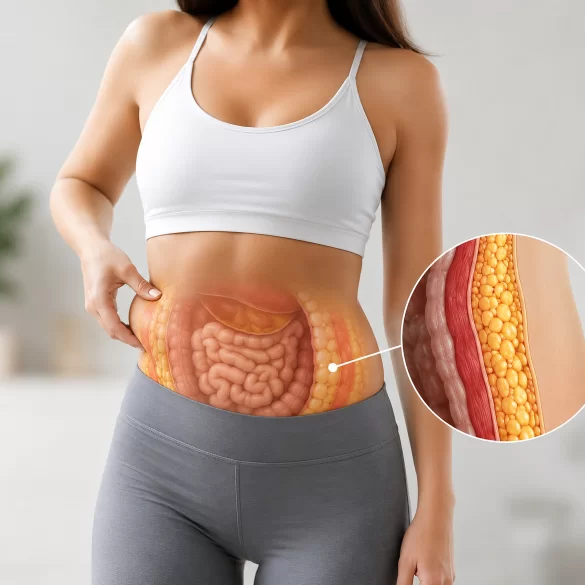
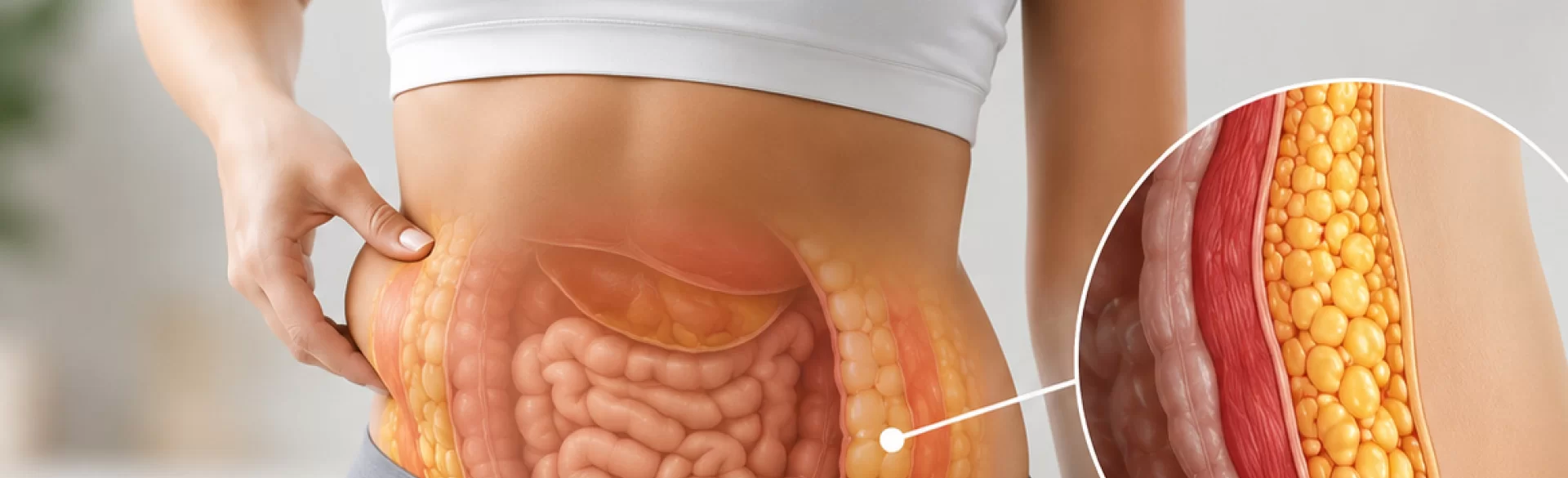
“Boczki” is a colloquial term for the local accumulation of adipose tissue in the area of the lateral parts of the waist and the lower torso. In women, fat deposits are most often located above the iliac crest and within the waist, while in men they characteristically form the so-called “love handles”, i.e., fat rolls on the sides of the abdomen. This phenomenon results from the physiology of energy storage, hormonal factors, and individual genetic predisposition. “Boczki” can occur both in overweight individuals and in slim patients, as local adipose tissue often shows high resistance to diet and physical activity. Modern aesthetic medicine treats this problem as a combination of metabolic and hormonal disorders, as well as the local architecture of adipose tissue.
Love handles - what they are
Love handles represent a subcutaneous accumulation of adipocytes, i.e., fat cells, which expand under the influence of a positive energy balance. Adipose tissue in this area functions as an energy store, thermal insulation, and an endocrine organ secreting cytokines and hormones that affect the metabolism of the entire organism.
In clinical practice, two mechanisms of love handle formation are distinguished:
- adipocyte hypertrophy - an increase in the volume of fat cells,
- adipocyte hyperplasia - an increase in the number of fat cells.
The second mechanism is of particular importance because once formed, adipocytes remain in the body for many years, which explains the tendency for recurrent fat deposition in the same places.
Adipose tissue in the lateral waist area is also characterized by specific hormone receptor activity. Alpha-2 adrenergic receptors dominate there, which inhibit lipolysis, i.e., the breakdown of fat. At the same time, the blood supply to this area is often weaker than, for example, in the face or limbs, which further hinders the mobilization of fatty acids during physical exertion.
It is worth emphasizing that love handles are not solely an aesthetic problem. Excessive accumulation of adipose tissue around the waist can be a marker of metabolic disorders, insulin resistance, and an increased risk of cardiovascular diseases.
Love handles - where they accumulate
The accumulation of fat tissue referred to as love handles is located primarily:
- in the lateral parts of the waist,
- above the hips,
- in the lower back,
- in the lumbar region,
- on the border between the abdomen and hips.
Fat distribution depends primarily on:
Factor | Influence on fat accumulation |
|---|---|
Genetics | Determines the distribution of adipocytes |
Hormones | Influence the metabolic activity of fat tissue |
Age | Slows down metabolism and increases the tendency for fat deposition |
Stress | Elevates cortisol levels, which promote abdominal obesity |
Lifestyle | Lack of physical activity and caloric surplus intensify fat deposition |
In women, love handles often coexist with fat deposition in the hips and thighs, which is associated with the action of estrogens. This body shape is referred to as the gynoid ("pear") type. In men, the android ("apple") type dominates, where fat is deposited mainly within the abdomen and waist.
Chronic stress also plays a significant role. Cortisol increases the deposition of visceral fat and enhances the appetite for high-energy products. As a result, the waist area becomes particularly susceptible to the accumulation of fat tissue.
In aesthetic medicine, love handles are among the most frequently treated localized fat deposits. Treatments include, among others:
- cryolipolysis,
- injection lipolysis,
- RF radio waves,
- HIFU,
- endermologie,
- body shaping treatments based on electromagnetic energy,
- surgical liposuction.
The selection of therapy depends on the thickness of the fat tissue, skin quality, and the presence of tissue laxity.
Love handles - dlaczego trudno je zredukować
Reduction of love handles is one of the most difficult elements of body shaping. This is due to the biology of adipose tissue and the body's adaptive mechanisms.
The most important causes of stubborn love handle reduction include:
Dominance of alpha-2 receptors
Fat cells in the waist area exhibit a large number of alpha-2 adrenergic receptors. These receptors inhibit the process of lipolysis even during physical activity and a caloric deficit.
Limited tissue blood supply
Weaker microcirculation causes reduced transport of hormones and enzymes responsible for burning fat. For this reason, the mobilization of fatty acids proceeds more slowly than in other areas of the body.
Metabolic adaptation
During prolonged weight loss, the body triggers energy-saving mechanisms:
- slows down the basal metabolic rate,
- reduces thermogenesis,
- increases the feeling of hunger,
- intensifies energy storage.
As a result, fat in the love handles area may persist despite body weight loss.
Hormonal factors
Insulin resistance, hyperinsulinemia, chronic stress, and hormonal imbalances promote fat accumulation specifically around the waist. Particularly significant is an excess of cortisol and reduced insulin sensitivity.
Low effectiveness of "spot exercises
Exercises targeted solely at the oblique abdominal muscles do not cause localized fat burning. The phenomenon of so-called spot reduction is not supported by scientific research. Training strengthens muscles, but reducing body fat requires a systemic energy deficit.
For this reason, effective management involves simultaneous action:
- dietary,
- metabolic,
- hormonal,
- training,
- treatment.
Love handles vs. visceral fat - the difference
Love handles are most often associated with subcutaneous adipose tissue, whereas visceral fat is located deep in the abdominal cavity, around internal organs. Both types of fat differ in structure, metabolic activity, and impact on health.
Feature | Love handles (subcutaneous fat) | Visceral fat |
|---|---|---|
Location | Under the skin | Around organs |
Visibility | Externally visible | Often invisible |
Metabolic function | Lower activity | High hormonal activity |
Health risk | Moderate | High |
Association with diseases | Mainly aesthetic | Diabetes, hypertension, atherosclerosis |
Visceral fat is considered particularly dangerous metabolically. It produces pro-inflammatory cytokines and influences the development of:
- metabolic syndrome,
- type 2 diabetes,
- hypertension,
- fatty liver disease,
- cardiovascular diseases.
Importantly, a patient can have relatively small love handles and, at the same time, a significant amount of visceral fat. Therefore, evaluating the body shape solely visually does not allow for determining the actual health risk.
In diagnostics, the following are used:
- waist circumference measurement,
- body composition analysis,
- imaging studies (CT, MRI),
- evaluation of the WHR (waist-to-hip ratio).
In the case of excess visceral fat, metabolic and lifestyle changes are of primary importance, while aesthetic procedures play a complementary role.
Treatments used in the reduction of love handles
In modern aesthetic medicine, the reduction of love handles is based on therapies aimed at reducing adipocyte volume, improving skin tension, and body remodeling. The offered treatments include, among others:
- cryolipolysis,
- injection lipolysis,
- microneedle radiofrequency,
- LPG Endermologie,
- body HIFU,
- technologies utilizing electromagnetic energy,
- acoustic waves,
- treatments combining fat reduction with skin firming.
In the case of large fat deposits, surgical liposuction remains the most effective method, however, it requires medical qualification and an assessment of the patient's health.
The best results are achieved by combining treatment therapies with:
- diet therapy,
- resistance and aerobic training,
- improving sleep quality,
- stress reduction,
- treatment of metabolic disorders.

