Skin laxity
back to main page
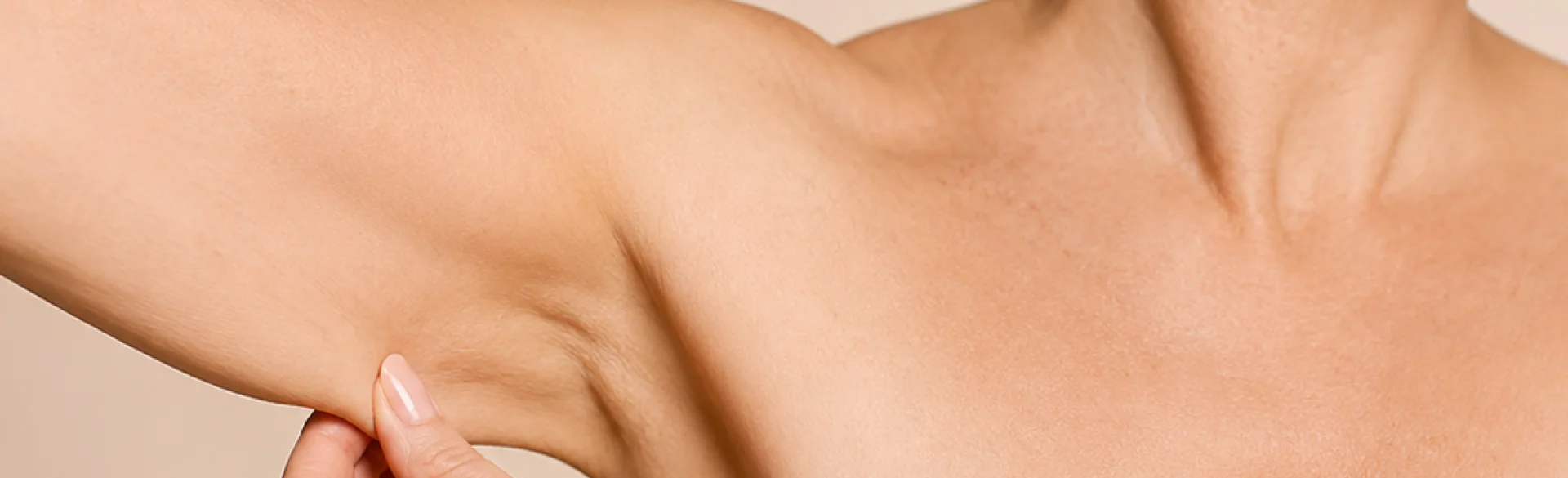
Skin laxity is a condition characterized by the loss of tissue tension, firmness, and elasticity, resulting from changes occurring in the structure of the dermis and subcutaneous tissue. This process is primarily associated with the degradation of collagen and elastin fibers, decreased fibroblast activity, and the gradual loss of adipose tissue responsible for the mechanical support of the skin. Laxity can affect both the face and the body, and its severity depends on age, genetics, lifestyle, hormonal balance, and changes in body weight. In aesthetic medicine, skin laxity is considered one of the main signs of biological and gravitational aging, affecting body proportions and facial contours.
Wiotkość skóry - czym jest
Skin laxity means a reduction in the skin's ability to maintain proper tension and elasticity. In healthy, young skin, collagen fibers form a dense support network, while elastin is responsible for the skin's ability to return to its original shape after stretching. With age and under the influence of environmental factors, gradual degradation of these structures occurs.
The sagging process involves several anatomical levels:
- the epidermis,
- the dermis,
- subcutaneous adipose tissue,
- fascia and supporting ligaments.
The amount of hyaluronic acid naturally present in the skin also decreases, which leads to a loss of hydration and a deterioration of tissue density. The skin becomes thinner, less resistant to stretching, and more susceptible to the effects of gravity.
Laxity can occur locally or in a generalized manner. It most commonly affects:
- the facial oval,
- cheeks,
- the chin area,
- the neck,
- the arms,
- the abdomen,
- the thighs,
- the buttocks,
- the area above the knees.
In dermatology and aesthetic medicine, a distinction is made between laxity resulting mainly from chronological aging and secondary laxity, associated, among other things, with significant weight loss, pregnancy, or hormonal changes.
Skin laxity - what it looks like
Lax skin gives the impression of being thin, less compact, and lacking elasticity. A characteristic feature is the excessive mobility of tissues and their tendency to sag. In more advanced cases, skin folds form and anatomical contours become deformed.
Typical symptoms of skin laxity include:
- loss of skin tension,
- sagging of the facial oval,
- deepening of furrows and folds,
- “empty” tissue structure,
- skin creasing during movement,
- excess skin after weight loss,
- the effect of thin, “paper” skin.
On the face, laxity often manifests as the appearance of so-called jowls, sagging cheeks, and a worsening of the jawline definition. Within the body, characteristic features include sagging arms, a lax abdomen, sagging buttocks, or excess skin on the inner thighs.
An important diagnostic element is the assessment of skin quality during palpation. Lax skin shows reduced mechanical resistance and returns to its original position more slowly after stretching.
The severity of the changes depends on the patient's age, the amount of adipose tissue, the quality of supporting fibers, and the degree of damage to collagen structures.
Skin laxity - causes
Skin laxity is a multifactorial phenomenon. The biological aging process plays a key role, leading to a decrease in the production of type I and III collagen and elastin. After the age of 25, the amount of collagen in the skin decreases by an average of about 1% per year.
The most important causes of skin laxity are:
- chronological aging,
- photoaging caused by UV radiation,
- loss of adipose tissue,
- rapid weight loss,
- hormonal changes,
- pregnancy,
- chronic inflammation,
- protein and antioxidant deficiencies,
- tobacco smoking,
- oxidative stress.
The influence of ultraviolet radiation is particularly significant. UV activates matrix metalloproteinases (MMPs), which are enzymes responsible for collagen degradation. As a result, supporting fibers lose their proper structure, and the skin stretches more quickly.
Hormones are also important. A decline in estrogens during menopause leads to a rapid decrease in collagen synthesis and a deterioration of skin quality. In women, the sagging process often accelerates precisely after menopause.
At the histological level, the following are observed:
Change | Clinical effect |
|---|---|
Decrease in the amount of collagen | loss of firmness |
Elastin fragmentation | decreased elasticity |
Atrophy of adipose tissue | tissue hollowing |
Weakening of skin ligaments | sagging of structures |
Decreased hydration | thin, dry skin |
Skin laxity - what accelerates it
The rate of development of skin laxity depends on many environmental and metabolic factors. Some of them can accelerate the degradation of the skin's supporting fibers many times over.
The strongest factors accelerating skin laxity are:
- intense sun exposure,
- cigarette smoking,
- rapid weight loss,
- very low-calorie diets,
- sleep deprivation,
- chronic stress,
- excessive alcohol,
- lack of physical activity,
- frequent weight fluctuations,
- chronic dehydration.
Tobacco smoking significantly limits skin microcirculation and increases oxidative stress. This leads to disruption of fibroblast function and accelerated collagen degradation. In smokers, the skin becomes thinner and loses its firmness more quickly.
The loss of muscle mass associated with age or lack of physical activity is also of great importance. Muscles provide a natural scaffolding for the skin, which is why their weakening increases the visibility of laxity.
Nowadays, increased symptoms of laxity are more and more frequently observed in people using weight-reducing pharmacotherapy, especially with a rapid decrease in adipose tissue. The body then cannot keep up with skin remodeling and adapting tissues to new body proportions.
Skin laxity and weight loss - the connection
Weight loss is one of the most common reasons for the appearance of loose skin, especially when the weight loss process is rapid. Adipose tissue stretches the skin for years, and after its reduction, collagen and elastin fibers do not always regain their original tension.
The greatest risk occurs with:
- losing a large number of kilograms,
- a rapid pace of weight loss,
- multiple yo-yo effects,
- poor skin quality before weight loss,
- age over 40.
Particularly visible changes appear on:
- the face,
- the abdomen,
- the arms,
- the buttocks,
- the thighs.
On the face, the loss of adipose tissue can lead to sunken cheeks, deepening of nasolabial folds, and loss of youthful volume. This phenomenon is colloquially referred to as “Ozempic face”, although the mechanism applies to any rapid weight loss.
Within the body, excess skin and deterioration of body contours occur. The longer the skin remained stretched, the lower its ability to spontaneously contract.
In aesthetic medicine, various methods are used to support the improvement of skin tension, including:
- microneedle radiofrequency technologies,
- HIFU,
- fractional laser therapy,
- tissue biostimulators,
- collagen stimulators,
- regenerative mesotherapy,
- lifting treatments,
- surgical procedures in advanced laxity.
The effectiveness of the therapy depends on the degree of damage to the skin's supporting structures and the body's ability to regenerate collagen.

