Smog and skin
back to main page
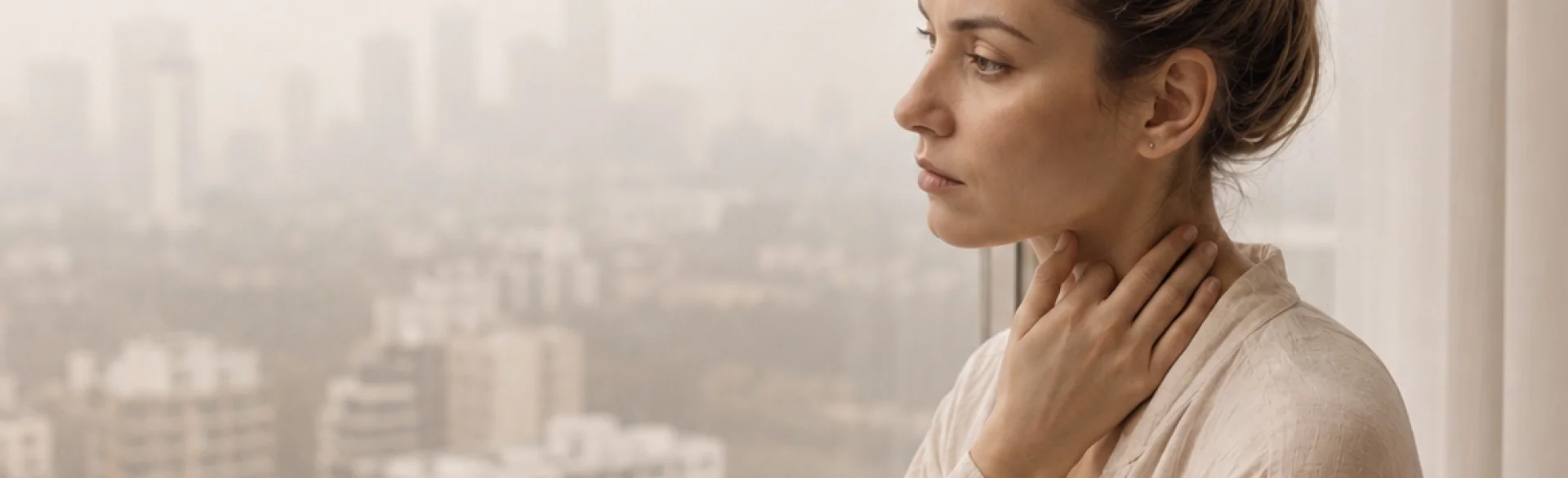
Smog is a mixture of particulate matter, gases, and organic compounds formed primarily as a result of road transport, fuel combustion, industrial activity, and heating processes. The components of greatest dermatological significance include PM10 and PM2.5 particles, ultrafine particles, soot, polycyclic aromatic hydrocarbons, volatile organic compounds, nitrogen oxides, sulfur dioxide, tropospheric ozone, and heavy metals. The skin constitutes the first barrier separating the body from the environment; however, long-term exposure to polluted air can disrupt its protective function. The primary mechanisms of damage include oxidative stress, lipid peroxidation, aryl hydrocarbon receptor activation, chronic inflammation, and impairment of the epidermal barrier. This can result in dryness, irritation, uneven skin tone, exacerbation of inflammatory dermatoses, and acceleration of extrinsic skin aging.
Smog and skin - how pollutants penetrate the skin
Particulate matter particles do not penetrate healthy skin to the same extent. Larger PM10 particles deposit mainly on the surface of the epidermis, in hair follicles, sebaceous gland openings, and irregularities of the stratum corneum. PM2.5 and ultrafine particles have a larger active surface area relative to their mass and can carry adsorbed metals, soot, and polycyclic aromatic hydrocarbons. Their penetration is facilitated by epidermal barrier damage, inflammation, microtrauma, and increased hair follicle activity. Gases, such as ozone, do not need to reach the deep layers of the skin to produce a biological effect. They already react with lipids and antioxidants on its surface.
The most important pathways of smog impact include:
- the transepidermal route, especially with ceramide deficiency and increased transepidermal water loss;
- the follicular route, in which the hair follicle acts as a reservoir for particles;
- surface reactions, leading to the oxidation of squalene and stratum corneum lipids;
- the receptor mechanism, particularly the activation of the AhR receptor by polycyclic aromatic hydrocarbons;
- indirect action, associated with systemic inflammation developing after the inhalation of pollutants.
AhR activation alters the expression of genes responsible for the xenobiotic response, inflammation, keratinocyte differentiation, and pigmentation. At the same time, reactive oxygen species damage lipids, proteins, mitochondria, and skin cell DNA. However, this does not mean that all smog particles freely pass through an intact epidermis. A significant part of the damage results from reactions occurring on the skin's surface and the cellular signals they trigger.[1-4]
Smog and skin - what changes they cause
The consequences of exposure depend on the composition and concentration of pollutants, duration of exposure, UV radiation, age, phototype, place of residence, and the baseline condition of the epidermal barrier. Particularly susceptible are individuals with atopic dermatitis, acne, seborrhea, rosacea, and sensitive skin.
Changes associated with air pollution include:
- epidermal barrier disruption, increased water loss, dryness, roughness, and a feeling of tightness;
- irritation and inflammation, manifesting as burning, pruritus, erythema, or hyperreactivity;
- sebum oxidation, especially of squalene, which may promote comedones and acne lesions;
- exacerbation of inflammatory dermatoses, including atopic dermatitis, acne, and possibly psoriasis;
- acceleration of extrinsic aging, including loss of elasticity, wrinkles, and uneven pigmentation;
- a dull, uneven skin tone resulting from the accumulation of pollutants, keratinization disorders, and oxidative stress.
Reactive oxygen species activate the transcription factors NF-κB and AP-1 as well as MAPK kinases. This leads to an increased release of proinflammatory cytokines, including IL-1, IL-6, IL-8, and TNF-α, as well as matrix metalloproteinases, especially MMP-1, MMP-2, and MMP-9. These enzymes participate in the degradation of collagen and other components of the extracellular matrix.
Epidemiological studies demonstrate associations between air pollution and certain skin diseases, but not all prove a direct causal relationship. The latest systematic review indicates significant variability in results and generally low or very low certainty for some of the epidemiological evidence. Smog should therefore be treated as an important component of the exposome and a potential aggravating factor, rather than a standalone cause of every observed skin change.
Smog and skin - why they worsen hyperpigmentation
Pollutants can stimulate melanogenesis, that is, the production of melanin by melanocytes, through several interacting pathways. Polycyclic aromatic hydrocarbons activate the AhR receptor, whose signaling influences the activity of tyrosinase and other proteins regulating pigment synthesis. Oxidative stress and inflammatory cytokines further increase melanocyte reactivity. If exposure to smog is accompanied by UVA radiation, visible light, or high temperature, the pigmentation mechanisms can mutually intensify.
Pollutants promote hyperpigmentation through:
- direct activation of AhR and melanogenesis pathways;
- generation of reactive oxygen species;
- induction of local, chronic inflammation;
- barrier damage and increased skin susceptibility to radiation;
- aggravation of post-inflammatory hyperpigmentation after acne, eczema, or irritation;
- oxidative depletion of the skin's natural antioxidants.
Population studies have shown a link between long-term exposure to traffic-related pollution and a higher number of facial lentigines in women of European and Asian descent. This observation does not mean that every pigment spot is caused by smog. Solar radiation, genetic predisposition, hormones, inflammation, medications, and skin phototype still play a key role in the development of hyperpigmentation.
New, rapidly enlarging, asymmetrical, or multicolored lesions should not be automatically considered environmental hyperpigmentation. They require a dermatological evaluation and, depending on the clinical presentation, a dermoscopic examination.[6-8]
Smog and skin - how to protect your skin in the city
The basis of prevention is reducing the combined burden of pollution and radiation on the skin. Evening cleansing should remove particulate matter, sunscreen residues, and excess oxidized sebum, but it must not disrupt the epidermal barrier. A gentle cleanser with a physiological pH is recommended, without intense friction or harsh detergents. Double cleansing is not necessary for everyone. Its validity depends on the type of cosmetics used and skin tolerance.
Daily protection should include:
- a broad-spectrum sunscreen, at least SPF 30, and most often SPF 50+ in the case of hyperpigmentation;
- in the case of melasma, a tinted product with iron oxides, reducing the impact of visible light;
- emollients containing ceramides, cholesterol, fatty acids, or humectant substances;
- properly selected antioxidants, e.g., vitamin C, vitamin E, ferulic acid, niacinamide, or polyphenols;
- avoiding excessive exfoliation and combining multiple irritating active ingredients;
- checking air quality and limiting intense activity near busy streets during high particulate concentrations.
In-office treatments do not „detoxify” the body and do not replace photoprotection, but they can support cleansing, barrier reconstruction, hyperpigmentation reduction, and skin texture improvement. In Ambasada Urody's offer, treatments addressing smog-related problems include:
- cleansing and regeneration: HydraFacial, also with Britenol Booster and LED, DermaClear, hydradermabrasion, Geneo X, cavitation peeling, microdermabrasion, and manual cleansing;
- antioxidant and barrier care: Intraceuticals oxygen infusion, including the variant with Vitamin C Booster, oxygen therapy, Cryolift 3.0, LED therapies, and properly selected DermaQuest, Environ, and Mesoestetic treatments;
- hyperpigmentation therapies: Alma DyeVL PRO, ClearLift, Alma DyeVL PRO photorejuvenation, Icon Cynosure MaxG, Dermapen 4.0 with peel and active cocktail, Nanopore microneedle mesotherapy, brightening nano-treatment with microneedling, brightening Skinbooster, and mesococktails reducing hyperpigmentation;
- controlled exfoliation: Ferulac Valencia Peel with Retises 10% Forte, Orange Peel, Nanopeel or Yellow Peel, Mandelac, LactiPeel, Perfect Peel, Perfect Peel with Derma Plus Booster, and Retises CT Nanopeel.
The selection of a procedure should be preceded by identifying the type of hyperpigmentation, assessing the phototype, active inflammation, barrier integrity, and contraindications. For irritated skin, barrier reconstruction takes priority. Laser procedures, IPL, microneedling, and stronger peels require strict photoprotection, as improperly applied, they can themselves cause post-inflammatory hyperpigmentation.

