When was the first Botox?
- When to start getting botox?
- Preventive vs. Corrective Botox in the Age Range of 25-30 Years
- What are the benefits of using Botox at a young age?
- Baby botox and maintaining natural facial expressions without a mask-like effect
- Static and dynamic wrinkles possible to correct
- Preparation for injection and blood-thinning substances
- The first effects of botulinum toxin and the full result
- The 4-hour rule and restrictions on the use of the sauna and solarium
- Durability of effects and muscle recovery after the first visit
- Pregnancy and autoimmune diseases as significant contraindications
- Rely on experience and safety
Contrary to the common belief that Botox should be used only when wrinkles become abundant, it can and often should be started much earlier. The optimal age range is 25-30 years, which is when the production of collagen and elastin begins to decline - the skin loses firmness, and facial habits start leaving permanent marks. Throughout life, we develop various habits, many of which lead to the formation of wrinkles.
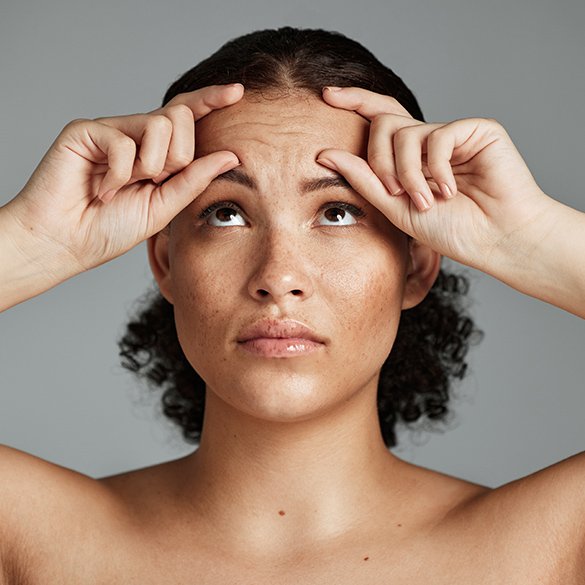
A very common problem that aesthetic medicine doctors encounter is the habitual frowning of the forehead, causing the so-called frown lines. When we have such a habit, frown lines can develop very quickly, and a doctor may recommend Botox even at the age of 25. The procedure is available from the age of 18, but the decision should be based on the condition of the skin, not just age. It's a form of facial hygiene - teaching muscles to avoid excessive activity that leads to premature aging.
The age range of 25-30 years is the time when anti-aging prevention yields the best results. Preventative Botox works by blocking the excessive activity of muscles responsible for frowning or squinting, which prevents the formation of deep lines. This method helps retrain muscles from habitual tension before deep wrinkles form. Corrective Botox is used for individuals with visible wrinkles - it smooths existing lines and prevents them from deepening further. The decision to undergo Botox should be based on an individual assessment of skin condition by an aesthetic medicine doctor, rather than just age.
Botulinum toxin is a neurotoxin that works by blocking neuromuscular transmission - it precisely blocks the release of acetylcholine, a neurotransmitter responsible for muscle contraction. This results in partial relaxation of facial muscles, and existing wrinkles become less pronounced. At the same time, it prevents the formation of new wrinkles. The effect is reversible and temporary.
In the case of habitual forehead frowning, administering botulinum toxin causes the relaxed muscles to not tense as much, allowing us to unlearn this habit during the period the Botox is effective. When Botox is active, the skin relaxes and has time to regenerate - the absence of constant tension prevents it from folding, which prevents the deepening of lines. The skin has time to regenerate, and muscle tension returns to a healthy level.
Baby Botox is a technique dedicated to young individuals (20-30 years old) and those who are concerned about a rigid appearance. It involves administering smaller amounts of the product in strategic points, allowing for gentle muscle relaxation while maintaining natural facial expressions. This eliminates the risk of the so-called 'mask effect' - a stiff, immobile facial expression. Another variation is mesobotox - a very superficial application of the product in the skin layers, which works to reduce pores and excessive sweating. The effects of baby Botox are subtle yet noticeable - the skin looks fresher, expressions remain lively, and a natural appearance is preserved.
Dynamic wrinkles are those visible during muscle movement - when we smile, squint, or frown. Typical examples include crow's feet around the eyes, horizontal forehead lines, and the glabellar lines between the eyebrows. Botox works most effectively on these by blocking excessive muscle activity. Static wrinkles are visible even at rest - these are so-called permanent wrinkles, formed as a result of years of skin folding. Botox can soften them but not completely remove them - in such cases, they often require support from fillers. The combination of therapies yields the best results for deeper forehead wrinkles.
Proper preparation minimizes the risk of bruising and swelling after injections. It is crucial to stop taking blood-thinning substances 7-10 days before the appointment – aspirin, ibuprofen, other anti-inflammatory drugs, and supplements like vitamin E, omega-3 fatty acids, and St. John's wort. These substances affect blood clotting, so even a minor puncture can cause a hematoma. Avoid alcohol for 24-48 hours before the procedure, as it also thins the blood. On the day of the procedure, come without makeup and inform the doctor about any medications you are taking.
- Stop taking aspirin, ibuprofen, and other anti-inflammatory drugs 7-10 days prior
- Discontinue vitamin E, omega-3 fatty acids, and St. John's wort a week before
- Avoid alcohol for 24-48 hours before the procedure
- Come without facial makeup on the day of the procedure
- Inform the doctor about any medications and allergies
- Avoid intense tanning and laser treatments a week before
The first effects usually appear 3-5 days after injection - the skin begins to smooth out, and muscle tension gradually decreases. This marks the beginning of the process of blocking acetylcholine by the neurotoxin. The full result is visible after 7-14 days, at which point the muscles are maximally relaxed, and the wrinkle-smoothing effect is fully noticeable. Therefore, a follow-up visit is recommended approximately 2 weeks after the procedure. The doctor can then assess the symmetry of the effect and make minor adjustments if necessary. The process of blocking neuromuscular transmission is gradual—the effects develop naturally over the first two weeks.
Immediately after the procedure, the so-called 4-hour rule applies - during the first four hours, absolutely no bending, lying down, or tilting the head downward is allowed. The product needs to stabilize at the injection site, and changing body position can cause it to move to adjacent muscle areas, risking asymmetry or drooping of the eyebrows. During this time, it is best to remain in an upright position.
- Avoid intense physical activity - running, gym, aerobics
- No use of saunas, steam baths, and hot baths
- Avoidance of solarium and intense sunbathing
- Avoid facial massage and procedures affecting the treated areas
- No alcohol for 24-48 hours after the procedure
- Avoid tilting the head and sleeping on your stomach on the first night
- No manipulation of the injection area (touching, pressing)
Heat accelerates the metabolism of the toxin, which can weaken the effect of the procedure and shorten its duration. Similarly, intense exercise increases blood flow and body temperature, which negatively affects the stabilization of the product. Physical activity should be limited for the first 48 hours, after which you can gradually return to your normal routine.
The effect of the first Botox treatment usually lasts shorter than with subsequent applications - typically 3-6 months, but often closer to the lower end of that range. The muscles need to "unlearn" their intense activity, and the body may metabolize the toxin faster the first time due to stronger muscle tension and lack of adaptation. With each subsequent treatment, the duration of the effects extends - muscles gradually weaken, lose the habit of constant tension, and muscle regeneration occurs more gently. The metabolism of the toxin also slows down as the body adapts to regular treatments. Therefore, doctors recommend repeating the treatment approximately every six months - regularity helps maintain the effect of smoother skin.
Botox, despite its safety, has a number of absolute contraindications that preclude the procedure. The most important of these are pregnancy and breastfeeding - there is insufficient research confirming the safety of botulinum toxin for the fetus and infant, hence the procedure should be postponed until after lactation is completed. Other key contraindications include autoimmune diseases (lupus, multiple sclerosis, rheumatoid arthritis), neuromuscular diseases (myasthenia gravis, Lambert-Eaton syndrome), active skin infections, use of aminoglycoside antibiotics, and allergy to the components of the preparation. A mandatory medical consultation with an aesthetic medicine doctor is required before each procedure, during which a detailed medical history will be taken and contraindications for injections will be assessed.
If you're considering whether a Botox treatment is right for you, we warmly invite you to a consultation at the Beauty Embassy in Warsaw. Our specialists, with many years of experience in aesthetic medicine, will conduct a detailed assessment of your skin, discuss realistic expectations, and tailor an individual treatment plan. We use original certified products and the latest technologies that guarantee safety and natural results. Schedule a consultation and find out how Botox can help you maintain a youthful appearance!

