Allergic pimples
back to main page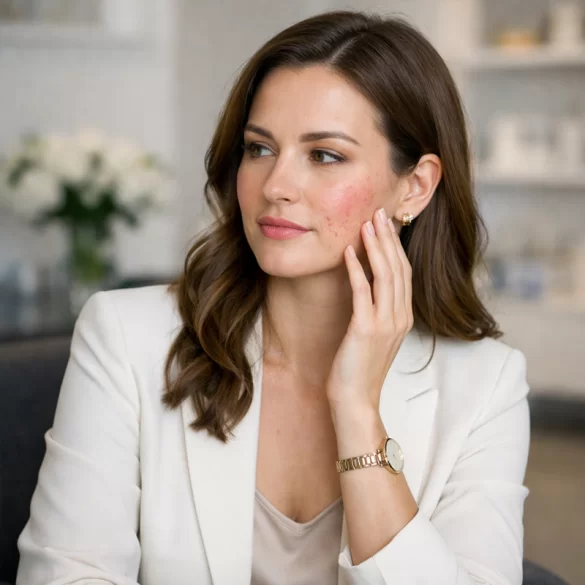

Allergic pimples are a colloquial term for skin lesions that appear in the course of the body's hypersensitivity reaction to certain external or internal substances. In dermatology these lesions do not constitute a separate disease entity, but may accompany various forms of allergic skin diseases, such as contact dermatitis, urticaria, or allergic eczema. The symptoms can resemble acne — papules, pustules, or small inflammatory vesicles appear, often accompanied by itching, burning, and skin redness. Allergic lesions most often develop in areas where the skin comes into contact with the allergen, but they may also occur in a generalized manner. Diagnosis requires consideration of the allergy history, the clinical presentation and — in some cases — diagnostic tests, such as patch tests.
Allergic acne – causes
Lesions referred to as allergic pimples arise as a result of the body's immunological reaction to an allergen, that is, a substance that causes hypersensitivity. This mechanism is most often associated with a type I (immediate, IgE-dependent) or type IV (delayed cell-mediated) reaction, in which T lymphocytes play a key role. Contact of the skin with the allergen leads to the release of inflammatory mediators such as histamine, cytokines, and prostaglandins, resulting in inflammatory lesions.
The most common causes of allergic pimples include:
1. Contact allergens
- cosmetic ingredients (preservatives, fragrances, dyes),
- metals, especially nickel and cobalt,
- ingredients of detergents and cleaning agents,
- latex,
- some substances used in dermatological preparations.
2. Reactions to medications
Some medications can cause skin reactions resembling acneiform lesions. This applies, among others, to:
- antibiotics,
- nonsteroidal anti-inflammatory drugs,
- anticonvulsant drugs,
- sulfonamides.
3. Food allergies
In some people, skin lesions may appear after consumption of products that trigger an allergic reaction, such as:
- nuts,
- seafood,
- cow's milk,
- eggs,
- wheat or other cereal products.
4. Environmental allergens
- house dust mites,
- plant pollens,
- animal dander.
In clinical practice it is important to distinguish allergic lesions from common acne, because their mechanisms of development differ – in the case of allergy there is no excessive sebum production and blockage of hair follicle openings, but rather an inflammatory reaction of the immune system.
Allergic pimples – what do they look like?
The clinical presentation of allergic pimples can be varied, because the lesions depend on the type of allergic reaction and the individual reactivity of the skin. Most often small inflammatory papules, pustules, or vesicles are observed, which may resemble acne lesions, but usually differ in several characteristic features.
Typical symptoms include:
- small red papules or pustules, often numerous and appearing suddenly,
- vesicles filled with serous fluid,
- erythema (redness of the skin) around the lesions,
- itching or burning, which are much more common than in acne,
- sometimes skin swelling at the site of the reaction.
Allergic lesions can occur in various locations, but most commonly appear:
- on the face (especially the cheeks and around the mouth),
- on the neck and décolletage,
- on the hands and forearms,
- in areas of direct skin contact with the allergen.
A characteristic feature is the sudden onset of lesions and their rapid appearance after exposure to the allergen. Unlike common acne, comedones are rare, and the lesions may resolve relatively quickly after elimination of the triggering factor.
In some cases allergic pimples may coexist with other symptoms of an allergic reaction, such as:
- hives,
- angioedema,
- skin itching,
- watering of the eyes or allergic rhinitis.
Allergic pimples – treatment
Treatment of allergic pimples is primarily based on identification and elimination of the allergen that triggers the skin reaction. Without removal of the causative factor, even the most advanced symptomatic treatment may prove ineffective.
Therapeutic management includes several basic stages.
1. Elimination of the allergen
The most important element of treatment is avoiding contact with the substance that causes the allergic reaction. For this purpose, the following are often performed:
- patch tests (diagnostics of contact allergy),
- allergy blood tests,
- a detailed history regarding cosmetics, medications and diet.
2. Pharmacological treatment
Depending on the severity of the lesions, the following are used:
- antihistamine drugs, which reduce itching and the allergic reaction,
- topical corticosteroids, reducing inflammation,
- preparations that soothe and regenerate the epidermal barrier,
- in more severe cases – systemic treatment recommended by a dermatologist or allergist.
3. Skin care
Appropriate skin care is very important in the therapy of allergic lesions and includes:
- use of hypoallergenic cosmetics,
- avoiding fragranced and irritating substances,
- restoration of the skin's hydrolipid barrier,
- use of preparations with ceramides, panthenol or allantoin.
4. Dermatological and cosmetological procedures
In some cases, especially when allergic lesions lead to chronic skin inflammation or leave post-inflammatory hyperpigmentation, supportive procedures that aid skin regeneration can be helpful. In clinical practice, among others, the following are used:
- laser procedures reducing inflammation and erythema,
- procedures supporting skin regeneration and improvement of the epidermal barrier,
- dermatological therapies supporting skin healing after inflammatory lesions.
At Ambasadzie Urody Clinic & Spa, various modern dermatological and cosmetological procedures are used to support skin regeneration, improve its condition, and reduce inflammatory lesions and post-inflammatory hyperpigmentation.
However, proper dermatological diagnosis is crucial, because lesions resembling allergic pimples may actually be symptoms of other skin diseases, such as rosacea, folliculitis or contact eczema.

