Fioletowe krosty na nogach
back to main page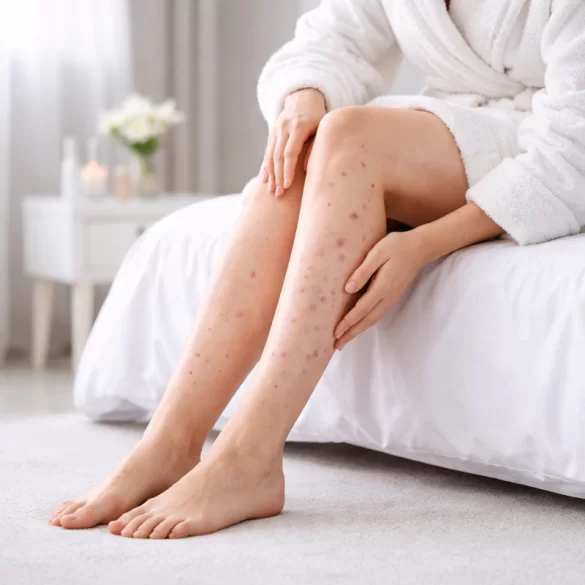

Fioletowe krosty na nogach to zmiany skórne o zabarwieniu od purpurowego do sinoczerwonego, które mogą mieć charakter zapalny, naczyniowy, alergiczny lub infekcyjny. W odróżnieniu od klasycznych zmian trądzikowych ich kolor wynika najczęściej z wynaczynienia krwi do skóry (plamica), zaburzeń mikrokrążenia, uszkodzenia naczyń włosowatych lub przewlekłego stanu zapalnego. Zmiany te mogą występować pojedynczo lub mnogie, być bolesne, swędzące albo bezobjawowe. Ich pojawienie się wymaga różnicowania dermatologicznego i – w części przypadków – diagnostyki internistycznej, ponieważ mogą stanowić objaw chorób ogólnoustrojowych, w tym zapaleń naczyń, zaburzeń krzepnięcia czy chorób autoimmunologicznych.
Purple Bumps on Legs – Causes
The etiology of purple skin lesions on the lower limbs is varied. The most common causes include:
1. Vascular Causes
- Purpura – extravasation of red blood cells into the skin due to damage to capillaries.
- Vasculitis – immunologically mediated damage to the vessel wall; lesions are often raised, painful, and symmetrical.
- Chronic venous insufficiency – venous blood stasis leads to discoloration, swelling, and inflammatory changes.
2. Inflammatory and Dermatological Causes
- Lichen planus – violet-tinged papules, often itchy.
- Erythema nodosum – painful, subcutaneous nodules on the anterior surface of the lower legs.
- Folliculitis – in the advanced stage, lesions may take on a bluish hue.
3. Hematological Disorders
- thrombocytopenia,
- bleeding disorders,
- coagulation disorders.
4. External Factors
- mechanical injuries,
- drug reactions,
- viral or bacterial infections.
In clinical practice, it is crucial to assess whether the lesions do not blanch under pressure (a characteristic sign of purpura), which may suggest vascular pathology.
Purple bumps on legs – what they look like
The clinical presentation depends on the cause. The changes can take the form of:
- papules – raised above the skin surface,
- petechiae – flat, with a diameter from a few millimeters to several centimeters,
- subcutaneous nodules – painful on palpation,
- lesions with ulceration – in more severe forms of vasculitis.
Characteristic features:
- color ranging from red-purple to brown-purple,
- no fading upon pressure (in purpura),
- possible pain or itching,
- symmetrical distribution on the lower legs (common in vasculitis),
- accompanying general symptoms: fever, weakness, joint pain.
In cases of chronic venous insufficiency, changes often coexist with:
- ankle swelling,
- telangiectasias,
- hemosiderin pigmentation (rusty skin tone).
Any lesion persisting for more than 2–3 weeks, worsening, or co-occurring with general symptoms requires laboratory diagnostics (complete blood count, coagulation parameters, ESR/CRP) and possibly a skin biopsy.
Purple bumps on legs – treatment
Therapeutic management directly depends on the diagnosis.
Cause-specific treatment
- Vasculitis – systemic glucocorticoids, immunosuppressive drugs.
- Thrombocytopenia – hematological treatment.
- Venous insufficiency – compression therapy, phlebotropic pharmacotherapy, procedures to close insufficient vessels.
- Bacterial infections – local or systemic antibiotic therapy.
Symptomatic dermatologic treatment
- topical anti-inflammatory preparations,
- calcineurin inhibitors,
- antihistamines (in case of itching),
- skin barrier care (emollients, regenerative preparations).
Supportive therapies used in aesthetic medicine and procedural dermatology
In cases of post-inflammatory changes, vascular discoloration, or chronic venous stasis, the following may be helpful:
- Vascular laser therapy – reduction of purpuric changes and telangiectasia,
- IPL light therapy,
- Microneedle radiofrequency – to improve skin quality and microcirculation,
- procedures to enhance lymphatic drainage and microcirculation,
- regenerative therapies supporting skin reconstruction.
In clinical practice, procedures utilizing radiofrequency technology, light therapy, and methods supporting microcirculation available in modern aesthetic dermatology centers are used.
Bezwzględnej konsultacji wymagają sytuacje, gdy:
- zmiany pojawiły się nagle i są liczne,
- towarzyszy im gorączka lub złe samopoczucie,
- występują krwawienia z innych miejsc (np. dziąsła, nos),
- pacjent przyjmuje leki przeciwzakrzepowe,
- zmiany są bolesne i szybko się powiększają.
Fioletowe krosty na nogach nie powinny być bagatelizowane. Choć część przypadków ma łagodny charakter dermatologiczny, inne mogą stanowić pierwszy objaw poważnych chorób naczyniowych lub hematologicznych. Właściwa diagnostyka różnicowa stanowi klucz do skutecznego leczenia.

