Hormonal acne
back to main page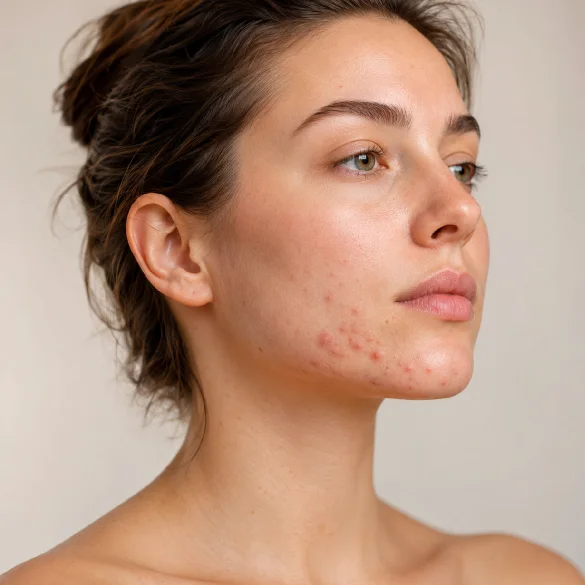
Hormonal acne is a chronic form of acne in which a key role is played by hormonal imbalances and increased sensitivity of the sebaceous glands to the action of androgens, i.e., sex hormones responsible, among other things, for the production of sebum. It most commonly affects women after puberty, however, it can also occur in men. Characteristic is the appearance of deep, painful inflammatory lesions located mainly in the lower part of the face. Unlike adolescent acne, the disease often persists for many years, shows a recurrent course, and requires comprehensive management including the diagnosis of hormonal causes, dermatological treatment, and proper skin care.
Hormonal acne - characteristics
Hormonal acne develops as a result of the interaction of several biological mechanisms. The most important of these is increased androgen activity or hypersensitivity of androgen receptors present in the sebaceous glands. Not every person with hormonal acne has elevated hormone levels in the blood. In many patients, the problem results from local skin hyperreactivity to normal androgen concentrations.
Under the influence of hormones, the following occur:
- increased sebum production,
- disorders of keratinization of hair follicle openings,
- formation of microcomedones,
- proliferation of Cutibacterium acnes bacteria,
- activation of chronic inflammation.
Skin lesions are usually characterized by:
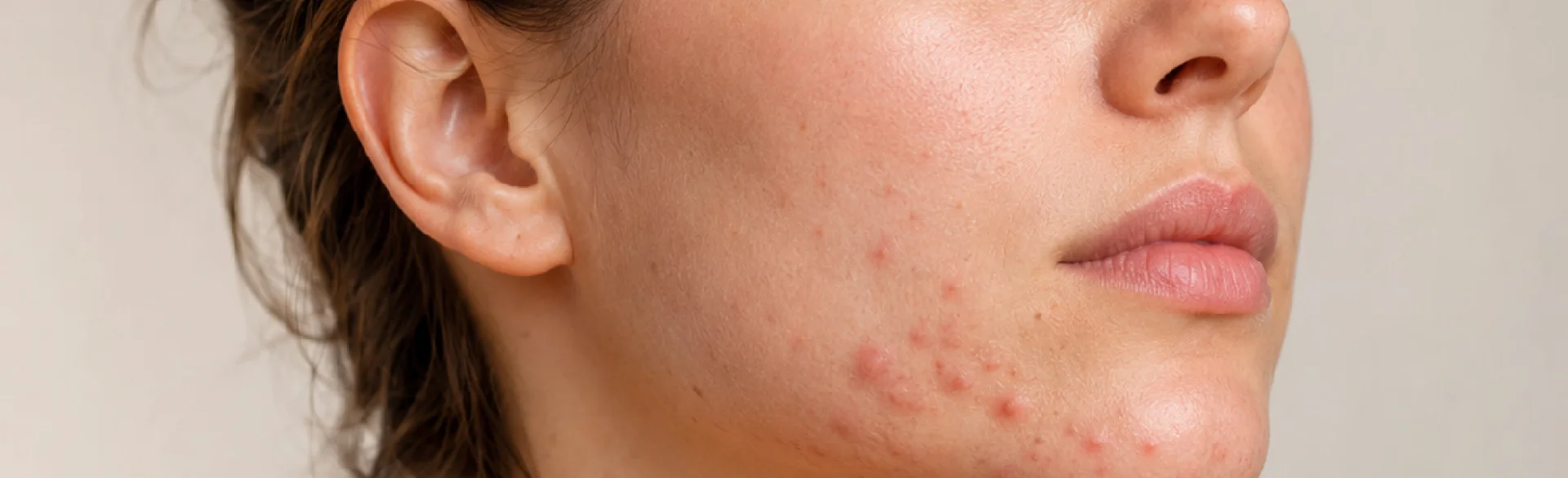
- deep papules,
- painful nodules,
- inflammatory lesions leaving post-inflammatory hyperpigmentation,
- atrophic scars.
Hormonal acne most commonly appears between the ages of 20 and 40, although it can also persist after menopause. In some women, it is one of the symptoms of polycystic ovary syndrome (PCOS), hyperandrogenism, or other endocrine disorders. Irregular menstruation, excessive male-pattern hair growth (hirsutism), androgenetic alopecia, or difficulties getting pregnant also indicate the need for diagnosis.
Hormonal acne - why it appears on the chin and jawline
One of the most characteristic features of hormonal acne is the localization of lesions in the so-called U-zone of the face, which includes:
- the chin,
- the jawline,
- the submandibular area,
- the lower part of the cheeks,
- the neck.
This localization is not accidental. These areas contain a large number of sebaceous glands showing high sensitivity to androgens. Even minor hormonal changes can lead to a significant increase in sebum production and the formation of inflammatory lesions.
Hormonal lesions are usually deep in nature. They are often palpable under the skin even before redness appears. Nodules can be painful to the touch and persist for many weeks.
Typical features of the lesions include:
Feature | Hormonal acne |
|---|---|
Location | Chin, jaw, neck |
Type of lesions | Inflammatory nodules and papules |
Painfulness | High |
Tendency to recur | Very high |
Risk of scarring | High |
In some patients, lesions occur almost exclusively in the lower part of the face, while the forehead and nose remain practically free of eruptions. Such a clinical picture is an important diagnostic clue for a dermatologist.
Hormonal acne - menstrual cycle and severity of lesions
Many women observe a clear relationship between the severity of acne lesions and the individual phases of the menstrual cycle. This results from physiological changes in the concentrations of estrogens and progesterone and the relative influence of androgens on the sebaceous glands.
Most commonly, exacerbation occurs:
- about 7–10 days before menstruation,
- in the final phase of the cycle,
- immediately before the onset of bleeding.
During this period, the following are observed:
- an increase in sebum production,
- increased inflammatory activity of the skin,
- the appearance of new painful nodules,
- slower healing of existing lesions.
After the onset of menstruation, hormonal changes usually gradually subside, and acne activity decreases. The characteristic cyclical nature of recurrences is one of the features distinguishing hormonal acne from other varieties of the disease.
In the case of very severe symptoms, a doctor may recommend hormonal diagnostics, including, among other things, the assessment of the concentrations of testosterone, DHEA-S, androstenedione, prolactin, LH, FSH, and thyroid hormones. The scope of tests is always selected individually and depends on the clinical picture and the patient's age.
Hormonal acne - how to distinguish it from bacterial acne
In clinical practice, the term “bacterial acne” does not constitute a separate disease entity. The bacterium Cutibacterium acnes is involved in the development of most forms of acne, but it is not the primary cause of the disease itself. In hormonal acne, hormonal dysregulation remains the dominant triggering factor.
The most important differences are presented in the table below.
Feature | Hormonal acne | Acne vulgaris with a predominant involvement of bacterial lesions |
|---|---|---|
Age | Most commonly adults | Mainly adolescence |
Location | Chin, jawline, neck | Forehead, nose, cheeks |
Cyclicality | Distinct | Usually absent |
Dominant lesions | Nodules and papules | Comedones, pustules, papules |
Connection to hormones | Very strong | Weaker |
Diagnosis is based primarily on medical history and dermatological examination. In case of suspected hormonal disorders, cooperation between a dermatologist and an endocrinologist or gynecologist may be necessary.
It should be remembered that different mechanisms of acne development can coexist in a single patient, which is why treatment should be individually tailored to the clinical presentation.
Hormonal acne - treatments supporting treatment
The basis of hormonal acne therapy is dermatological treatment and, in justified cases, the correction of hormonal imbalances. Aesthetic medicine treatments play a supporting role. Their goal is to reduce inflammation, regulate the functioning of sebaceous glands, reduce the number of lesions, and improve skin quality after the active disease process has subsided.
Supporting treatment methods include, among others:
- chemical peels with salicylic, mandelic, or azelaic acid, which reduce keratosis of the hair follicle openings and reduce seborrhea,
- LED light therapies, used as a complement to anti-inflammatory treatment,
- laser therapy, used mainly in the treatment of acne scars and post-inflammatory hyperpigmentation after the active acne is under control,
- microneedling, used in skin remodeling with atrophic scars after the inflammatory process has ended,
- regenerative treatments supporting the reconstruction of the epidermal barrier and improving skin healing.
The selection of procedures depends on the activity of the disease, the type of lesions, and the pharmacological treatment used. During periods of intense inflammation, many skin remodeling treatments are postponed until stable remission is achieved.
Equally important is daily care, including gentle cleansing, the use of anti-inflammatory and sebum-regulating products, and regular sun protection. Properly conducted combination therapy allows not only to limit the number of new lesions, but also to reduce the risk of permanent scars and hyperpigmentation

