Thyroid acne
back to main page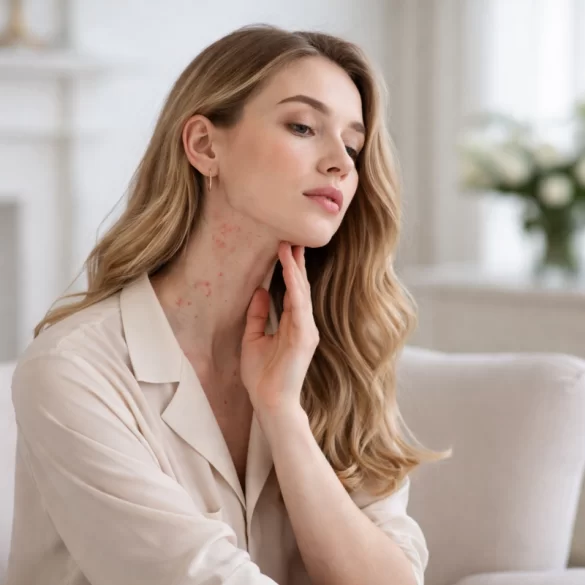
Thyroid acne is a clinical term referring to acneiform lesions that appear or worsen during the course of thyroid dysfunction. It is not a separate disease entity in dermatological classifications, but rather a skin manifestation of hormonal dysregulation involving the hypothalamic-pituitary-thyroid axis. Thyroid hormones (T3 - triiodothyronine and T4 - thyroxine) influence keratinocyte proliferation, sebaceous gland activity, angiogenesis, and immune processes within the skin. Their deficiency or excess leads to disturbances in the keratinization of hair follicle openings, changes in sebum composition, and increased inflammatory response, which may clinically resemble hormonal acne. In practice, it most often coexists with Hashimoto's disease or Graves' disease.
Thyroid acne – causes
The mechanism of skin changes in thyroid disorders is multifactorial and includes both direct effects of thyroid hormones on the skin and indirect effects through interaction with other hormonal systems.
In hypothyroidism, the following occurs:
- slowing of cellular metabolism,
- reduced proliferation of keratinocytes,
- disturbances in skin exfoliation,
- accumulation of mucopolysaccharides in the dermis,
- impaired microcirculation.
The skin becomes dry, thickened, and less elastic, and the accumulation of sebum promotes the formation of closed comedones and inflammatory changes. Additionally, chronic low-grade inflammation increases the production of pro-inflammatory cytokines.
The most common background: autoimmune thyroiditis (Hashimoto's disease).
2. Hyperthyroidism
In hyperthyroidism, the following is observed:
- increased activity of sebaceous glands,
- increased sweating,
- accelerated turnover of epidermal cells,
- increased vascular reactivity.
Excess sebum and changes in the skin microbiome promote the colonization of Cutibacterium acnes and intensify the inflammatory response.
3. Disorders of the Hypothalamus-Pituitary-Thyroid (HPT) Axis
- fluctuations in TSH indirectly affecting androgen metabolism,
- coexisting hormonal disorders (e.g., hyperprolactinemia).
4. Autoimmune Factors
In autoimmune thyroid diseases, elevated levels of pro-inflammatory cytokines are observed, which can exacerbate inflammatory reactions within hair follicles.
In clinical practice, thyroid acne often coexists with:
- chronic fatigue,
- weight fluctuations,
- menstrual disorders,
- hair loss.
The presence of systemic symptoms should prompt laboratory diagnostics (TSH, FT3, FT4, anti-TPO antibodies, anti-TG antibodies).
Thyroid acne – what it looks like
The clinical picture is not straightforward and may vary depending on the predominant hormonal disorder.
Typical features of skin changes:
- inflammatory papules and pustules,
- closed comedones,
- changes with a chronic, recurrent nature,
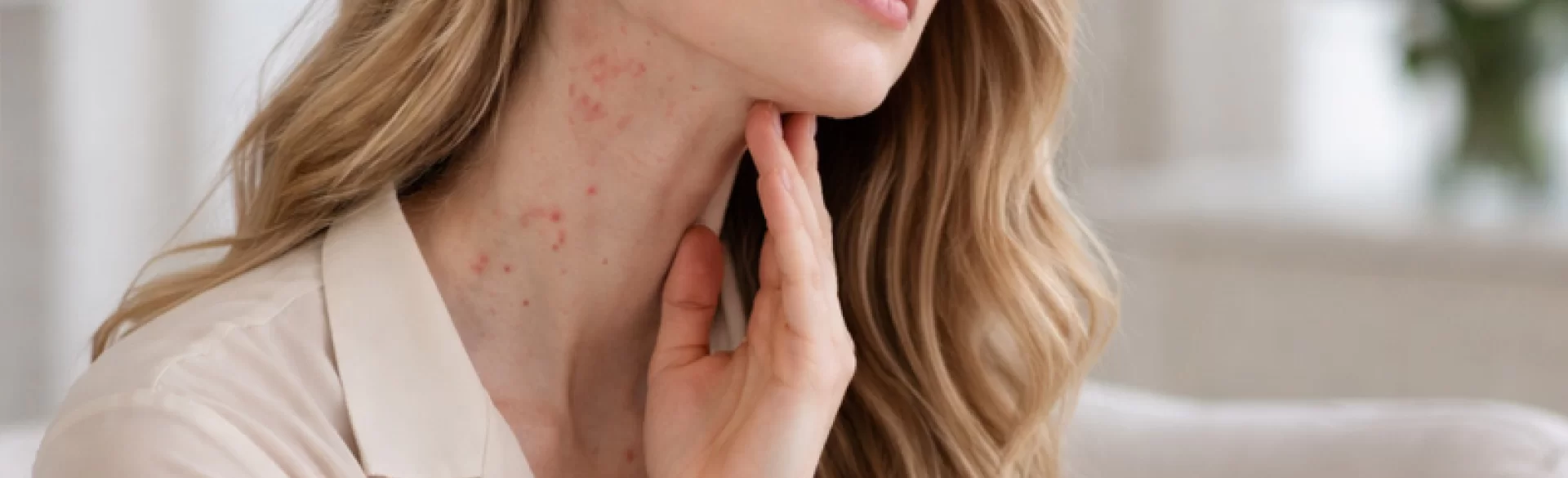
- location: lower part of the face (jawline, chin), neck, back.
Accompanying symptoms suggesting an endocrine background
In hypothyroidism:
- dry, cool skin,
- facial swelling,
- thinning of the eyebrows (especially the outer third),
- brittle hair.
In hyperthyroidism, the following are more commonly observed:
- seborrhea,
- enlarged pores,
- facial erythema,
- excessive sweating.
It is characteristic that the changes are resistant to classical dermatological treatment if thyroid function is not balanced. The use of retinoids or antibiotics alone does not eliminate the cause.
Thyroid acne – treatment
Treatment should be conducted simultaneously by a dermatologist and an endocrinologist.
1. Diagnostics
Basic tests include:
- TSH,
- FT3,
- FT4,
- anti-TPO,
- anti-TG.
In selected cases:
- SHBG,
- free testosterone,
- prolactin,
- thyroid ultrasound.
Without confirmation and stabilization of hormonal balance, skin treatment is solely symptomatic.
2. Causal Treatment
In hypothyroidism – levothyroxine supplementation and TSH normalization.
In hyperthyroidism – antithyroid treatment, radioactive iodine, or surgical treatment (depending on indications).
Improvement of skin condition usually occurs within a few months after hormonal parameters stabilize.
3. Dermatological Treatment
Individually tailored:
- topical retinoids (normalization of keratinization),
- azelaic acid (anti-inflammatory and antibacterial action),
- topical or oral antibiotics during flare-ups,
- in selected cases – isotretinoin (after excluding contraindications).
Key is to:
- rebuild the hydrolipid barrier,
- avoid aggressive exfoliating therapies in dry and sensitive skin,
- individualize care.
4. Supportive Therapies
After stabilizing thyroid function, procedures to improve skin quality and reduce post-acne changes can be implemented:
- medical peels,
- regenerative mesotherapy using platelet-rich plasma or growth factors,
- microneedle radiofrequency for acne scars,
- biostimulating therapies supporting collagen remodeling.
These procedures should only be performed after excluding active, uncontrolled thyroid disease.

