Ingrown hairs
back to main page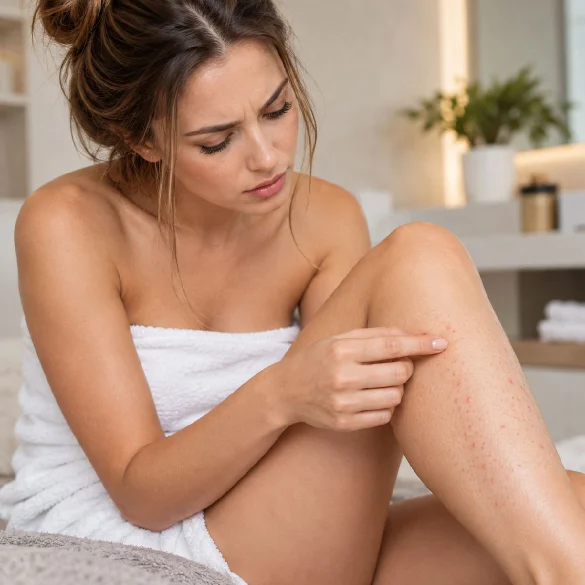
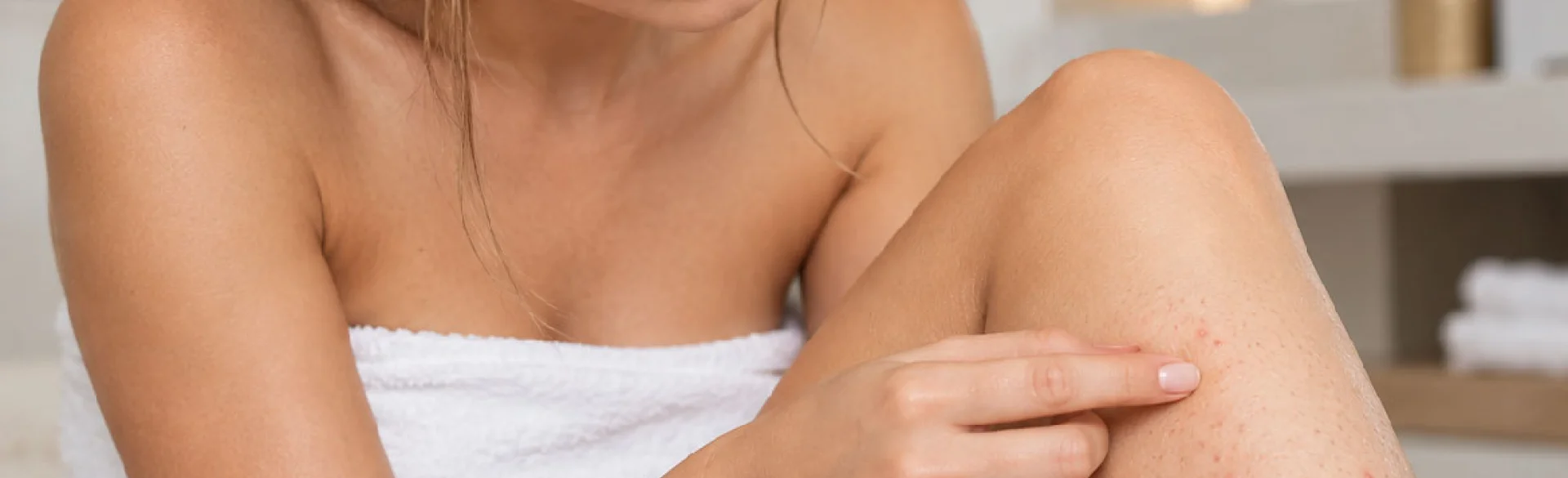
Ingrown hairs are hairs whose shaft grows into the epidermis or re-penetrates the skin after having previously emerged onto its surface. The body recognizes the keratin shaft as a foreign body, which triggers a local inflammatory response. Papules, pustules, redness, itching, or tenderness develop, and chronic lesions can leave post-inflammatory hyperpigmentation and scars. The problem most often develops after shaving, waxing, sugaring, tweezing, or using a mechanical epilator. A specific form is pseudofolliculitis barbae, which is pseudo-folliculitis in the beard area. Diagnosis is usually based on a skin examination, sometimes aided by dermoscopy. Recurrent or purulent lesions require differentiation from infectious folliculitis, acne, keratosis pilaris, and hidradenitis suppurativa.
Ingrown hairs - why they form
The direct cause of ingrown hairs is the abnormal trajectory of the hair shaft relative to the follicular orifice. Two primary mechanisms are distinguished:
- extrafollicular penetration - the hair emerges onto the surface, then curls and pierces the epidermis again;
- transfollicular penetration - a closely cut hair retracts below the skin surface and pierces the follicular wall before exiting its orifice.
The risk is increased by the curved structure of the follicle and an oval or flattened hair cross-section, which promotes spiral growth. The phenomenon occurs particularly often with thick, coarse, curly, and heavily pigmented hair. Very close shaving also plays a role. Stretching the skin while moving the blade causes the hair to be cut below the epidermal level, and the obliquely shaped tip acts like a microscopic blade.
Contributing factors include:
- shaving against the grain and passing the blade over the same area multiple times;
- dull, dirty, or multi-blade razors;
- plucking hairs, which can alter the direction of their subsequent growth;
- hyperkeratosis of the follicular orifices;
- skin dryness and epidermal barrier impairment;
- friction, pressure, sweat, and wearing tight clothing;
- scars, skin folds, and chronic inflammation;
- hormonal disorders associated with excessive hair growth, including hyperandrogenism.
Inflammatory cells accumulate around the ingrown shaft, mainly neutrophils, lymphocytes, macrophages, and foreign-body giant cells. Clinically, this corresponds to a follicular papule or pustule. A prolonged process promotes post-inflammatory hyperpigmentation, fibrosis, hypertrophic scars, and keloids.
Ingrown hairs - where do they appear
Lesions develop primarily in areas of regular hair removal and in areas exposed to friction. The typical location depends on the hair removal method, hair structure, and the anatomy of the given area.
The most commonly affected are:
- face and neck - especially the chin, submandibular area, and the anterior surface of the neck in people who shave facial hair;
- bikini area, mons pubis, and groins - hair there is usually thick and curly, and the skin is subject to friction;
- armpits - favored by frequent hair removal, moisture, antiperspirants, and rubbing;
- calves and thighs - especially after shaving, waxing, or using an epilator;
- buttocks - as a result of pressure, friction, sweat, and keratosis pilaris;
- chest, abdomen, back, and nape of the neck - more commonly in individuals with thick hair and after mechanical hair removal.
An ingrown hair usually forms a small papule with a dark, arched shaft visible under the epidermis. It may be accompanied by burning, itching, tenderness, and erythema. The appearance of purulent discharge may indicate an intensified inflammatory reaction or a secondary infection, most often caused by staphylococci.
Extensive, painful, or recurrent lesions, nodules, abscesses, scarring, severe hyperpigmentation, and systemic symptoms require dermatological consultation. Differential diagnosis includes bacterial and yeast folliculitis, fungal infections, acne vulgaris, keratosis pilaris, furunculosis, acne keloidalis nuchae, and hidradenitis suppurativa. A sudden growth of coarse hair on the face or trunk in women may warrant a hormonal evaluation.
Ingrown hairs - how to prevent them
Prevention involves reducing micro-injuries, properly regulating keratinization, and maintaining a healthy epidermal barrier. In individuals prone to pseudofolliculitis, it can be beneficial to leave short stubble and use a trimmer with a guard that keeps the hair slightly above the skin surface.
During shaving, it is advisable to:
- soften the hair with warm water and a mild cleansing product;
- apply a gel or cream that provides adequate glide;
- move the blade in the direction of hair growth;
- use short, light strokes without pressing down on the razor;
- maintain natural skin tension;
- limit the number of blade passes over a single area;
- regularly replace and thoroughly clean shaving components;
- apply a soothing and epidermal barrier-restoring product after shaving.
In individuals with excessive keratinization, appropriately selected keratolytic cosmetics containing salicylic, glycolic, lactic, or azelaic acid, or urea, can be helpful. These substances reduce the cohesion of the stratum corneum and facilitate proper hair emergence. The frequency of application should take into account skin sensitivity, the anatomical area, and other products being used. Intense exfoliation immediately after hair removal increases susceptibility to irritation.
Body scrubs available at Ambasada Urody can support skin smoothing and the removal of superficial stratum corneum cells. They are most significant in prevention, when the skin remains calm and free of active pustules, erosions, and abscesses. Moisturizing, reducing friction, and wearing breathable clothing further support proper keratinization.
Ingrown hairs - how to remove
Management depends on the number of lesions, the degree of inflammation, and the presence of complications. A single, superficially located hair may emerge on its own after swelling subsides and the epidermis softens. A warm compress and gentle keratolytic care facilitate this process. A visible hair loop can be released by a doctor or a qualified specialist using a sterile instrument, keeping the bulb in the follicle and avoiding trauma to the surrounding skin.
For inflammatory lesions, a dermatologist may use:
- a topical retinoid to regulate keratinization;
- benzoyl peroxide to reduce inflammation and bacterial count;
- a short course of a topical glucocorticosteroid;
- a topical or oral antibiotic in case of confirmed infection;
- azelaic acid or other treatment for post-inflammatory hyperpigmentation.
The most causative method for frequent recurrences is laser hair reduction. Light energy absorbed by melanin leads to selective damage to the follicular structures responsible for hair regrowth. Reducing the number and diameter of hairs limits the possibility of them re-entering the skin. Treatments are performed in a series because individual hairs go through different phases of the growth cycle.
At Ambasada Urody, the following are available:
- Mediostar PRO diode laser hair removal - designed for long-term hair reduction, equipped with contact cooling to enhance epidermal protection;
- Thunder MT laser hair removal - utilizing alexandrite and Nd:YAG wavelengths, which enables the selection of parameters suited to the skin phototype, follicle depth, and hair characteristics.
Thanks to deeper penetration and lower absorption by epidermal melanin, the Nd:YAG laser plays a particular role in individuals with darker phototypes. The alexandrite laser shows high affinity for hair melanin and is mainly used on lighter skin. The final choice of technology should result from an examination of the skin, hair color and diameter, tanning, medications, and contraindications.
Ambasada Urody's offer also includes sugaring, Lycon wax, and classic waxing. These methods provide temporary hair removal. With an active tendency toward ingrown hairs, they require individual qualification, as pulling out the hair may sustain the mechanism of the problem. In recurrent cases, laser hair reduction is a more causative solution.
Ingrown hairs - what not to do
Self-squeezing, piercing, and deep hair extraction with tweezers increases tissue trauma, aggravates inflammation, and promotes infections, hyperpigmentation, and scarring. Manipulating painful nodules, pustules, and abscesses is particularly risky.
When prone to ingrown hairs, it is advisable to eliminate:
- dry shaving and shaving against the grain;
- pressing down on the blade and repeatedly shaving the same area;
- stretching the skin while shaving;
- using dull or shared razors;
- mechanically scrubbing active inflammatory lesions;
- applying concentrated alcohol and highly irritating cosmetics;
- combining several intensive exfoliating substances in a single routine;
- depilation with wax or paste on inflamed skin;
- laser therapy without prior assessment of phototype, tan, medications, and skin conditions.
Antibiotics require medical indications. Pseudofolliculitis is primarily a foreign body reaction, which is why the presence of papules alone does not confirm a bacterial infection. Rational treatment reduces the risk of antibiotic resistance.
Severe pain, rapidly spreading erythema, noticeable skin warmth, an abscess, fever, or persistent scarring are indications for a medical consultation. Early diagnosis helps inhibit inflammation, prevent permanent consequences, and tailor the hair removal method to hair biology and skin phototype.

