Skin microarchitecture
back to main page
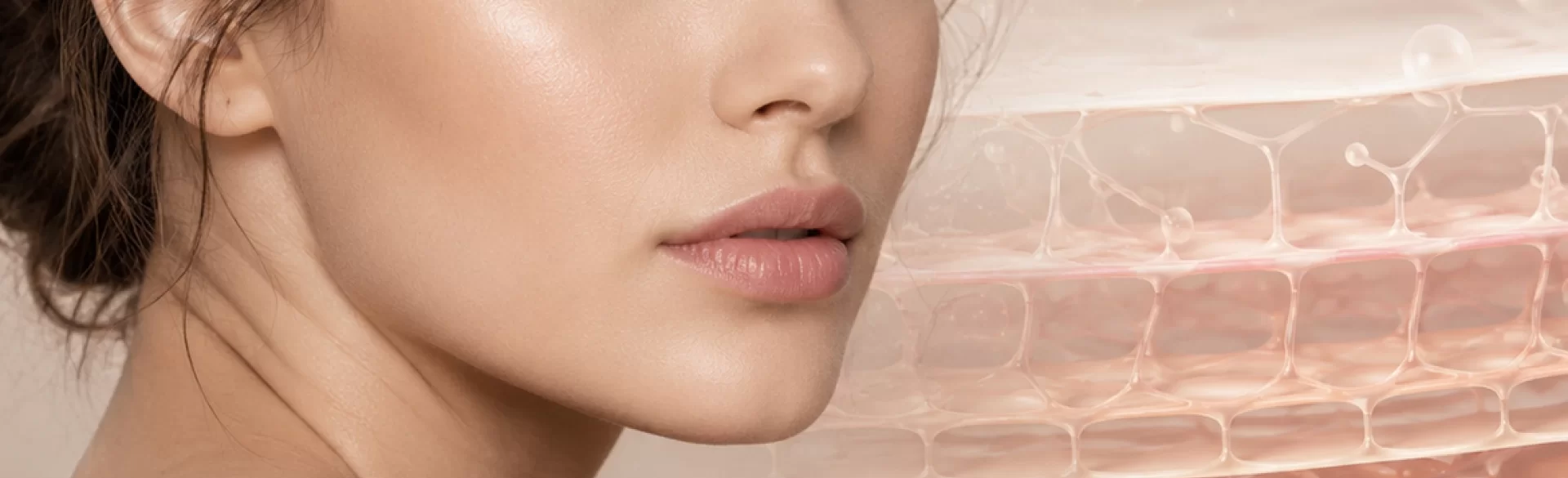
Skin microarchitecture is a concept describing the microscopic organization of its cellular and extracellular structures, responsible for the integrity, protective function, elasticity, and regenerative capabilities of the skin. It encompasses the mutual arrangement of keratinocytes, fibroblasts, collagen and elastin fibers, blood vessels, the extracellular matrix, and the supporting structures of the dermis and epidermis. Proper microarchitecture determines the maintenance of skin homeostasis, its appropriate tension, hydration, and resistance to mechanical and oxidative damage. Modern dermatology and aesthetic medicine treat the assessment of skin microarchitecture as one of the key elements in diagnosing aging processes, photodamage, and the effectiveness of regenerative and anti-aging therapies.
Skin microarchitecture - what is it?
Human skin possesses a multi-level structural organization, the proper functioning of which depends on maintaining precise relationships between cells and the extracellular matrix. The term „skin microarchitecture” refers to this very microscopic organization of tissues.
The skin microarchitecture primarily consists of:
- epidermis with ordered layers of keratinocytes,
- basement membrane separating the epidermis from the dermis,
- dermis containing collagen and elastin fibers,
- fibroblasts, i.e., cells responsible for collagen production,
- extracellular matrix (ECM) responsible for mechanical support,
- microcirculation and the network of lymphatic vessels,
- cellular receptors and immune structures.
The correct organization of these elements is responsible for:
- skin tension and firmness,
- uniform surface structure,
- proper healing,
- maintaining hydration,
- resistance to UV radiation and oxidative stress.
Skin microarchitecture is not a static structure. It undergoes constant remodeling depending on age, hormonal balance, environmental exposure, and the metabolic activity of fibroblasts. In clinical practice, its assessment is performed using modern diagnostic methods, such as:
- high-resolution dermoscopy,
- skin ultrasonography,
- confocal microscopy,
- histopathological analysis,
- 3D skin imaging,
- biochemical diagnostics of aging markers.
Skin microarchitecture - what does a healthy structure look like?
Healthy skin microarchitecture is characterized by a high degree of organization and a balance between tissue degradation and reconstruction processes. The integrity of the dermo-epidermal junction and the appropriate quality of the extracellular matrix are of key importance here.
In healthy skin, the following are observed:
- regular arrangement of type I and III collagen fibers,
- normal elastin density,
- even distribution of fibroblasts,
- adequate hydration with hyaluronic acid,
- efficient microcirculation,
- proper epidermal thickness.
Collagen is responsible for the mechanical strength of the skin, while elastin enables its elasticity and ability to return to its original shape after stretching. Hyaluronic acid performs a hydrophilic function - it binds water and maintains the appropriate level of tissue hydration.
An important element of healthy microarchitecture is also the proper function of the hydrolipid barrier. Thanks to it, the skin:
- limits transepidermal water loss (TEWL),
- protects the organism against pathogens,
- maintains a stable pH,
- reduces susceptibility to inflammation.
Microscopically, healthy skin also shows well-developed dermal papillae that increase the contact surface between the epidermis and the dermis. These structures improve tissue nourishment and are responsible for the mechanical stability of the skin.
At the cellular level, mitochondrial activity also plays an important role, as energy processes condition proper regeneration and the synthesis of skin support proteins.
Skin microarchitecture - how does it change with age?
Healthy skin microarchitecture is characterized by a high degree of organization and a balance between the processes of tissue degradation and reconstruction. The integrity of the dermo-epidermal junction and the appropriate quality of the extracellular matrix are of key importance here.
In healthy skin, the following are observed:
- regular arrangement of type I and III collagen fibers,
- normal elastin density,
- even distribution of fibroblasts,
- adequate hydration with hyaluronic acid,
- efficient microcirculation,
- proper epidermal thickness.
Collagen is responsible for the skin's mechanical strength, while elastin enables its elasticity and the ability to return to its original shape after stretching. Hyaluronic acid performs a hydrophilic function – it binds water and maintains the appropriate level of tissue hydration.
A correct function of the hydrolipid barrier is also an essential element of healthy microarchitecture. Thanks to it, the skin:
- limits transepidermal water loss (TEWL),
- protects the body against pathogens,
- maintains a stable pH,
- reduces susceptibility to inflammation.
Microscopically, healthy skin also shows well-developed dermal papillae that increase the contact surface between the epidermis and the dermis. These structures improve tissue nutrition and are responsible for the mechanical stability of the skin.
At the cellular level, mitochondrial activity also plays an important role, as energy processes determine the proper regeneration and synthesis of skin support proteins.
Skin microarchitecture - role in aging diagnostics
Healthy skin microarchitecture is characterized by a high degree of organization and a balance between tissue degradation and reconstruction processes. The integrity of the dermal-epidermal junction and the appropriate quality of the extracellular matrix are of key importance here.
In healthy skin, the following are observed:
- regular arrangement of type I and III collagen fibers,
- correct elastin density,
- even distribution of fibroblasts,
- adequate hydration with hyaluronic acid,
- efficient microcirculation,
- appropriate epidermal thickness.
Collagen is responsible for the mechanical strength of the skin, while elastin enables its elasticity and ability to return to its original shape after stretching. Hyaluronic acid performs a hydrophilic function - it binds water and maintains an appropriate level of tissue hydration.
An essential element of healthy microarchitecture is also the proper function of the hydrolipid barrier. Thanks to it, the skin:
- limits transepidermal water loss (TEWL),
- protects the body against pathogens,
- maintains a stable pH,
- reduces susceptibility to inflammation.
Microscopically, healthy skin also exhibits well-developed dermal papillae that increase the contact surface between the epidermis and the dermis. These structures improve tissue nutrition and are responsible for the mechanical stability of the skin.
At the cellular level, mitochondrial activity also plays a significant role, as energy processes determine the proper regeneration and synthesis of skin support proteins.
Skin microarchitecture - impact on the effectiveness of therapy
The state of skin microarchitecture directly affects the effectiveness of dermatological procedures and aesthetic medicine treatments. Skin with preserved tissue integrity exhibits greater regenerative potential, better healing, and a more predictable therapeutic response.
The highest effectiveness is observed in therapies stimulating the remodeling of the dermis, such as:
- regenerative mesotherapy,
- tissue biostimulators,
- microneedle radiofrequency,
- fractional laser therapy,
- platelet-rich plasma therapies,
- medical peels,
- collagen stimulators,
- HIFU lifting treatments.
In clinical practice, the so-called “skin quality,” which is the biological quality of the skin resulting precisely from its microarchitecture, is becoming increasingly important. Patients with preserved dermal density achieve:
- better skin tension,
- more natural rejuvenation effects,
- longer-lasting therapy results,
- lower risk of complications.
In the therapy of aging skin, stimulating fibroblasts to produce new collagen becomes particularly important. Therefore, modern anti-aging procedures focus mainly on regenerative processes, rather than exclusively volumetric ones.
The offer includes numerous procedures supporting the reconstruction of skin microarchitecture, including laser technologies, microneedle radiofrequency, mesotherapy, tissue biostimulators, and treatments stimulating neocollagenesis and improving the quality of the extracellular matrix.

