Pathological scars
back to main page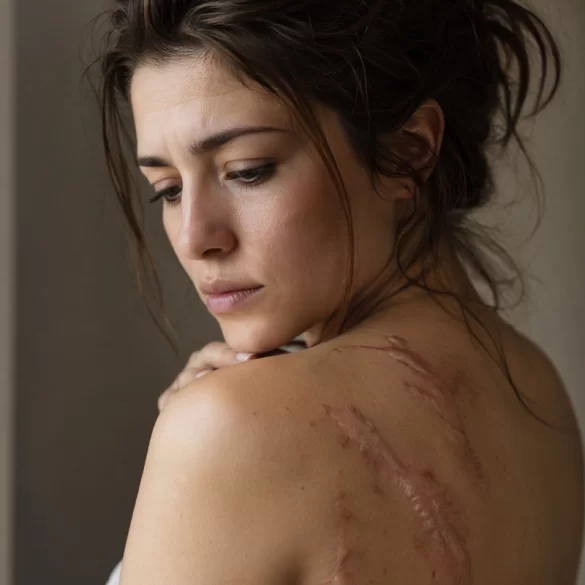

Pathological scars are abnormal, excessive scars resulting from impaired wound healing. In clinical practice, this group primarily includes hypertrophic scars and keloids. Both types are associated with excessive production of connective tissue and collagen, but they differ in their progression and appearance. A hypertrophic scar remains within the boundaries of the original skin injury, whereas a keloid exceeds its borders and infiltrates healthy skin. These lesions can cause not only an aesthetic defect, but also itching, pain, a pulling sensation, limited tissue mobility, and a significant psychological burden. Their treatment can be difficult, long-term, and requires precise selection of the method for the type of scar.
Pathological scars – what they are
Pathological scars are the result of an abnormal skin repair response after injury, surgery, burn, inflammation, or other tissue damage. In normal healing, a wound passes through the inflammatory, proliferative, and remodeling phases. In pathological scars, this process becomes deregulated: fibroblasts, which are cells that produce connective tissue components, remain excessively active, and collagen deposition exceeds its physiological breakdown. Scar tissue is formed that is thicker, harder, and less elastic than the surrounding skin.
The most important classification includes:
- hypertrophic scars – they are raised, red, thickened, but do not extend beyond the boundaries of the wound; they are more likely to partially flatten over time,
- keloids – they have an expansive character, exceed the area of the original injury, rarely regress spontaneously, and more often recur after treatment.
Pathological scars most commonly appear in areas exposed to greater skin tension or with an increased predisposition to such healing, especially on the sternum, shoulders, back of the neck, jawline, earlobes, and back. They can be pink, red, or brownish-red in color, and they are sometimes hard, shiny, and irregular. Subjective symptoms, such as burning, hypersensitivity, or itching, are not uncommon — and it is precisely these that often distinguish a clinical problem from a purely aesthetic one.
Pathological scars – causes
The cause of pathological scars is not „bad skin,” but impaired healing regulation, which is simultaneously influenced by many factors. The most important are prolonged inflammation, excessive activation of fibroblasts, increased synthesis of type I and III collagen, and abnormal cellular signals associated with, among others, TGF-β, pro-inflammatory cytokines, and mechanotransduction, i.e., the biological response of tissues to tension. In other words: the skin not only heals, but heals „too much.”
The most important risk factors include:
- genetic predisposition to the formation of keloids and hypertrophic scars,
- wound location in areas of high skin tension,
- extent and depth of the injury,
- burns, which particularly often lead to hypertrophic scars,
- wound infection or prolonged healing,
- chronic inflammation,
- recurring micro-traumas within the healing skin,
- certain procedures, piercings, and surgeries, especially in predisposed individuals.
Keloids more often develop in individuals with an individual biological predisposition, and not solely due to the size of the injury. Significantly, they can appear even after a relatively minor injury, such as an ear piercing, vaccination, a small cut, or an acne lesion. On the other hand, hypertrophic scars are more often associated with surgical and burn wounds and with high tension of the wound edges. This is an important difference because patients often use both names interchangeably, and this is not precise — medicine does not like terminological chaos, even if the skin sometimes does.
Pathological scars – treatment
Treatment of pathological scars should be selected individually, as there is no single method effective for all patients. The type of therapy depends on the scar type, its age, location, symptoms, tendency to recur, and previous treatment attempts. The best results are usually achieved by combination treatment rather than a single procedure.
The primary management methods include:
- silicone therapy – silicone gels or sheets reduce transepidermal water loss, improve scar maturation conditions, and are widely used in the prevention and treatment of fresh hypertrophic scars,
- pressure therapy – particularly used after burns and in selected locations,
- intralesional corticosteroid injections – especially triamcinolone; they are among the most commonly used methods in treating keloids and hypertrophic scars,
- combined injections, e.g., with 5-fluorouracil, and in selected cases also with other medications,
- laser therapy, including vascular lasers and fractional lasers, which can improve vascularity, elasticity, height, and scar structure,
- cryotherapy, used mainly for some keloids,
- surgical treatment, usually with adjuvant therapy, as keloid excision alone is associated with a high risk of recurrence.
Treatment of keloids requires special caution. A surgical procedure alone without adjuvant therapy may even worsen the problem, as new trauma can stimulate an even greater scarring response. Therefore, after excision, supplementary treatment is often implemented, such as steroid injections, silicone therapy, or other methods limiting the risk of recurrence. Contemporary recommendations emphasize that therapy effectiveness should be assessed not only by the flattening of the scar but also by the reduction of itching, pain, redness, and improvement of tissue function.
In clinical practice, improvement is usually gradual rather than immediate. The patient should know that the goal of treatment is most often not to „erase” the scar, but rather its flattening, softening, reduction of symptoms, and limitation of recurrences. This is important because unrealistic expectations are as common a problem in scar treatment as the scars themselves. A sensible strategy yields better results than therapy driven by aesthetic impulse.

