Pimples near the nose
back to main page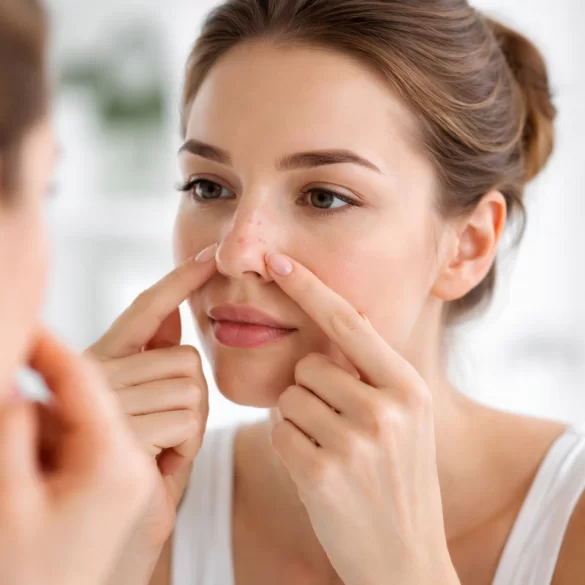
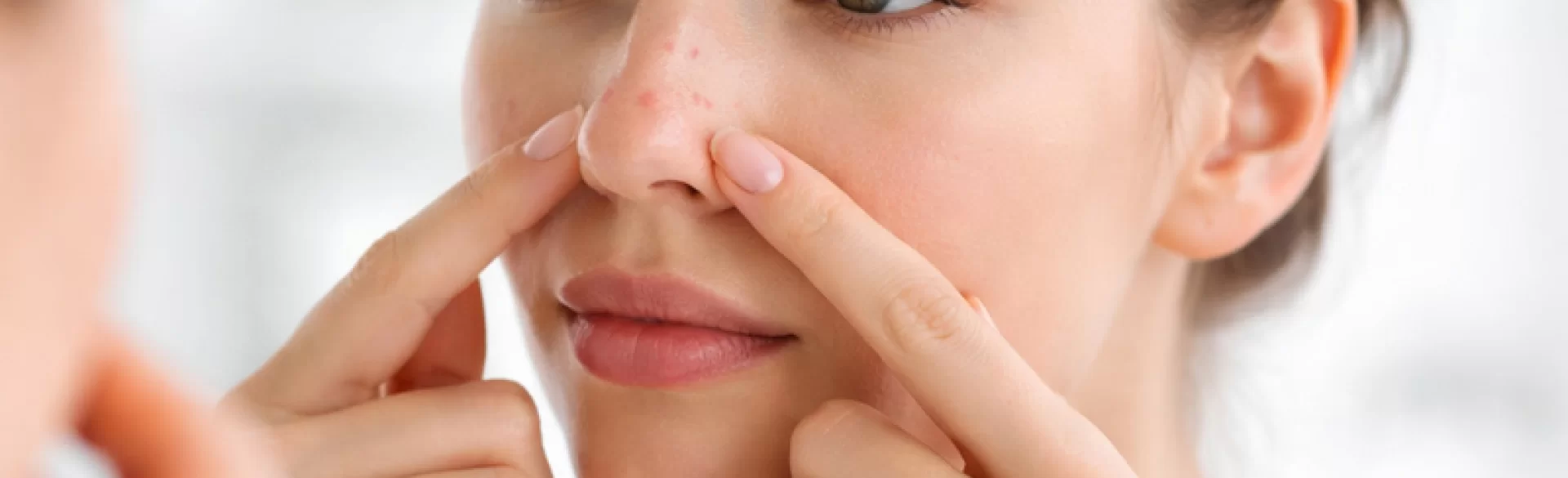
Lesions around the nose are skin changes of an inflammatory or non-inflammatory nature, located within the wings of the nose, nasolabial folds, and the vestibule of the nose. They are most often related to disorders of the sebaceous glands, bacterial colonization (mainly Cutibacterium acnes), mechanical irritation, or inflammation of hair follicles. The area of the nose is part of the so-called "T-zone," which is an area with increased sebaceous activity, predisposing to the development of acne lesions. Due to the specific blood supply to the face (the so-called "danger triangle of the face"), inflammatory changes in this area require particular caution and proper treatment.
Acne near the nose – causes
The etiology of changes in this area is multifactorial and includes both local and systemic factors.
The most common causes are:
- Acne vulgaris - overproduction of sebum, hyperkeratinization of hair follicle openings, and colonization by Cutibacterium acnes.
- Folliculitis - often bacterial in origin (Staphylococcus aureus), especially in the nasal vestibule.
- Rosacea - papulopustular changes in the central area of the face.
- Mechanical irritation - frequent nose wiping, runny nose, use of irritating cosmetics.
- Contact dermatitis - allergic or toxic reaction to cosmetic ingredients.
- Hormonal disorders - hyperandrogenism, insulin resistance, polycystic ovary syndrome.
- Stress and high glycemic index diet - exacerbate inflammatory response and sebum production.
It is worth noting that recurring, painful changes in the nasal vestibule may be a symptom of a nasal furuncle, which requires medical consultation due to the risk of the infection spreading via venous pathways to the cavernous sinus.
Spots near the nose – what they look like
The clinical picture depends on the underlying nature of the lesion.
The most commonly observed are:
- Inflammatory papules – red, raised, painful upon pressure.
- Pustular eruptions – with visible purulent plug.
- Open and closed comedones – especially around the wings of the nose.
- Inflammatory infiltrate – hard, painful, without visible purulent content.
- Erythematous-desquamating changes – in the case of contact dermatitis.
Alarm features requiring urgent medical consultation:
- increasing pain,
- swelling involving the lip or cheek,
- fever,
- visual disturbances,
- severe headache.
In such cases, infectious complications within the so-called "danger triangle" of the face should be ruled out, where veins lack valves, promoting the spread of infection to intracranial structures.
Acne near the nose – treatment
Treatment depends on the cause and severity of the changes. Therapy should be aimed at reducing inflammation, normalizing keratinization, and controlling bacterial colonization.
Topical treatment:
- Topical retinoids (adapalene, tretinoin) – regulate the keratinization process.
- Benzoyl peroxide – has antibacterial and anti-inflammatory effects.
- Azelaic acid – exhibits anti-inflammatory and seboregulating properties.
- Topical antibiotics (clindamycin, erythromycin) – for purulent lesions.
- Mupirocin ointments – for nasal vestibulitis.
General treatment (in justified cases):
- oral antibiotic therapy,
- isotretinoin in severe acne,
- hormonal treatment in women.
What should not be done:
- squeeze lesions within the nose,
- use alcohol and strongly irritating preparations,
- apply heavy, comedogenic cosmetics.
Dermatological procedures may also be effective in treating chronic or recurrent lesions, such as:
- chemical peels (salicylic, azelaic, pyruvic acid),
- non-ablative fractional laser therapy,
- LED light therapy (blue antibacterial light),
- medical skin cleansing under specialist supervision.
It is crucial to tailor the therapy individually – empirical treatment without diagnostics often leads to the chronicity of the problem.
Prevention includes actions to limit excessive sebum production and bacterial colonization.
Recommendations:
- gentle skin cleansing twice a day,
- use of non-comedogenic dermocosmetics,
- avoiding aggressive mechanical peels,
- controlling a high glycemic index diet,
- stress reduction,
- regular check-ups with a dermatologist in case of recurrence tendencies.
In cases of chronic, painful, or atypical lesions, differential diagnosis for rosacea, folliculitis, boils, or cystic lesions is necessary.

