Rosacea (rosacea)
back to main page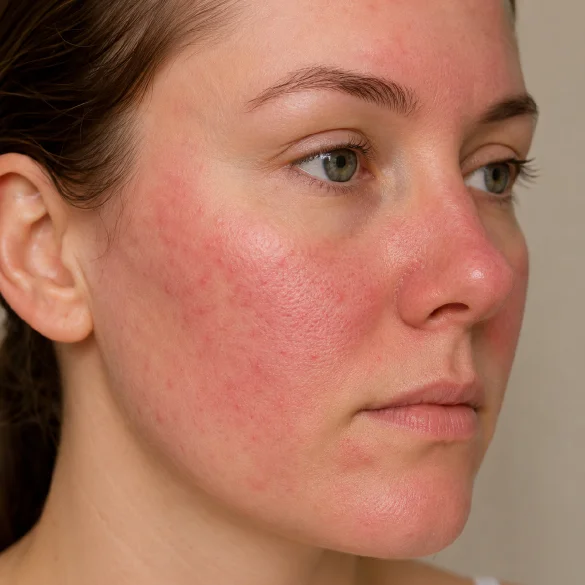
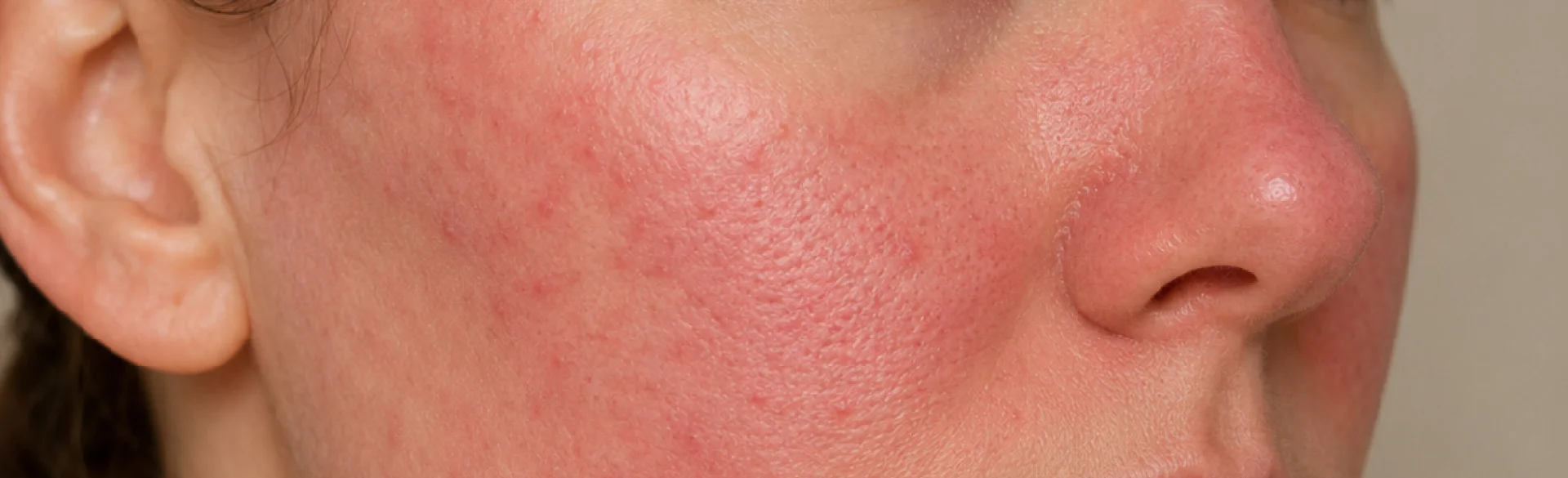
Rosacea is a chronic, inflammatory facial skin disease with a complex etiology, including innate immunity disorders, vascular hyperreactivity, skin barrier dysfunction, and an abnormal neuroimmune response. The disease most commonly develops between the ages of 30 and 60 and primarily affects individuals with a fair skin phototype, although it can occur in anyone. Characteristic symptoms are persistent erythema of the central face, paroxysmal redness (flushing), telangiectasias (dilated blood vessels), papules and pustules, and in some patients, also tissue hypertrophy and ocular involvement. Rosacea runs a course with periods of exacerbation and remission, therefore effective management requires both the treatment of skin lesions and the elimination of factors exacerbating the disease.
Rosacea - characteristics
Rosacea is one of the most common chronic inflammatory skin diseases of the face. Unlike acne vulgaris, it does not develop as a result of excessive sebum production and clogging of hair follicles, but results primarily from blood vessel regulation disorders and chronic inflammation.
The disease process involves several coexisting mechanisms:
- hyperreactivity of skin vessels,
- increased activity of antimicrobial peptides (cathelicidins),
- chronic inflammation,
- presence of Demodex folliculorum mites in increased numbers,
- damage to the epidermal barrier,
- influence of genetic and environmental factors.
The lesions are primarily located on:
- cheeks,
- nose,
- chin,
- forehead.
Much less frequently, they involve the neck, decolletage, or scalp.
A characteristic feature of the disease is its chronic course. Initially, the erythema is paroxysmal and resolves spontaneously. Over the years, the redness becomes permanent, and dilated blood vessels and inflammatory lesions appear.
Untreated rosacea can lead to permanent damage to blood vessels, skin thickening, and a significant deterioration in the quality of life due to chronic discomfort and aesthetic problems.
Rosacea - types and stages
Currently, there is a shift away from the classic division into stages of the disease in favor of a classification based on dominant clinical symptoms. In practice, however, many changes develop gradually.
Most commonly, the following subtypes of rosacea are distinguished:
Erythematotelangiectatic subtype (ETR)
It is characterized by:
- flushing of the face,
- persistent erythema,
- numerous telangiectasias,
- a burning sensation and skin hypersensitivity.
This is the earliest and most common subtype of the disease.
Papulopustular subtype
In addition to erythema, the following appear:
- red papules,
- inflammatory pustules,
- skin edema.
The lesions resemble acne, however, there are no comedones.
Phymatous subtype (phyma)
There is:
- sebaceous gland hyperplasia,
- skin fibrosis,
- thickening of tissues.
The most characteristic form is rhinophyma, i.e., overgrowth of the skin of the nose.
Ocular subtype
The changes affect the organ of vision and can cause:
- chronic blepharitis,
- a feeling of sand under the eyelids,
- photophobia,
- dry eye,
- recurrent conjunctivitis.
Ophthalmic symptoms may appear even before skin lesions.
Rosacea - what exacerbates it
One of the characteristic features of rosacea is a very individual skin reaction to numerous external and internal stimuli. Trigger factors lead to rapid dilation of blood vessels and intensification of inflammation.
Exacerbation is most commonly observed after:
- exposure to UV radiation,
- high temperature,
- sudden temperature changes,
- sauna,
- hot baths,
- intense physical exertion,
- alcohol, especially red wine,
- spicy foods,
- hot beverages,
- severe emotional stress.
The following are also important:
- certain cosmetics containing alcohol, menthol, or fragrances,
- mechanical scrubs,
- aggressive cosmetic procedures,
- chronic use of topical glucocorticosteroids.
In daily care, the following are recommended:
- gentle cleansers,
- regular use of creams that rebuild the hydrolipid barrier,
- year-round SPF 50+ photoprotection,
- avoiding individual trigger factors.
Keeping a flare-up diary often helps to identify the stimuli responsible for the worsening of the course of the disease.
Rosacea - the difference between rosacea and acne vulgaris
Although the name of both diseases contains the word “acne”, they are two distinct disease entities differing in causes, course, and treatment.
| Feature | Rosacea | Acne vulgaris |
|---|---|---|
| Age of onset | most commonly 30–60 years | mainly adolescence |
| Erythema | very characteristic | usually absent |
| Telangiectasia | common | do not occur |
| Comedones | do not occur | are the primary symptom |
| Papules and pustules | present | present |
| Skin hyperreactivity | highly pronounced | slight |
| Location | central part of the face | face, back, chest |
| Course | chronic with periods of exacerbation | usually resolves with age |
Correct diagnosis is crucial, because treatment effective in acne vulgaris can exacerbate symptoms of rosacea. This applies especially to strongly exfoliating and skin-irritating preparations.
Rosacea - laser treatments and IPL
Modern treatment of rosacea includes pharmacological therapy, proper skin care, and treatments using light and lasers. Particularly good results are achieved in patients with persistent erythema and telangiectasias.
The most commonly used technologies include:
- IPL (Intense Pulsed Light) – intense pulsed light selectively targets hemoglobin contained in dilated blood vessels. It causes their gradual closure, reduces erythema, and limits the frequency of flushing.
- Vascular lasers – including the pulsed dye laser (PDL) and lasers emitting light at wavelengths strongly absorbed by hemoglobin. They effectively reduce telangiectasias, chronic erythema, and improve the appearance of the skin.
- Nd:YAG 1064 nm laser – is primarily used in the treatment of deeper-lying blood vessels.
- Supportive therapies – appropriately selected regenerative treatments and treatments rebuilding the skin barrier can reduce skin hyperreactivity and improve the tolerance of pharmacological treatment.
Procedural treatment brings the best results after first controlling active inflammation. In most patients, it is necessary to perform a series of several treatments and periodic maintenance therapies, as rosacea remains a chronic disease.

