Rhinophyma
back to main page
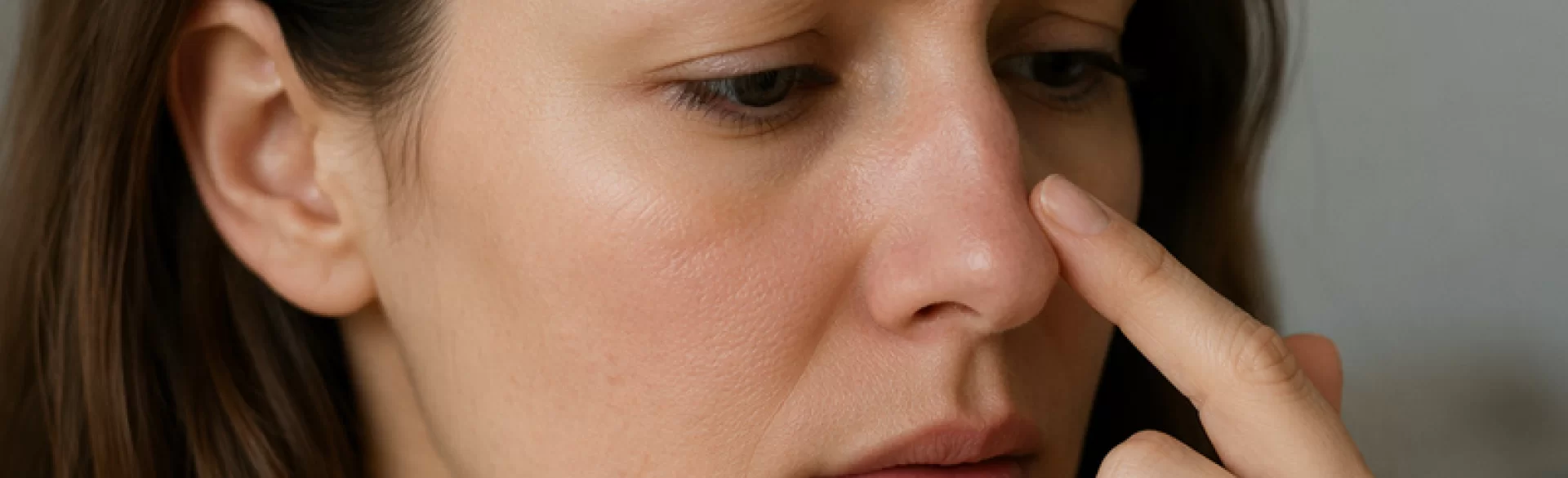
Rhinophyma (Latin: rhinophyma) is an advanced form of a chronic inflammatory skin disease, most often being the final stage of rosacea. It is characterized by gradual hypertrophy of the nose tissues – mainly sebaceous glands and connective tissue – which leads to deformation of its shape, thickening of the skin, and the formation of irregular, nodular lesions. The condition primarily affects middle-aged and older men. The process develops slowly, often over many years, and its course is progressive. Rhinophyma affects both skin function and facial aesthetics, which can significantly reduce the quality of life of patients.
Rhinophyma – causes
The etiopathogenesis of rhinophyma is complex and multifactorial. It is most commonly a consequence of long-standing, untreated, or inadequately controlled rosacea, particularly its papulopustular subtype.
The main mechanisms leading to the development of rhinophyma include:
- chronic skin inflammation – causing tissue remodeling and fibrosis,
- sebaceous gland hypertrophy (hyperplasia) – leading to increased sebum production,
- dermal microcirculation disorders – permanent vasodilation (telangiectasia),
- excessive fibroblast proliferation – resulting in skin thickening,
- hormonal factors – explaining the higher incidence in men.
Factors predisposing to the development of the disease include:
- chronic exposure to UV radiation,
- alcohol consumption (an exacerbating factor, not a primary cause),
- genetic predisposition,
- immunological disorders,
- presence of Demodex (Demodex folliculorum).
The lack of early therapeutic intervention in the course of rosacea is also significant, as it allows the progression of changes to the hypertrophic stage.
Rhinophyma – first symptoms
The initial symptoms of rhinophyma are subtle and often go unnoticed or are misinterpreted as non-specific skin changes.
Early symptoms include:
- persistent nasal erythema – especially in its central part,
- dilated blood vessels (telangiectasia),
- increased sebum secretion,
- thickening and unevenness of the nasal skin,
- appearance of small papules and nodules.
As the disease progresses, the following are observed:
- distinct soft tissue hypertrophy,
- deformation of the nose shape (enlargement, asymmetry),
- formation of deep furrows and an irregular surface,
- change in skin color (from red to bluish-purple).
The advanced form can lead to functional disorders, such as difficulty breathing through the nose, resulting from the compression of anatomical structures.
Rhinophyma – home remedies
Home management in the case of rhinophyma is purely supportive in nature and is used mainly in the early stages of the disease or as an element of complementary therapy.
Key measures include:
1. Elimination of exacerbating factors:
- avoiding alcohol,
- limiting exposure to UV radiation,
- reducing the consumption of spicy foods and hot beverages,
- stress management.
2. Proper skin care:
- using preparations with anti-inflammatory and sebum-regulating effects,
- avoiding harsh cosmetics (alcohol, strong detergents),
- regular use of sunscreens (SPF 30–50).
3. Support for the skin barrier:
- preparations with niacinamide, azelaic acid, or metronidazole (after consultation),
- dermocosmetics for vascular and sensitive skin.
It should be emphasized that home methods do not lead to the reversal of hypertrophic changes. In the advanced stage, specialist treatment, often procedural, is required.
Rhinophyma – treatment
Treatment of rhinophyma depends on the stage of the lesions and includes both pharmacological therapy and surgical procedures.
1. Pharmacological treatment (in early stages):
- oral antibiotics (e.g., tetracyclines) – anti-inflammatory effect,
- isotretinoin – reduction of sebaceous gland activity,
- topical treatment (metronidazole, ivermectin, azelaic acid).
Pharmacotherapy can slow down the progression of the disease, but it does not remove existing hypertrophic lesions.
2. Surgical treatment (the gold standard in advanced cases):
The most effective methods include:
- ablative laser therapy (e.g., CO₂, Er:YAG) – vaporization of excess tissue and skin remodeling,
- radiosurgery and electrocoagulation – precise removal of hypertrophic structures,
- surgical dermabrasion – mechanical smoothing of the skin surface,
- surgical nose shaping – in cases of significant deformity.
3. Modern combined approach:
In clinical practice, combined therapies are often used, which:
- reduce inflammation,
- improve skin structure,
- restore the correct contour of the nose.
Treatments used in aesthetic and dermatological therapies
In the context of treating and improving the quality of the skin of the nose, procedures available in modern aesthetic medicine are also used, such as:
- fractional and ablative laser therapy,
- microneedle radiofrequency (stimulation of collagen remodeling),
- medical peels with seboregulating and anti-inflammatory effects,
- LED light therapies (anti-inflammatory effect),
- individually selected therapeutic programs for vascular and seborrheic skin.
The choice of method depends on the stage of the lesions, skin type, and the patient's general health.
