Seborrheic skin
back to main page
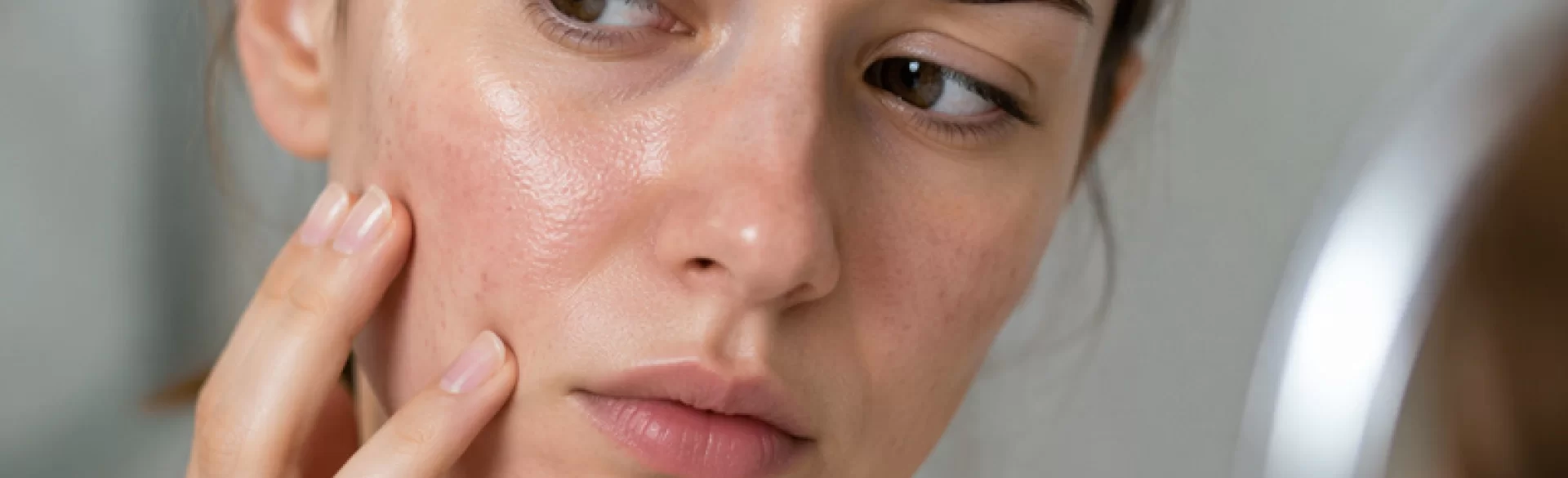
Seborrheic skin is a skin type characterized by excessive activity of the sebaceous glands (sebocytes), leading to increased sebum production – a natural lipid secretion that performs a protective function. This disorder is associated with abnormal hormonal regulation, hypersensitivity to androgens, and changes in the skin microbiome, especially the excessive proliferation of yeast of the genus Malassezia. Seborrheic skin shows a tendency toward oiliness, enlarged pores, inflammation, and acne lesions. It is most commonly located within the so-called T-zone (forehead, nose, chin), but can also involve the scalp, chest, and back.
Seborrheic skin – inflammation
Seborrhoeic dermatitis is a chronic, recurrent inflammatory dermatosis associated with excessive sebum secretion and skin microbiota imbalance. Lipophilic Malassezia yeast play a key role, metabolizing sebum lipids and leading to the formation of irritating free fatty acids.
The most important symptoms include:
- erythema (skin redness),
- epidermal desquamation (greasy scales),
- pruritus and burning sensation,
- papules and inflammatory foci.
Lesions are most commonly located:
- on the scalp (greasy dandruff),
- around the eyebrows, nose, and nasolabial folds,
- behind the ears,
- on the sternum and back.
Factors exacerbating inflammation include:
- stress and hormonal disorders,
- reduced immunity,
- improper skincare,
- environmental factors (humidity, temperature).
Pathophysiology involves the interaction between the immune system and yeast metabolism products, leading to chronic inflammation and epidermal barrier damage.
Seborrheic skin – home remedies
Home care procedures play an important role in controlling the symptoms of seborrheic skin, however, its effectiveness remains limited to mild forms of the disorder. Sebum production regulation, restoration of the hydrolipid barrier, and anti-inflammatory action are of key importance.
Recommended care elements include:
- gentle skin cleansing – syndet preparations with physiological pH, without aggressive detergents,
- use of seboregulating ingredients, such as:
- niacinamide – normalizes the work of sebaceous glands and has anti-inflammatory properties,
- zinc (e.g., zinc PCA) – exhibits antibacterial and sebostatic effects,
- azelaic acid – reduces inflammation and inhibits the proliferation of microorganisms,
- skin moisturizing – non-comedogenic preparations containing ceramides and humectants (e.g., hyaluronic acid),
- limiting irritating factors – alcohol, strong mechanical peels, and heavy occlusive cosmetics.
In practice, the following are also used:
- herbal infusions (e.g., chamomile, calendula) with soothing effects,
- plant oils with anti-inflammatory properties (e.g., tea tree oil – with caution due to potential irritation).
It should be emphasized that home methods do not eliminate the cause of the disorder, but only support symptom control. In the case of severe inflammatory changes, it is necessary to implement dermatological treatment.
Seborrheic skin – treatment
Treatment of seborrheic skin is multidirectional and includes pharmacological therapy, dermocosmetic therapy, and aesthetic medicine procedures. The goal is to reduce sebum secretion, control the microbiome, and limit inflammation.
Pharmacological treatment:
- topical antifungal drugs (e.g., ketoconazole, ciclopirox) – reduction of the Malassezia population,
- topical glucocorticosteroids – short-term use to reduce inflammation,
- calcineurin inhibitors (tacrolimus, pimecrolimus) – an alternative to steroids in chronic therapy,
- retinoids – regulation of keratinization and sebum production (in selected cases).
Aesthetic medicine and procedural dermatology procedures:
- chemical peels (e.g., salicylic, azelaic, mandelic acid) – keratolytic and sebum-regulating effects,
- skin cleansing and sebum-normalizing treatments – reduction of comedones and improvement of skin structure,
- microneedle mesotherapy – stimulation of regeneration and improvement of epidermal barrier function,
- LED light therapy – anti-inflammatory and bacteriostatic effects,
- laser therapy and high-energy devices – modulation of sebaceous gland function and improvement of skin quality.
In clinical practice, the following are also used:
- cleansing and sebum-regulating treatments,
- procedures supporting skin barrier restoration,
- combined therapies (pharmacology + procedures), which show the highest effectiveness.
The choice of therapy requires an individual assessment of the patient, taking into account the severity of symptoms, location of lesions, and comorbid dermatological conditions (e.g., acne, seborrheic dermatitis, rosacea).

